


The Cabinet yesterday passed a resolution stipulating that government agencies need to finance future tax-cut plans if they will result in more than NT$50 million in lost tax revenue per year.
The measure, proposed by the Ministry of Finance in early April, aims to stem a flurry of tax breaks that is depleting state coffers.
Under the new measure, which was announced yesterday, the Ministry of Finance must review tax-break proposals from government institutions and find other financial sources to make up for the shortfall.
Tax-cut plans which result in lost revenue of less than NT$50 million are not subjected to the rule, the Cabinet said in a statement.
Analysts yesterday criticized the plan saying it will be easy to circumvent.
"Government departments that come up with tax-cut plans will find ways to evade the rules," said Yophy Huang (黃耀輝), a researcher at Chung Hua Institute for Economic Research (中經院).
One trick that may be employed, Huang said, is to divide a larger tax-break plan into several parts, each totaling less than NT$50 million.
Huang further pointed out that the measure is not new, as the Law Governing the Allocation of Government Revenues and Expenditures (
"The law has not been complied with for many years, so why should we expect that the announcement made yesterday will make any difference?" Huang said.
Another tax expert said that the various laws governing tax-breaks are strewn with loopholes.
"Tax-cut regulations should contain a sunset clause stipulating when, or in what situation, the tax break will be revoked," said Lee Hsien-feng (李顯峰), associate professor of economics at National Taiwan University.
"Although the government now realizes this point, they will hardly cancel ongoing tax-cut plans due to political, mostly electoral considerations," Lee said.
Recent tax breaks include investment incentives to companies utilizing industrial parks and the reduction of the real estate transaction tax.
One example of how tax-break projects erode the national treasury is the Statute for Upgrading Industries (促進產業升級條例). The government lost NT$830 billion in tax revenue in 2001 due to tax cuts provided by the statute, according to the ministry's statistics.
Meanwhile two government branches yesterday said they would comply with the measure, but have no specific ideas about how to fund their future tax-cut plans yet.
"Maybe we will use surplus from state-run companies under our ministry to make up for the shortfall," Secretary-General Yeh Huey-ching (葉惠青) of the Ministry of Economic Affairs said yesterday.
The ministry presides over many state-owned companies, including Taiwan Sugar Corp (Taisugar, 台糖), Taiwan Power Co (Taipower, 台電), Chinese Petroleum Corp (中油) and Taiwan Salt Industrial Corp (台鹽).
Secretary-General Chen Hung-yi (
The total tax revenue for the first six months amonted to NT$683.1 billion, up NT$3.2 billion or 0.5 percent from a year earlier, the finance ministry reported yesterday.

Elon Musk’s lieutenants have reached out to chip industry suppliers, including Applied Materials Inc, Tokyo Electron Ltd and Lam Research Corp, for his envisioned Terafab, early steps in an audacious and likely arduous attempt to break into the production of cutting-edge chips. Staff working for the joint venture between Tesla Inc and Space Exploration Technologies Corp (SpaceX) have sought price quotes and delivery times for an array of chipmaking gear, people familiar with the matter said. In past weeks, they’ve contacted makers of photomasks, substrates, etchers, depositors, cleaning devices, testers and other tools, according to the people, who asked not to
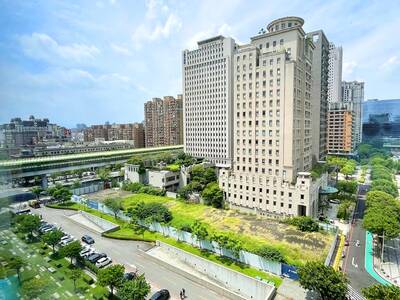
Taichung reported the steepest fall in completed home prices among the six special municipalities in the first quarter of this year, data compiled by Taiwan Realty Co (台灣房屋) showed yesterday. From January through last month, the average transaction price for completed homes in Taichung fell 8 percent from a year earlier to NT$299,000 (US$9,483) per ping (3.3m²), said Taiwan Realty, which compiled the data based on the government’s price registration platform. The decline could be attributed to many home buyers choosing relatively affordable used homes to live in themselves, instead of newly built homes in the city’s prime property market, Taiwan Realty

JET JUICE: The war on Iran’s secondary effects have seen fuel prices skyrocket, knocking flight schedules down to earth in return as airlines struggle with costs Airline passengers should brace for more irritation in the next few months as carriers worldwide cancel flights and ground planes to cope with stratospheric increases in jet-fuel prices. Dutch flag carrier KLM is the latest company to cut its schedule, saying on Thursday that it would scrap 80 return flights at Amsterdam’s Schiphol Airport in the coming month. That puts it in the same league as United Airlines Holdings Inc, Deutsche Lufthansa AG and Cathay Pacific Airways Ltd, which have all pruned itineraries to mitigate costs. Global capacity for next month has been reduced by about 3 percentage points, with all
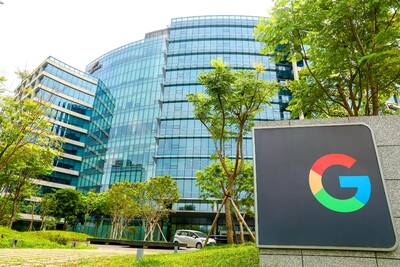
The government yesterday approved applications by Alphabet Inc’s Google to invest NT$27.08 billion (US$859.98 million) in Taiwan, the Ministry of Economic Affairs said in a statement. The Department of Investment Review approved two investments proposed by Google, with much of the funds to be used for data processing and electronic information supply services, as well as inventory procurement businesses in the semiconductor field, the ministry said. It marks the second consecutive year that Google has applied to increase its investment in Taiwan. Google plans to infuse NT$25.34 billion into Charter Investments Ltd (特許投資顧問) through its Singapore-based subsidiary Fructan Holdings Singapore Pte Ltd, and


 RSS
RSS