


The euro advanced Friday to within striking distance of its historical high just under US$1.1900, but thin market conditions could hinder further progress until full scale global trading resumes on Tuesday after the long weekend in both the US and the UK.
The single currency's gains spilled over into cross trading as well, as the euro hit a new all-time high at ¥138.12 and reached its highest point against the Swiss franc in two years, topping off at about 1.5250 francs.
As the euro surged across the board, the dollar retreated against most of its other major rivals. However, traders believed covert Japanese intervention capped the dollar's losses against the yen.
Late Friday, the euro was trading at US$1.1827, up from US$1.1699 late Thursday, with last-minute positioning in a thin market tending to exaggerate levels as activity wound down, traders said. The dollar was trading at ¥116.85, down from ¥117.22 late Thursday in New York.
Against the Swiss franc, the dollar was at 1.2885 francs, down from 1.2949 francs late Thursday. The British pound was at US$1.6362, up slightly from US$1.6352 a day earlier.
In an uncommon twist for pre-holiday trading, the euro shot up more than a cent from trading levels late Thursday.
The euro's break through "the top of its recent consolidation range" despite a lack of news and ahead of a three-day weekend in the US and UK, "is testament to the strength of the dollar downtrend and the degree to which underlying flows remained stacked against the dollar," according to UBS Warburg's currency advisory for Friday.
A big order to buy euros, which traders said came from a country in the Middle East, ignited the single currency's surge. With liquidity tight on a Friday preceding a long weekend, the euro gained momentum, tripping stop-loss orders along the way.
Perhaps most worrying for the dollar was the fact that strategists have concluded the euro climb was due mostly to long-term investors. What's more, they speculated that were the markets not so thin in advance of holiday weekend, the euro would likely be above the US$1.1840 level.
"There's going to be a lot of people caught on the wrong foot by this, I imagine, because the move was so quick," said Ian Gunner, head foreign exchange research with Mellon Bank in London. "As long as we hold this area without a dramatic pullback, the euro will likely push higher on Tuesday."
Meanwhile, the Canadian dollar ended little changed on Friday after continuing the weakening trend begun during Thursday's drastic selloff in overnight and early North American trading, but then rebounding as the session progressed.
Late Friday, the US dollar was trading at C$1.3744 down from C$1.3753 late Thursday.
Analysts said Thursday's weak Canadian April inflation report continued to undermine the Canadian dollar in earlier trading, as the data has reinforced expectations that Canadian interest rates will no longer be moving higher in months to come.

Shares of contract chipmaker Taiwan Semiconductor Manufacturing Co (TSMC, 台積電) came under pressure yesterday after a report that Apple Inc is looking to shift some orders from the Taiwanese company to Intel Corp. TSMC shares fell NT$55, or 2.4 percent, to close at NT$2,235 on the local main board, Taiwan Stock Exchange data showed. Despite the losses, TSMC is expected to continue to benefit from sound fundamentals, as it maintains a lead over its peers in high-end process development, analysts said. “The selling was a knee-jerk reaction to an Intel-Apple report over the weekend,” Mega International Investment Services Corp (兆豐國際投顧) analyst Alex Huang
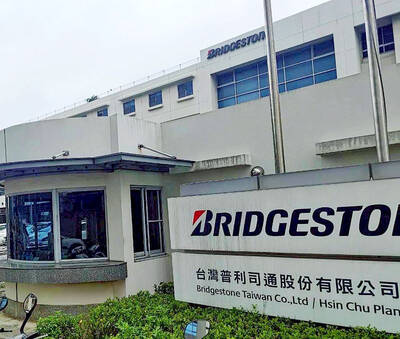
TRANSITION: With the closure, the company would reorganize its Taiwanese unit to a sales and service-focused model, Bridgestone said Bridgestone Corp yesterday announced it would cease manufacturing operations at its tire plant in Hsinchu County’s Hukou Township (湖口), affecting more than 500 workers. Bridgestone Taiwan Co (台灣普利司通) said in a statement that the decision was based on the Tokyo-based tire maker’s adjustments to its global operational strategy and long-term market development considerations. The Taiwanese unit would be reorganized as part of the closure, effective yesterday, and all related production activities would be concluded, the statement said. Under the plan, Bridgestone would continue to deepen its presence in the Taiwanese market, while transitioning to a sales and service-focused business model, it added. The Hsinchu
Taiwan Semiconductor Manufacturing Co (TSMC, 台積電) has approved a capital budget of US$31.28 billion for production expansion to meet long-term development needs during the artificial intelligence (AI) boom. The company’s board meeting yesterday approved the capital appropriation plan for purposes such as the installation of advanced technology capacity and fab construction, the world’s largest contract chipmaker said in a statement. At an earnings conference last month, TSMC forecast that its capital expenditure for this year would be at the higher end of the US$52 billion to US$56 billion range it forecast in January in response to robust demand for 5G, AI and

Taiwan Semiconductor Manufacturing Co’s (TSMC, 台積電) investment project in Arizona has progressed better than expected, but it still faces challenges such as water and labor shortages, National Development Council (NDC) Minister Yeh Chun-hsien (葉俊顯) said yesterday. Speaking with reporters after visiting TSMC’s Arizona hub and attending the SelectUSA Investment Summit in Maryland last week, Yeh said TSMC’s Arizona site turned a profit of NT$16.14 billion (US$514 million) last year in its first full year of mass production. “TSMC told me it was surprised by the smooth trial run of the first fab, which has left the company optimistic about the project’s outlook,”


 RSS
RSS