


The nation's motherboard manu-facturers may see sales fall by at least 10 percent this quarter after the spread of severe acute respiratory syndrome (SARS) hit the lucrative Chinese market, industry experts said yesterday.
"Second quarter demand from China is weak," said William Fong (
"We expect a 10 percent drop in motherboard sales," he said.
Citing nervous shoppers staying at home and a dramatic drop in business trips, Fong said Chinese computer buyers are putting their orders on hold.
Four Taiwanese companies supply around 90 percent of the world's motherboards, according to the government-funded Market Intelligence Center.
Motherboards are the circuit boards on which computer chips are connected to make a computer system.
China, with the world's fastest growing demand for computers, accounts for between 10 and 30 percent of motherboard sales at each of the four companies -- Asustek Computer Inc (
Over at Elitegroup, which sells up to 300,000 motherboards to China every month, the effect of SARS is already being felt.
"The impact is there," said Mike Chou (
"The drop this quarter will be maybe 10 percent, maybe more," he said.
With no decrease in new infections in China, Chou expected the slowdown to be drawn out.
Other companies are trying to play down the impact of SARS.
"The percentage of Asustek sales to China is much less than say Gigabyte," said product manager Joe Hsieh.
"Our feeling is that the effect of SARS overall in Asia is not that pronounced," Hsieh said.
Asustek's sales to Hong Kong have seen a drop, Hsieh said, but it was also too early to judge whether SARS is responsible for the drop, he said.
"To present we have not seen any impact on our sales," Micro-star spokeswoman Hong Pao-yu (
"The second quarter is normally the low season, so a drop in sales is to be expected," Hong said.
Another analyst accepted the low season argument, but said that canceled orders as a result of SARS would be added on top of that.
"A drop of 10 to 15 percent in sales is normal in the second quarter low season," said Wang Wan-li (
"The added SARS effect will create an extra drop of 5 percent, so we can expect motherboard sales to be down 20 percent," Wang said.
The cancellation of all trade shows in China because of SARS fears has dealt the biggest blow to motherboard sales there as buyers from all over the country attend exhibitions in larger cities and take their orders back to the far reaches of the country.
Taiwanese companies do not have effective distribution coverage of the whole country and rely heavily on trade events, Wang said.
It is also difficult for Chinese nationals to obtain visas to travel to Taiwan.
"Taiwanese companies have limited resources to distribute in China and need trade shows," Wang said.
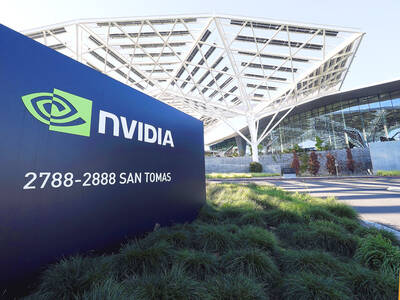
CHIP RACE: Three years of overbroad export controls drove foreign competitors to pursue their own AI chips, and ‘cost US taxpayers billions of dollars,’ Nvidia said China has figured out the US strategy for allowing it to buy Nvidia Corp’s H200s and is rejecting the artificial intelligence (AI) chip in favor of domestically developed semiconductors, White House AI adviser David Sacks said, citing news reports. US President Donald Trump on Monday said that he would allow shipments of Nvidia’s H200 chips to China, part of an administration effort backed by Sacks to challenge Chinese tech champions such as Huawei Technologies Co (華為) by bringing US competition to their home market. On Friday, Sacks signaled that he was uncertain about whether that approach would work. “They’re rejecting our chips,” Sacks
Taiwan’s long-term economic competitiveness will hinge not only on national champions like Taiwan Semiconductor Manufacturing Co. (TSMC, 台積電) but also on the widespread adoption of artificial intelligence (AI) and other emerging technologies, a US-based scholar has said. At a lecture in Taipei on Tuesday, Jeffrey Ding, assistant professor of political science at the George Washington University and author of "Technology and the Rise of Great Powers," argued that historical experience shows that general-purpose technologies (GPTs) — such as electricity, computers and now AI — shape long-term economic advantages through their diffusion across the broader economy. "What really matters is not who pioneers

BUBBLE? Only a handful of companies are seeing rapid revenue growth and higher valuations, and it is not enough to call the AI trend a transformation, an analyst said Artificial intelligence (AI) is entering a more challenging phase next year as companies move beyond experimentation and begin demanding clear financial returns from a technology that has delivered big gains to only a small group of early adopters, PricewaterhouseCoopers (PwC) Taiwan said yesterday. Most organizations have been able to justify AI investments through cost recovery or modest efficiency gains, but few have achieved meaningful revenue growth or long-term competitive advantage, the consultancy said in its 2026 AI Business Predictions report. This growing performance gap is forcing executives to reconsider how AI is deployed across their organizations, it said. “Many companies
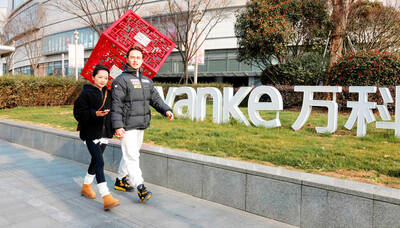
China Vanke Co (萬科), China’s last major developer to have so far avoided default amid an unprecedented property crisis, has been left with little time to keep debt failure at bay after creditors spurned its proposal to push back a looming bond payment. Once China’s biggest homebuilder by sales, Vanke failed to obtain sufficient support for its plan to delay paying the 2 billion yuan (US$283.51 million) note due today, a filing to the National Association of Financial Market Institutional Investors showed late on Saturday. The proposal, along with two others on the ballot, would have allowed a one-year extension. All three


 RSS
RSS