


NTT DoCoMo Inc, reversing an earlier stance, will sell a mobile phone that bridges old and new technologies after delays in introducing faster wireless service, chief technology officer Kota Kinoshita said.
DoCoMo, the world's No. 2 mobile phone company by sales, will sell the dual-band NEC Corp-manufactured phone in the next few months. DoCoMo aims to cover 97 percent of the Japanese market with faster wireless service in March 2004.
Not introducing a transition product earlier "wasn't a mistake, as we were targeting a nationwide rollout with single standard," Kinoshita said in an interview at the 3GSM World Congress in Cannes, France.
"From a perspective of risk management, we will launch a dual-mode 2G-3G phone in the spring," he said.
Consumers have shunned DoCoMo's FOMA service, the first to use so-called 3G technology allowing users to download video clips, partly because of lack of appealing handset models. The service started in October 2001. Failure to meet targets may tarnish the company's brand image, an investor said.
"Since the gap in coverage between 2G to 3G acts as a barrier to migration, we believe subscriber growth will take off once we reach 97 percent coverage," Kinoshita said.
The company has 99 percent coverage already in Tokyo.
Consumers in rural areas may be attracted to the dual-band phone because they may be more hesitant to move on to the new technology when it's available, he said. There will only be one model of the transitional phone.
DoCoMo said demand is strong for new 3G handsets from Matsushita Electric Industrial Co, which will go on sale in March, four months later than DoCoMo expected.
Matsushita Electric, Japan's second-biggest mobile phone maker, sells handsets under its Panasonic brand.
Mobile-phone makers have solved problems with phones for faster wireless service, Kinoshita said, improving standby battery life to 250 hours from 55 hours.
Prices have come down and the phones are sold for about the same as handsets for the older technology, or Y30,000 (US$250).
DoCoMo, which invested about Y1 trillion in 3G, expects to spend about the same on the so-called fourth generation, which it will roll out from 2007 to 2010.
By then the company plans to get half its revenue from data services, compared with a third now.
Earlier this month NTT DoCoMo said it may fall short of its already lowered target for subscribers to its high-speed wireless Internet cellphone service in Japan.
Company president Keiji Tachikawa said DoCoMo may not be able to meet its target of 320,000 subscribers by March 31. He blamed delays in handset deliveries for the slower-than-expected uptake.
The company signed up 152,000 customers for FOMA by the end of last year. That's less than 1 percent of DoCoMo's 43 million subscriber base.
In contrast, KDDI had a total of 4.7 million subscribers to its high-speed CDMA2000 1X service, which began last April.
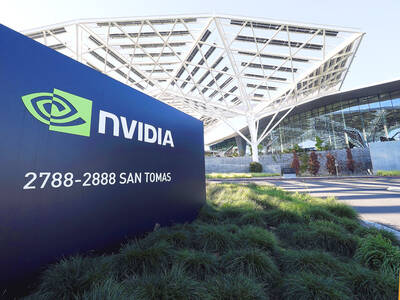
CHIP RACE: Three years of overbroad export controls drove foreign competitors to pursue their own AI chips, and ‘cost US taxpayers billions of dollars,’ Nvidia said China has figured out the US strategy for allowing it to buy Nvidia Corp’s H200s and is rejecting the artificial intelligence (AI) chip in favor of domestically developed semiconductors, White House AI adviser David Sacks said, citing news reports. US President Donald Trump on Monday said that he would allow shipments of Nvidia’s H200 chips to China, part of an administration effort backed by Sacks to challenge Chinese tech champions such as Huawei Technologies Co (華為) by bringing US competition to their home market. On Friday, Sacks signaled that he was uncertain about whether that approach would work. “They’re rejecting our chips,” Sacks
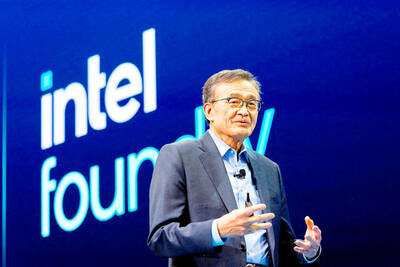
NATIONAL SECURITY: Intel’s testing of ACM tools despite US government control ‘highlights egregious gaps in US technology protection policies,’ a former official said Chipmaker Intel Corp has tested chipmaking tools this year from a toolmaker with deep roots in China and two overseas units that were targeted by US sanctions, according to two sources with direct knowledge of the matter. Intel, which fended off calls for its CEO’s resignation from US President Donald Trump in August over his alleged ties to China, got the tools from ACM Research Inc, a Fremont, California-based producer of chipmaking equipment. Two of ACM’s units, based in Shanghai and South Korea, were among a number of firms barred last year from receiving US technology over claims they have
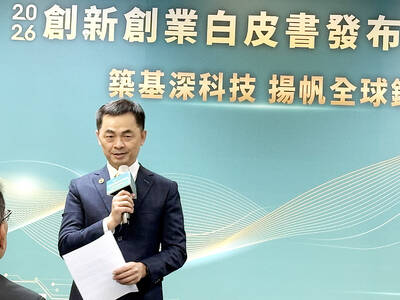
BARRIERS: Gudeng’s chairman said it was unlikely that the US could replicate Taiwan’s science parks in Arizona, given its strict immigration policies and cultural differences Gudeng Precision Industrial Co (家登), which supplies wafer pods to the world’s major semiconductor firms, yesterday said it is in no rush to set up production in the US due to high costs. The company supplies its customers through a warehouse in Arizona jointly operated by TSS Holdings Ltd (德鑫控股), a joint holding of Gudeng and 17 Taiwanese firms in the semiconductor supply chain, including specialty plastic compounds producer Nytex Composites Co (耐特) and automated material handling system supplier Symtek Automation Asia Co (迅得). While the company has long been exploring the feasibility of setting up production in the US to address

OPTION: Uber said it could provide higher pay for batch trips, if incentives for batching is not removed entirely, as the latter would force it to pass on the costs to consumers Uber Technologies Inc yesterday warned that proposed restrictions on batching orders and minimum wages could prompt a NT$20 delivery fee increase in Taiwan, as lower efficiency would drive up costs. Uber CEO Dara Khosrowshahi made the remarks yesterday during his visit to Taiwan. He is on a multileg trip to the region, which includes stops in South Korea and Japan. His visit coincided the release last month of the Ministry of Labor’s draft bill on the delivery sector, which aims to safeguard delivery workers’ rights and improve their welfare. The ministry set the minimum pay for local food delivery drivers at


 RSS
RSS