


The foundry model of making computer chips to order is failing, United Microelectronics Corp (UMC,
"The era of high margins for the current foundry model has gone forever," Tsao said. "Even the world's largest player cannot fight this fate," he said, citing the example of rival Taiwan Semiconductor Manufacturing Co (TSMC, 台積電), where net profit has dropped by more than a quarter during the past two years. Pressure on profit margins will only increase as more foundries open across Asia and the US, he said.
The cost of staying ahead of the competition by continually upgrading expensive chipmaking equipment is forcing high-tech companies to increasingly outsource the manufacture of computer chips to specialist chip manufacturers, or foundries. TSMC and UMC are now the world's largest foundries, but TSMC has a six-month technological advantage over UMC, analysts said yesterday.
Instead of mirroring TSMC's model of making computer chips for a growing list of customers, Tsao proposed UMC build a network of partnerships between different tech companies and his foundry.
Analysts were unsure about Tsao's new model. "This model is confusing to me," said Alfred Ying (
Tsao needs time to work out his portfolio of partners, Ying said, and warned that the partners needed to share UMC's vision -- pledging to place orders exclusively with UMC -- or there would be nothing to stop them from benefiting from UMC's support, then switching to a rival foundry further down the line.
With UMC relying on a smaller customer base for income in the future, losing a key client could cause serious damage to the company's bottom line, Ying said.
UMC needs to convince the market they are on the right track, another analyst said.
"This is not a clear strategy to investors at the moment," CLSA technology analyst Cheng Ming-kai said. "UMC will have to point out how investors will benefit."
Yesterday Tsao also cited UMC's relationship with former rival Silicon Integrated System Corp (
The comments were met with mixed reactions. "With full support, UMC's customers can grow faster than before, and then UMC can benefit from more orders from them," Ying said. "However, the situation at Silicon Integrated will give other similar companies cause for concern."
UMC has been buying shares in Silicon Integrated since December. UMC and its subsidiaries now hold about 30 percent of Silicon Integrated's shares, a source at the company said yesterday.
On Monday, UMC's chief executive officer John Hsuan (
Cheng agreed that Silicon Integrated had already benefited from its partnership with UMC, gaining more orders and saving money on investments, but speculated the takeover might be a precursor of more to come.
"UMC probably has a controlling interest in more companies than we know of," Cheng said. "I expect we'll hear of a lot more mergers in the next few months."

GROWING OWINGS: While Luxembourg and China swapped the top three spots, the US continued to be the largest exposure for Taiwan for the 41st consecutive quarter The US remained the largest debtor nation to Taiwan’s banking sector for the 41st consecutive quarter at the end of September, after local banks’ exposure to the US market rose more than 2 percent from three months earlier, the central bank said. Exposure to the US increased to US$198.896 billion, up US$4.026 billion, or 2.07 percent, from US$194.87 billion in the previous quarter, data released by the central bank showed on Friday. Of the increase, about US$1.4 billion came from banks’ investments in securitized products and interbank loans in the US, while another US$2.6 billion stemmed from trust assets, including mutual funds,
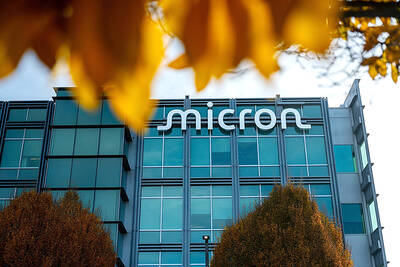
Micron Memory Taiwan Co (台灣美光), a subsidiary of US memorychip maker Micron Technology Inc, has been granted a NT$4.7 billion (US$149.5 million) subsidy under the Ministry of Economic Affairs A+ Corporate Innovation and R&D Enhancement program, the ministry said yesterday. The US memorychip maker’s program aims to back the development of high-performance and high-bandwidth memory chips with a total budget of NT$11.75 billion, the ministry said. Aside from the government funding, Micron is to inject the remaining investment of NT$7.06 billion as the company applied to participate the government’s Global Innovation Partnership Program to deepen technology cooperation, a ministry official told the
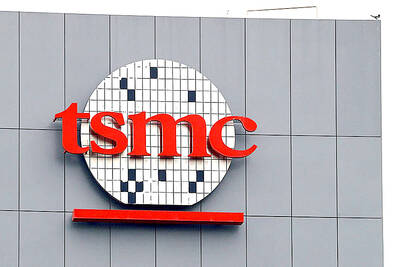
Taiwan Semiconductor Manufacturing Co (TSMC, 台積電), the world’s leading advanced chipmaker, officially began volume production of its 2-nanometer chips in the fourth quarter of this year, according to a recent update on the company’s Web site. The low-key announcement confirms that TSMC, the go-to chipmaker for artificial intelligence (AI) hardware providers Nvidia Corp and iPhone maker Apple Inc, met its original roadmap for the next-generation technology. Production is currently centered at Fab 22 in Kaohsiung, utilizing the company’s first-generation nanosheet transistor technology. The new architecture achieves “full-node strides in performance and power consumption,” TSMC said. The company described the 2nm process as
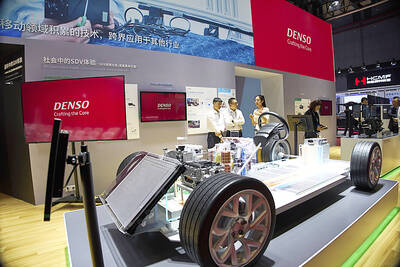
JOINT EFFORTS: MediaTek would partner with Denso to develop custom chips to support the car-part specialist company’s driver-assist systems in an expanding market MediaTek Inc (聯發科), the world’s largest mobile phone chip designer, yesterday said it is working closely with Japan’s Denso Corp to build a custom automotive system-on-chip (SoC) solution tailored for advanced driver-assistance systems and cockpit systems, adding another customer to its new application-specific IC (ASIC) business. This effort merges Denso’s automotive-grade safety expertise and deep vehicle integration with MediaTek’s technologies cultivated through the development of Media- Tek’s Dimensity AX, leveraging efficient, high-performance SoCs and artificial intelligence (AI) capabilities to offer a scalable, production-ready platform for next-generation driver assistance, the company said in a statement yesterday. “Through this collaboration, we are bringing two


 RSS
RSS