


Mainland Affairs Council (MAC) officials said yesterday that the government has reached the final stage of policy study on allowing banks to set up representative offices in China, dismissing reports that it would announce the policy in one or two weeks time as indefinite.
As study on whether to lift the restrictions on financial institutions continues, government officials, local bank representatives and academics agreed that interested local banks would need thorough evaluation on their own competitiveness before they jump into the Chinese market.
"The government policy on allowing local banks to set up representative offices in China, is moving in a more open direction," John Deng (
The lifting of restrictions on allowing banks to set up representative offices in China will involve policy changes at home and negotiations with China on several technical issues. None the less, they would rely on how China would handle these issues due to political concerns.
"The current regulations only allow local banks to set up representative offices via their overseas subsidaries," said Steve Chen (
Despite around 14 local banks meeting the above criteria, no subsidaries of these banks could meet all these criteria for setting up representative offices in China, Chen said. Other policy barriers that need to be taken into consideration include whether China would allow Taiwanese banks -- approved by the Taiwanese government -- to set up offices.
Additionally, supervisory officials should be created by both Taipei and Beijing, which would also be based on negotiations with China. Representatives of several leading local banks have said that business opportunities in China for them will be carefully evaluated.
Douglas Hsu (徐序東), chaiman of Far East International Bank (遠東國際商業銀行) recently said that policies on the timing and degree of the liberalization is still unclear and that the attitude of Beijing toward this issue should also be studied. As a result, banks should be cautious regarding this issue, he said.
Jeffrey Koo, (
E. Sun Bank's (
"Our priority will be to upgrade our representative office in Hong Kong into a full branch office," Duh said.
One banking industry source, who asked not to be identified, said that quick entry into the China banking market during the two-to-five-year grace period after Beijing enters the WTO will be beneficial to local banks since, in the long term, they will have to compete with their foreign rivals.
The precondition is that they are competitive.
"Many local private banks lack competitiveness with foreign banks, since they still only provide the lower-level services of traditional commercial banks," the source said.
"However, they fail to recognize the trends toward corporate banking, and providing sophisticated and multifunctional services (such as syndicated loans, or corporate bonds for investments)," he said.
Thomas Lee (李桐豪), chairman of the Department of Money and Finance at National Chengchi University, said that the initial niche markets in China for local banks will be to serve the more than 50,000 Taiwanese businessmen there, as well as their Chinese counterparts.
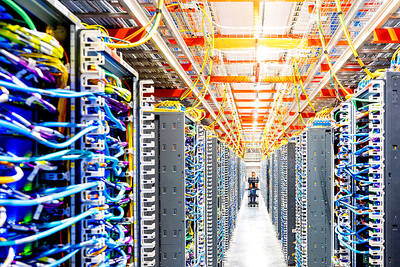
AI SPLURGE: The four major US tech companies have lost more than US$950 billion in value since releasing earnings and outlooks, while equipment makers were gaining Four of the biggest US technology companies together have forecast capital expenditures that would reach about US$650 billion this year — a flood of cash earmarked for new data centers and all the gear within them. The spending planned by Alphabet Inc, Amazon.com Inc, Meta Platforms Inc and Microsoft Corp, all in pursuit of dominance in the still-nascent market for artificial intelligence (AI) tools, is a boom without a parallel this century. Each of the companies’ estimates for this year is expected either near or surpass their budgets for the past three years combined. They would set a high-watermark for capital spending
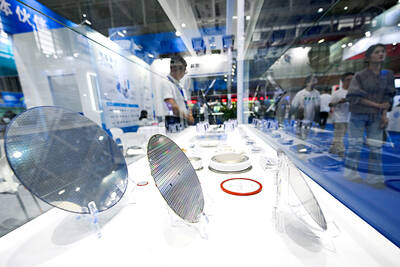
China’s top chipmaker has warned that breakaway spending on artificial intelligence (AI) chips is bringing forward years of future demand, raising the risk that some data centers could sit idle. “Companies would love to build 10 years’ worth of data center capacity within one or two years,” Semiconductor Manufacturing International Corp (SMIC, 中芯) cochief executive officer Zhao Haijun (趙海軍) said yesterday on a call with analysts. “As for what exactly these data centers will do, that hasn’t been fully thought through.” Moody’s Ratings projects that AI-related infrastructure investment would exceed US$3 trillion over the next five years, as developers pour eye-watering sums
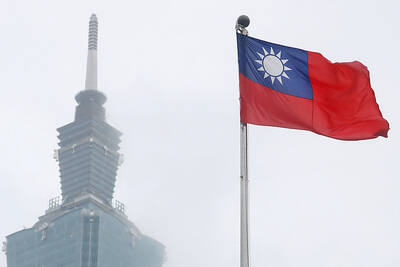
Bank of America Corp nearly doubled its forecast for the nation’s economic growth this year, adding to a slew of upgrades even after a rip-roaring last year propelled by demand for artificial intelligence (AI). The firm lifted its projection to 8 percent from 4.5 percent on “relentless global demand” for the hardware that Taiwanese companies make, according to a note dated yesterday by analysts including Xiaoqing Pi (皮曉青). Taiwan’s GDP expanded 8.63 percent last year, the fastest pace since 2010. The increase “reflects our sustained optimism over Taiwan’s technology driven expansion and is reinforced by several recent developments,” including a more stable currency,
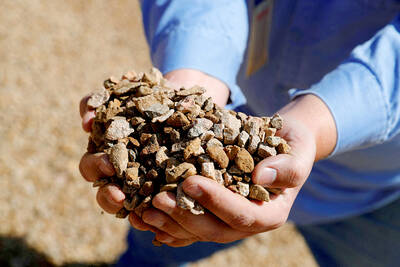
COLLABORATION: Taiwan and the US could jointly find solutions to weaknesses in supply chain resilience for critical materials, focusing on mining and initial refinement Taiwan is likely to purchase rare earths from the US in the future, and is also in talks with Australia and Canada to strengthen global rare earth supply chain security, Minister of Economic Affairs Kung Ming-hsin (龔明鑫) said yesterday. Taiwan and the US last month concluded the sixth Economic Prosperity Partnership Dialogue, during which both sides signed a joint statement endorsing the principles of the Pax Silica Declaration, pledging to deepen cooperation in areas including critical minerals. At the time, Kung said the two sides would establish working groups to advance cooperation in areas including artificial intelligence, digital infrastructure, critical materials and


 RSS
RSS