


Sony Ericsson Mobile Communications Ltd, the handset venture owned by Sony Corp and Ericsson AB, posted a third straight quarterly profit, helped by the popularity of camera phones such as the T610 and the T630.
Net income at Sony Ericsson, the sixth-biggest mobile-phone maker, was 82 million euros (US$98.7 million) in the first quarter, compared with a loss of 104 million euros a year earlier, it said in a Hugin statement.
Sony Ericsson, which lost 879 million euros in the first 21 months of its existence, is boosting sales and returning to profit as consumers opt for phones with cameras and color screens. President Katsumi Ihara last month raised his forecast for 2004 industry sales.
"An excellent set of results," said Per Lindberg, an analyst at Dresdner Kleinwort Wasserstein in Europe with a "buy" rating on Ericsson, the world's largest maker of wireless networks.
Sales surged 66 percent to 1.34 billion euros from 806 million euros. Pretax profit was 97 million euros.
"Income before taxes was exceptionally strong due to favorable market conditions," the company said in the statement.
Cost reductions initiated last year also helped boost earnings, Sony Ericsson said.
Industry sales of mobile phones will grow to more than 550 million units this year, up from a previous estimate of about 520 million, Sony Ericsson said. The company said it gained market share in the quarter.
Sony Ericsson's unit shipments surged 63 percent to a record 8.8 million phones in the quarter as it sold more low-priced handsets. The average selling price rose 2 percent to 152 euros from the year-earlier quarter, while dropping from 180 euros in the previous three months.
Ihara, who's led Sony Ericsson since it was founded in October 2001, has said he plans to focus on making phones with better cameras to grab market share. Sony Ericsson last month announced the S700 phone, which has a 1.3 megapixel camera, allowing for higher-resolution pictures.
Nokia Oyj, which has held the No. 1 position since 1998, on Friday said first-quarter sales fell as competitors took market share.
The Espoo, Finland-based company will start selling a cheaper version of a business handset this quarter to regain lost market share.
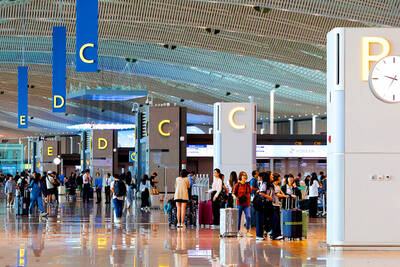
South Korea has adjusted its electronic arrival card system to no longer list Taiwan as a part of China, a move that the Ministry of Foreign Affairs said would help facilitate exchanges between the two sides. South Korea previously listed “Taiwan” as “Taiwan (China)” in the drop-down menus of its online arrival card system, where people had to fill out where they came from and their next destination. The ministry had requested South Korea make a revision and said it would change South Korea’s name on Taiwan’s online immigration system from “Republic of Korea” to “Korea (South),” should the issue not be

Tainan, Taipei and New Taipei City recorded the highest fines nationwide for illegal accommodations in the first quarter of this year, with fines issued in the three cities each exceeding NT$7 million (US$220,639), Tourism Administration data showed. Among them, Taipei had the highest number of illegal short-term rental units, with 410. There were 3,280 legally registered hotels nationwide in the first quarter, down by 14 properties, or 0.43 percent, from a year earlier, likely indicating operators exiting the market, the agency said. However, the number of unregistered properties rose to 1,174, including 314 illegal hotels and 860 illegal short-term rental
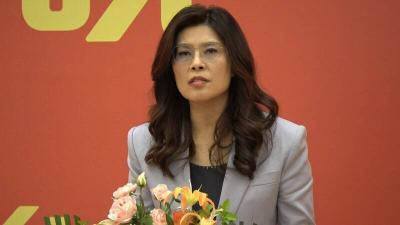
Both sides of the Taiwan Strait share a political foundation based on the “1992 consensus” and opposition to Taiwanese independence, Chinese Nationalist Party (KMT) Chairwoman Cheng Li-wun (鄭麗文) today said during her meeting with Chinese President Xi Jinping (習近平). Both sides of the Strait should plan and build institutionalized and sustainable mechanisms for dialogue and cooperation based on that foundation to make peaceful development across the Strait irreversible, she said. Peace is a shared moral value across the Strait, and both sides should move beyond political confrontation to seek institutionalized solutions to prevent war, she said. Mutually beneficial cross-strait relations are what the
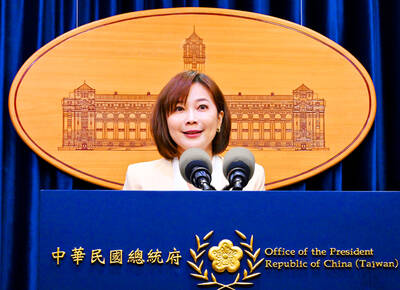
ECONOMIC COERCION: Such actions are often inconsistently applied, sometimes resumed, and sometimes just halted, the Presidential Office spokeswoman said The government backs healthy and orderly cross-strait exchanges, but such arrangements should not be made with political conditions attached and never be used as leverage for political maneuvering or partisan agendas, Presidential Office spokeswoman Karen Kuo (郭雅慧) said yesterday. Kuo made the remarks after China earlier in the day announced 10 new “incentive measures” for Taiwan, following a landmark meeting between Chinese President Xi Jinping (習近平) and Chinese Nationalist Party (KMT) Chairwoman Cheng Li-wun (鄭麗文) in Beijing on Friday. The measures, unveiled by China’s Xinhua news agency, include plans to resume individual travel by residents of Shanghai and China’s Fujian


 RSS
RSS