


The US economy that turned sluggish at the end of last year isn't doing much better now -- and may well be doing worse -- as war uncertainties and the stagnant job market make consumers and businesses more cautious. Some analysts worry about a slide back into recession.
Since the 2001 recession, the economy has tried, unsuccessfully so far, to get back to full throttle.
Optimistic analysts believe the economy in the current January-to-March quarter has grown at a below-normal annual rate of around 1.5 percent to just over 2 percent.
More pessimistic economists are suggesting growth of under a 1 percent rate, and some believe the first quarter could show the economy shrank, a step toward recession.
"I don't think anybody really wants to make significant financial commitments in view of the jobless recovery, the geopolitical situation and higher energy prices, which are eating into purchasing power," said Sung Won Sohn, chief economist at Wells Fargo.
The broadest measure of economic health -- GDP -- slowed from a decent 4 percent annual growth rate in the third quarter of last year to 1.4 percent in the final quarter, the Commerce Department reported Thursday.
That final quarterly estimate was unchanged from a month ago. GDP measures the total value of goods and services produced within the US.
While Sohn believes the economy will grow at a lackluster 2 percent rate in the first quarter, Carl Tannenbaum, chief economist at LaSalle Bank is more bearish, forecasting a 0.5 percent growth rate.
"The chance of having a negative first quarter is very real," he said.
The government will release its initial estimate of first-quarter GDP on April 25.
sluggish job market
In a second report Thursday, new claims for unemployment benefits last week fell by a seasonally adjusted 25,000 to 402,000, a two-month low, the Labor Department said. Even with the drop, claims are at a level suggesting the job market remains sluggish.
Since the end of 2001, economic growth has been jagged, with a three-month period of strength followed by a quarter of weakness.
That muddled climate -- along with concerns about the war, higher oil prices and a turbulent stock market -- has made businesses reluctant to make major financial commitments, namely capital investment and hiring. That is the biggest factor restraining the economy's recovery.
Although businesses largely have restrained spending, consumers have been the main force keeping the economy going.
cautious consumers
But recent economic reports show consumers are becoming more cautious, especially as the job market has worsened. The unemployment rate rose to 5.8 percent last month as the economy lost a whopping 308,000 jobs.
The sluggish profit environment is another reason why companies have been slow to make big hiring and capital spending commitments, economists said.
"The economy is growing at a snail's pace, and the greater concern is that it could slip into recession," said Richard Yamarone, economist with Argus Research Corp. "Even if the economy avoids a technical recession -- two consecutive quarters of negative GDP -- it will certainly feel like one."

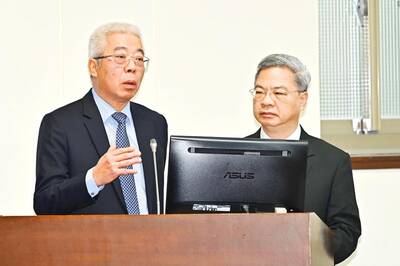
Taiwan has arranged for about 8 million barrels of crude oil, or about one-third of its monthly needs, to be shipped from the Red Sea this month to bypass the Strait of Hormuz and ease domestic supply pressures, CPC Corp, Taiwan (CPC, 台灣中油) said yesterday. The state-run oil company has worked with Middle Eastern suppliers to secure routes other than the Strait of Hormuz, through which about 20 percent of the world’s oil and liquefied natural gas typically passes, CPC chairman Fang Jeng-zen (方振仁) said at a meeting of the legislature’s Economics Committee in Taipei. Suppliers in Saudi Arabia have indicated they
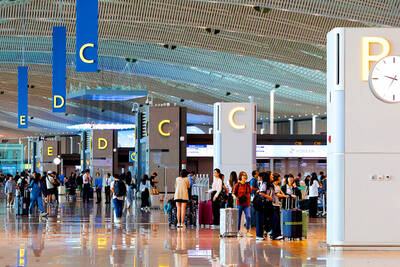
South Korea has adjusted its electronic arrival card system to no longer list Taiwan as a part of China, a move that the Ministry of Foreign Affairs said would help facilitate exchanges between the two sides. South Korea previously listed “Taiwan” as “Taiwan (China)” in the drop-down menus of its online arrival card system, where people had to fill out where they came from and their next destination. The ministry had requested South Korea make a revision and said it would change South Korea’s name on Taiwan’s online immigration system from “Republic of Korea” to “Korea (South),” should the issue not be

Tainan, Taipei and New Taipei City recorded the highest fines nationwide for illegal accommodations in the first quarter of this year, with fines issued in the three cities each exceeding NT$7 million (US$220,639), Tourism Administration data showed. Among them, Taipei had the highest number of illegal short-term rental units, with 410. There were 3,280 legally registered hotels nationwide in the first quarter, down by 14 properties, or 0.43 percent, from a year earlier, likely indicating operators exiting the market, the agency said. However, the number of unregistered properties rose to 1,174, including 314 illegal hotels and 860 illegal short-term rental

AIR ALERT: China’s reservation of airspace over the Yellow Sea and East China Sea could be an attempt to test the US’ response ahead of a Trump-Xi meeting, the NSB head said China’s attempts to infiltrate Taiwan are systematic, planned and targeted, with activity shifting from recruiting mid-level military officers to rank-and-file enlisted personnel, National Security Bureau (NSB) Director-General Tsai Ming-yen (蔡明彥) said yesterday. The Chinese Communist Party’s (CCP) integrates national security, intelligence operations and “united front” efforts into a dense network to conduct intelligence gathering and espionage in Taiwan, Tsai said at a meeting of the legislature’s Foreign Affairs and National Defense Committee. It uses specific networks to screen targets through exchange activities and recruiting local collaborators to establish intelligence-gathering organizations, he said. China is also shifting who it targets to lower-ranking military personnel,


 RSS
RSS