

US Vice President J.D. Vance on Thursday rejected the use of the word “war” to describe the US fighting with Iran, as he steered clear of predicting that the six-month-old conflict would be over by November’s midterm elections, in which Republicans are trying to hang on to their narrow majorities in Congress.
“I wouldn’t call it a war,” Vance said after being asked during a White House press briefing about whether the fighting could end before voters cast their ballots in the Nov. 3 congressional elections. “Right now, there is no active shooting.”
Vance’s assertion came even as Iran on Thursday fired at US Gulf ally Kuwait as it continued to retaliate for rounds of US strikes on Iran earlier in the week.
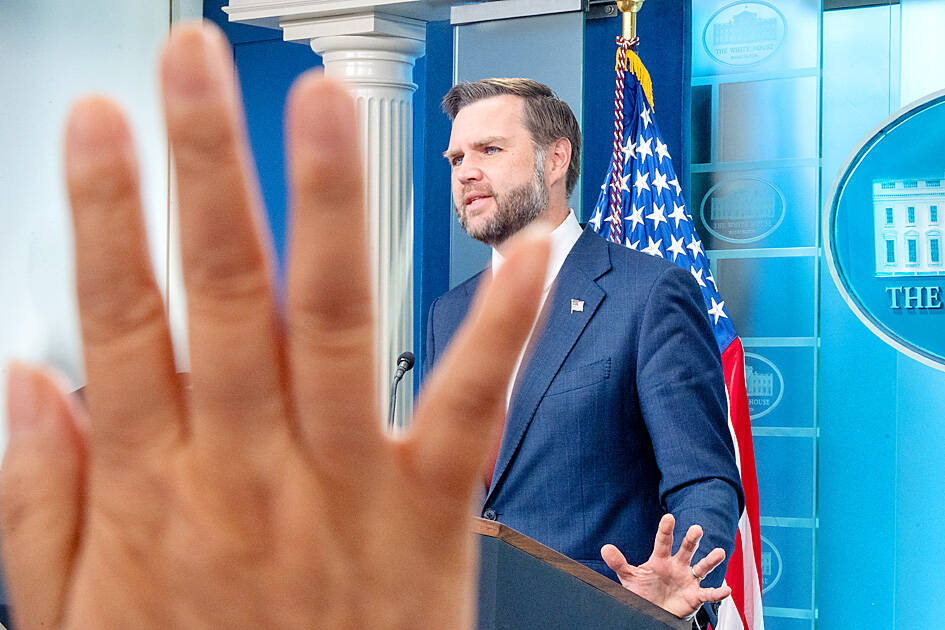
Photo: AP
The vice president said the US had a “responsibility” to carry out this week’s strikes because Iran continued to target commercial vessels passing through the Strait of Hormuz.
Vance’s attempt to minimize the intensity of the fighting illuminates the difficult task at hand for US President Donald Trump and his administration as he tries to persuade American voters to keep Republicans in control of Congress, even as the unpopular conflict — one the White House said at its outset would last a matter of weeks — has driven up gas prices and left consumers grappling with higher inflation.
Vance said he did not want to set “artificial timelines.”
“But when you ask: ‘When will this end?’ You’re asking me a question like: ‘When will the Iranians stop shooting at ships?’” Vance said. “I think the reality is, I don’t know the answer to that question. You would have to ask the Iranians.”
The administration in July faced scrutiny after it reclassified four fallen soldiers as well as dozens of wounded troops in its Defense Casualty Analysis System, which Pentagon officials have repeatedly pointed to as the definitive source on the numbers of dead and wounded from the conflict. Those killed or wounded in fighting after a brief ceasefire between the US and Iran fell apart were classified in a new category called “Overseas Operations” after initially being tallied in the totals from the war.
Meanwhile, a US campaign to throttle Iran’s economy by blockading its oil exports and stopping sanctions evasion is growing increasingly difficult to withstand, three senior Iranian sources said.
Washington has in recent weeks sought to ratchet up the economic pressure on Tehran, in an effort to extract concessions in any future negotiation that six months of conflict have so far failed to secure.
Although Iran’s clerical rulers managed to bypass sanctions for decades, the latest US moves have left them in a far more sensitive position, with few remaining channels to secure foreign currency or buy goods, the sources said.
In particular, the effort to stop Iran accessing international financing networks in other countries it has long used to keep its economy functioning poses a real and urgent threat, the sources said.
Any sign the economic campaign might break a months-long deadlock in the conflict would likely cheer US planners, though Iran has also warned it could respond to the pressure with military escalation, raising the stakes at a key moment.
While more energy is flowing to international markets through the Strait of Hormuz despite Iranian efforts to continue disrupting the seaway, the US blockade of Iranian oil exports has entirely cut off Tehran’s main source of revenue.
Adding to Iran’s problems, the economy was already deep in crisis before the conflict, with a cratering currency and spiralling inflation, while months of bombing have run up a massive bill to rebuild damaged industry and infrastructure.
Iran’s financial squeeze is itself biting into its efforts to get around the sanctions regime, leaving less cash to pay the high premiums required to skirt sanctions illicitly, the sources said.
The rial has fallen to record lows over recent days and one senior source said Iran only has another two months’ supply of gasoline, which has to be imported despite domestic oil production because of limited refining capacity.
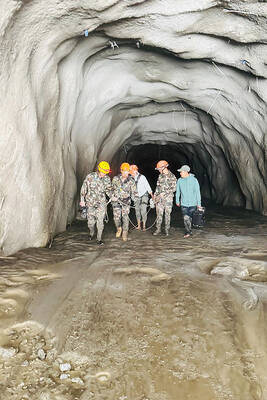
DEATH TOLL 903: More than 900 workers are believe to be trapped in the tunnels and underground areas of several hydropower projects after flash floods in Nepal-Tibet Rescue teams were working to reach more than 900 people thought to be trapped in the tunnels and underground areas of half a dozen hydropower projects in Nepal following the devastating flash floods, ?the National Disaster Risk Reduction and Management Authority said yesterday. The death toll from the unprecedented deluge of ice, rock, mud ?and debris that crashed through valleys of Nepal on Wednesday last week has risen to 903 people, with 16 more dead reported on the Tibet side of the border. More than 4,000 are missing in Nepal, with another 500 in Tibet. Hundreds of bodies, many unidentified, have been

Ontario Premier Doug Ford on Saturday answered US President Donald Trump’s “Lake America” decree with a billboard-sized message on the Canadian shoreline — “Lake Ontario. Now and Always” — as Canadian leaders met Trump’s move with ridicule rather than outrage. Wearing a Canada national soccer team jersey, Ford unveiled the sign near Grimsby and posed for photographs. The message is repeated in French. The display followed Trump’s executive order directing US federal agencies to call Lake Ontario “Lake America.” After months of tariffs, threats to make Canada the 51st US state and personal attacks on its leaders, the reaction in
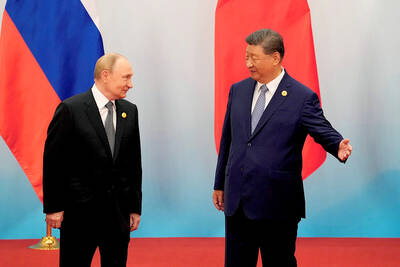
PLENARY SESSION: Although the SCO says it is ‘not an alliance directed against other states,’ Putin and Xi have repeatedly made anti-Western speeches during its summits Russian President Vladimir Putin and Chinese President Xi Jinping (習近平) are expected tomorrow in Kyrgyzstan for a two-day summit, also attended by Iran’s and India’s leaders, of a regional bloc seeking to be a counter-influence to the West. Around a dozen heads of states would head to the Kyrgyz capital, Bishkek, to mark 25 years of the Shanghai Cooperation Group (SCO). The group brings together Russia, China, India, Pakistan, Iran, four Central Asian countries and Moscow-allied Belarus. Putin and Xi have previously used SCO summits to promote their vision of a multipolar world and present a united front against the
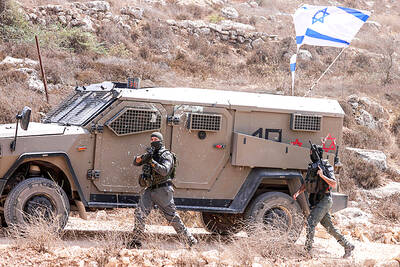
Dozens of Israeli settlers on Saturday attacked the Palestinian village of Qusra in the northern occupied West Bank after nearly three weeks of tension in the area, drawing rare condemnation from Israeli Prime Minister Benjamin Netanyahu. Earlier this month, a group of settlers began blocking supplies from entering Palestinian houses on the outskirts of the village near Nablus, trapping residents inside and drawing unusually strong criticism from the US ambassador. Weeks later, Israeli forces continue to operate in the area while settlers still roam the surrounding hills. On Saturday, Qusra residents and dozens of settlers had descended on the village,


 RSS
RSS