


Three Iranian men pressed rehydrated raisins at an artisan distillery just outside New York, thousands of miles from their war-struck homeland. They were carefully producing aragh sagi, a traditional spirit banned by the clerical authorities along with all alcohol following the 1979 Islamic revolution.
Despite its outlaw moonshine status, the drink is still made clandestinely and consumed inside Iran.
“Everybody’s drinking, but we just don’t want to get caught,” said Siavash Karampour, formerly a fixture on Tehran’s rock music scene and now the comanager of a bar in Brooklyn.
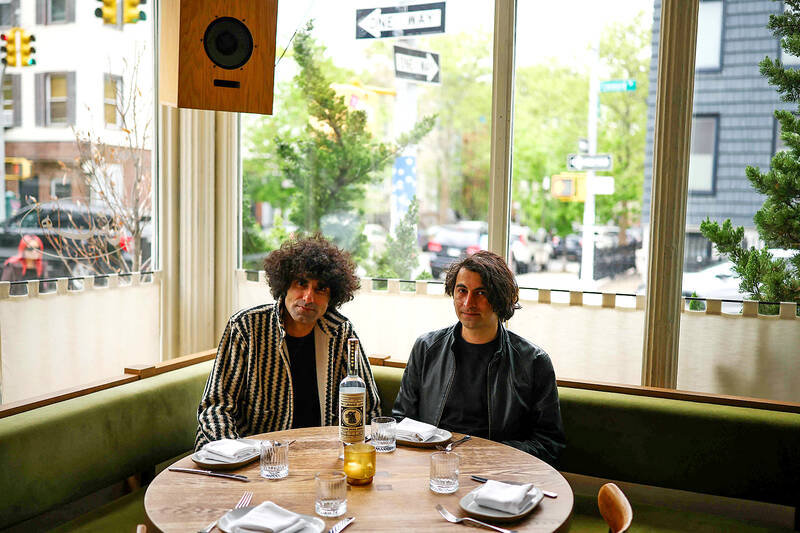
Photo: AFP
Together with three childhood friends who, like him, came to New York to rebuild their lives, they decided to brew the Iranian firewater in the US.
They said they wanted to offer others like them a taste of home and “something that has been behind the curtain.” Branded as “SAG,” their aragh sagi — like a stronger Italian grappa — is made in the still of David Nahmias, a distiller born into a Moroccan Jewish family who makes mahia, a traditional dried fig-based spirit from his homeland.
“They came to me through word of mouth. Their alcohol uses the same process as arak, which you find in Syria or Lebanon — but without the anise. It wasn’t complicated for me... And I liked them,” Nahmias said.
The creators of SAG settled in New York several years ago, and remain active in the local Iranian diaspora and all have day jobs.
They were the first to bring aragh sagi to the US market, although a handful of brands exist in Europe.
The company’s output of 7,000 bottles a year — sold for US$50 a pop in about 30 liquor stores and available in as many bars — remains modest.
However, bars have latched on to their creation as a way to promote new cocktails.
“We just started this back in the day, as a hobby... we kind of want to grow organically,” SAG cofounder Sasan Oskouei said.
The entrepreneurs see their venture as a project that goes beyond a simple spirit, representing an emotional and cultural gesture.
“So many Iranian artists and filmmakers have highlighted some parts of Iran that haven’t been seen before, and in making this, we are kind of doing the same thing,” Karampour said.
Since they launched SAG two years ago, many artistic projects have emerged to complement the brand, with parties in New York and DJ sets performed by Iranian musicians. Their connection to Iran through friends and family is constant, making the ongoing conflict between Tehran and their host nation all the more painful.
“It’s really tough to be seeing all these images, and then you still have to go to work and live your daily life... You technically live in two countries,” Karampour said.
With the help of large handheld food mixers, they carefully grind the mixture of dried Californian grapes and water, which they then ferment before distilling it in a large still imported from Germany.
SAG cofounder Amir Imani said New York was the ideal place to establish their brand, a city that is very diverse and tolerant, and where their business is not written off as “exotic.”
“Being in New York helps, because I can see people are not supportive of what is happening in this administration — either the war or like US Immigration and Customs Enforcement and all of that,” Imani said. “So I feel privileged that I’m here surrounded by people who think the same.”
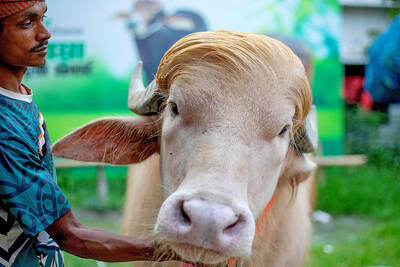
Crowds in Bangladesh are flocking to snap photographs with an unlikely social media star — an albino buffalo with flowing blond hair nicknamed “Donald Trump” that is due to be sacrificed within days. Owner Zia Uddin Mridha, 38, said his brother named the 700kg bull over its flowing helmet of hair resembling the signature look of the US president. “My younger brother picked this name because of the buffalo’s extraordinary hair,” he said at his farm in Narayanganj, just outside the capital, Dhaka. Mridha said that a constant stream of curious visitors — social media fans, onlookers and children — have come throughout

It began as a satirical online project. Now millions of young people in India are flocking to it as an outlet for their frustration. A parody political party called the Cockroach Janta Party, with the insect as its symbol, has exploded across India’s social media by turning absurdist humor into protest. Memes and short videos mocking corruption, joblessness and political dysfunction have flooded social media sites, where millions of users are embracing the cockroach — known for its ability to survive harsh conditions — as a tongue-in-cheek symbol of endurance. The online movement’s rise has been unusually rapid. The Cockroach Janta Party (CJP)
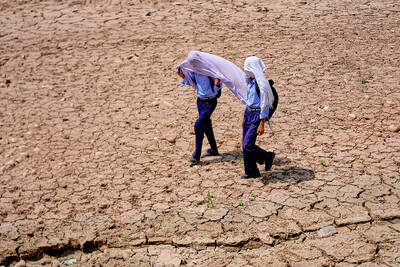
HOTTER: While Indians are accustomed to summer heat, climate change has caused northwestern India to warm faster than other parts of the country, an academic said Roads and markets have emptied during afternoons and some farmers have switched to nighttime work to avoid scorching temperatures as a heat wave grips large parts of India. The India Meteorological Department forecast maximum temperatures for yesterday of about 45°C in the capital, New Delhi, where authorities have opened temporary “cooling zones” to help people cope. The weather department warned that conditions would likely persist across several northern regions in the coming days, with temperatures staying well above seasonal averages. Authorities urged people to stay indoors during the hottest hours and take precautions against heat-related illnesses. India declares a heat wave whenever maximum temperatures
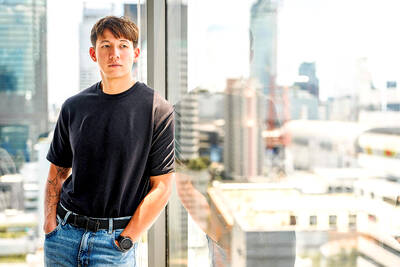
SPEAKING OUT: After Siranudh Scott’s allegations surfaced, celebrities and public figures took to social media to share their own experiences of sexual misconduct and abuse A high-profile alleged sexual abuse case within a wealthy Thai beer brewing family has prompted a wave of painful accounts from survivors of unconnected abuse in the conservative nation. Siranudh Scott, a member of the billionaire Thai family that founded the ubiquitous Singha beer brand, posted an emotional video this month accusing his elder brother Sunit of repeatedly abusing him when he was a teenager. Sunit, who is in his 30s, later denied the allegations in a video posted online, but Singha parent Boonrawd dismissed him from his executive role with the company on Tuesday last week. “I felt I needed to speak


 RSS
RSS