


Ukraine and Russia are to implement a ceasefire for the Orthodox Easter holidays, the warring nations’ leaders said on Thursday, announcing a rare 32-hour halt in fighting.
The four-year war previously saw limited and short truces, but Moscow and Kyiv were quick to trade accusations of violations. With talks on ending the four-year-old conflict derailed by the Middle East conflict, Ukrainian President Volodymyr Zelenskiy this week said that he had made a holiday truce proposal through the US.
The Kremlin in a statement late on Thursday said that “a ceasefire is declared from 16:00 on April 11 until the end of the day on 12 April 2026” by Russian President Vladimir Putin, “in connection with the approaching Orthodox feast of Easter.”
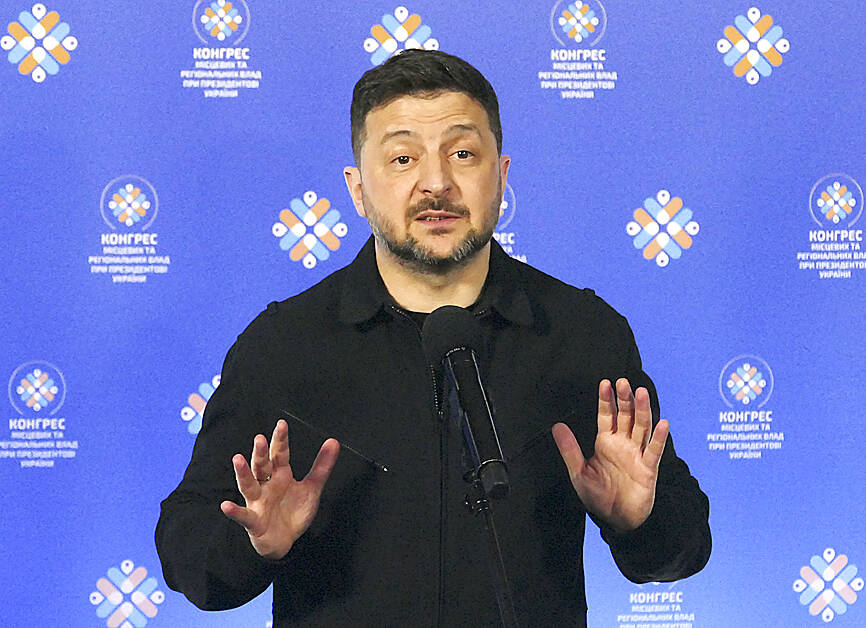
Photo: EPA
The Kremlin’s statement made no mention of Kyiv’s initial proposal.
Zelenskiy responded that “Ukraine has repeatedly stated that we are prepared to take reciprocal measures. We proposed a ceasefire this year during the Easter holidays and will act accordingly.”
“People need an Easter free from threats and real progress toward peace, and Russia has a chance to avoid returning to hostilities after Easter,” he added.
Putin has instructed the General Staff “to cease combat operations in all directions for this period,” the Kremlin said, adding that troops were ready to “counter any possible provocations by the enemy.”
“We assume that the Ukrainian side will follow the example of the Russian Federation,” it said.
The war has cost hundreds of thousands of lives and forced millions to flee their homes, making it Europe’s deadliest conflict since World War II.
Over the past few years, fighting on the front has come to a near standstill. Russia has made small territorial gains at a high cost, but Kyiv has managed to push back in the southeast and Russian advances have been slowing since late 2025, according to the US-based Institute for the Study of War (ISW).
Apart from Ukrainian counterattacks, analysts attributed the slowdown to Russia being banned from using SpaceX’s Starlink satellites and Moscow’s own efforts to block the Telegram messaging app. The satellites and messaging app were widely used by troops for communications, especially for coordinating drone attacks that have come to dominate the war.
However, the situation is unfavorable for Ukraine in the Donetsk region, toward the cities of Kramatorsk and Sloviansk, the ISW said.
Moscow wants Ukraine to pull troops from both cities without a fight as part of any peace accord.
Ukraine has stepped up assaults on Russian energy targets, especially oil-exporting ports after prices spiked on the back of the Middle East conflict.
Several rounds of US-led talks have failed to bring the warring sides closer to an agreement and US attention is now focused on Iran. The negotiations have become deadlocked, with Moscow demanding territorial and political concessions that Zelenskiy has ruled out as tantamount to capitulation.
Moscow occupies just over 19 percent of Ukraine, most of which was seized during the first weeks of the conflict.
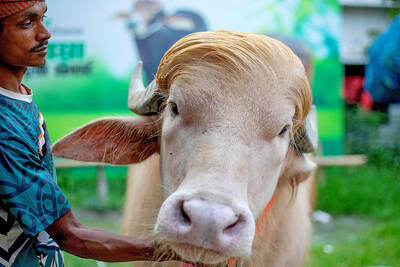
Crowds in Bangladesh are flocking to snap photographs with an unlikely social media star — an albino buffalo with flowing blond hair nicknamed “Donald Trump” that is due to be sacrificed within days. Owner Zia Uddin Mridha, 38, said his brother named the 700kg bull over its flowing helmet of hair resembling the signature look of the US president. “My younger brother picked this name because of the buffalo’s extraordinary hair,” he said at his farm in Narayanganj, just outside the capital, Dhaka. Mridha said that a constant stream of curious visitors — social media fans, onlookers and children — have come throughout

It began as a satirical online project. Now millions of young people in India are flocking to it as an outlet for their frustration. A parody political party called the Cockroach Janta Party, with the insect as its symbol, has exploded across India’s social media by turning absurdist humor into protest. Memes and short videos mocking corruption, joblessness and political dysfunction have flooded social media sites, where millions of users are embracing the cockroach — known for its ability to survive harsh conditions — as a tongue-in-cheek symbol of endurance. The online movement’s rise has been unusually rapid. The Cockroach Janta Party (CJP)
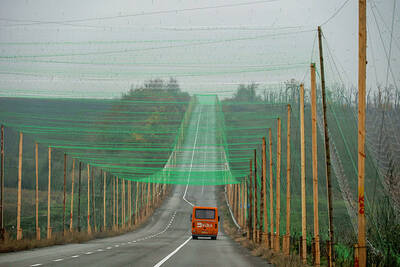
BIGGER ROLE: Beijing has said it maintains an impartial stance on the war in Ukraine, but by training Russian troops, China is far more involved than previously known China’s armed forces secretly trained about 200 Russian military personnel in China late last year, and some have since returned to fight in Ukraine, according to three European intelligence agencies and documents seen by Reuters. While China and Russia have held a number of joint military exercises since Moscow’s full-scale invasion of Ukraine in 2022, Beijing has repeatedly said that it is neutral in the conflict and presents itself as a peace mediator. The covert training sessions, which predominantly focused on the use of drones, were outlined in a dual-language Russian-Chinese agreement signed by senior Russian and Chinese officers in Beijing on
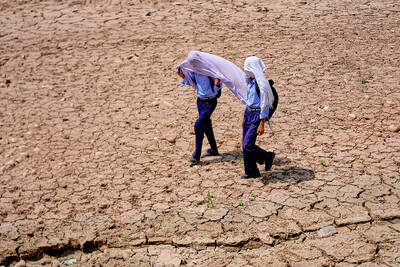
HOTTER: While Indians are accustomed to summer heat, climate change has caused northwestern India to warm faster than other parts of the country, an academic said Roads and markets have emptied during afternoons and some farmers have switched to nighttime work to avoid scorching temperatures as a heat wave grips large parts of India. The India Meteorological Department forecast maximum temperatures for yesterday of about 45°C in the capital, New Delhi, where authorities have opened temporary “cooling zones” to help people cope. The weather department warned that conditions would likely persist across several northern regions in the coming days, with temperatures staying well above seasonal averages. Authorities urged people to stay indoors during the hottest hours and take precautions against heat-related illnesses. India declares a heat wave whenever maximum temperatures


 RSS
RSS