


Australia is investigating Facebook, TikTok and YouTube for possible breaches of the nation’s under-16 social media ban, accusing the tech companies yesterday of “failing to obey” the world-leading laws.
Australia in December last year banned people younger than 16 from a raft of the world’s most popular social media sites, citing the need to protect young minds from “predatory algorithms” filled with sex and violence.
Three months since the landmark laws came into effect, Australia’s online safety watchdog found a “substantial proportion of Australian children” were still scrolling banned platforms.
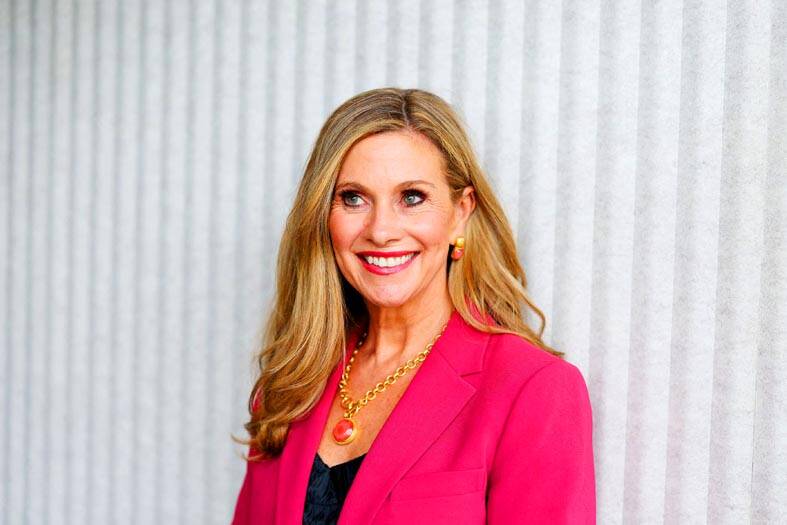
Photo: Reuters
“Australia’s world-leading social media laws are not failing, but big tech is failing to obey the laws,” Australian Minister for Communications Anika Wells told reporters. “Australia will not let the social media giants take us for mugs.”
Australia’s eSafety Commission flagged “significant concerns” about Facebook, Instagram, Snapchat, TikTok and YouTube.
“None of this is impossible. None of this is even difficult for big tech, who are innovative billion-dollar companies,” Wells said. “If these companies want to do business in Australia, they must obey Australian laws.”
Australia is to decide any punishments by the middle of this year. Tech companies face fines of up to US$33.9 million under the laws.
More than 5 million accounts belonging to underage Australian users have been removed since the laws came into effect, the eSafety Commission said.
A growing body of research suggests too much time online is taking a toll on the well-being of teenagers. Australia’s ban has been hailed as a godsend for parents sick of seeing children glued to their phones. It has also drawn interest across the globe — with Malaysia, France, New Zealand and Indonesia among the nations now eyeing similar measures.
Although social media companies have pledged to abide by the laws, they have warned that the measures could instead push teenagers into dark, unregulated corners of the Internet.
Meta, the parent company of Facebook and Instagram, said accurately proving users’ ages had been “a challenge for the whole industry.”
It said that it would “keep investing in enforcement to detect and remove under-16 accounts.”
Image-sharing platform Snapchat said that it was “fully committed to implementing reasonable steps under the legislation,” and had so far locked 450,000 accounts.
TikTok said it had no comment, while inquiries to YouTube did not receive a reply.
Social media companies bear the sole responsibility for checking that Australia-based users are 16 or older. They must prove they have taken “reasonable steps” to weed out young teenagers, although it remains unclear how this would be interpreted by the government. Some platforms have said they would use artificial intelligence tools to estimate ages based on photographs, while users could also choose to prove their age by uploading a government ID.
Online discussion site Reddit has filed a legal challenge against Australia’s ban, which it described as “legally erroneous.”
The US-based company said that there were serious privacy concerns associated with platforms verifying age, with the collection of personal data creating a risk of leaks or hacks. Reddit’s challenge is yet to be heard in the Australian High Court.

Four contenders are squaring up to succeed Antonio Guterres as secretary-general of the UN, which faces unprecedented global instability, wars and its own crushing budget crisis. Chile’s Michelle Bachelet, Argentina’s Rafael Grossi, Costa Rica’s Rebeca Grynspan and Senegal’s Macky Sall are each to face grillings by 193 member states and non-governmental organizations for three hours today and tomorrow. It is only the second time the UN has held a public question-and-answer, a format created in 2016 to boost transparency. Ultimately the five permanent members of the UN’s top body, the Security Council, hold the power, wielding vetoes over who leads the

A humanoid robot that won a half-marathon race for robots in Beijing on Sunday ran faster than the human world record in a show of China’s technological leaps. The winner from Honor, a Chinese smartphone maker, completed the 21km race in 50 minutes and 26 seconds, said a WeChat post by the Beijing Economic-Technological Development Area, also known as Beijing E-Town, where the race began. That was faster than the human world record holder, Ugandan Jacob Kiplimo, who finished the same distance in about 57 minutes in March at the Lisbon road race. The performance by the robot marked a significant step forward

An earthquake registering a preliminary magnitude of 7.7 off northern Japan on Monday prompted a short-lived tsunami alert and the advisory of a higher risk of a possible mega-quake for coastal areas there. The Cabinet Office and the Japan Meteorological Agency said there was a 1% chance for a mega-quake, compared to a 0.1% chance during normal times, in the next week or so following the powerful quake near the Chishima and Japan trenches. Officials said the advisory was not a quake prediction but urged residents in 182 towns along the northeastern coasts to raise their preparedness while continuing their daily lives. Prime
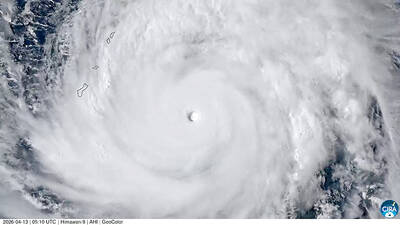
HAZARDOUS CONDITION: The typhoon’s sheer size, with winds extending 443km from its center, slowed down the ability of responders to help communities, an official said The US Coast Guard was searching for six people after losing contact with their disabled boat off the coast of Guam following Typhoon Sinlaku. The crew of the 44m dry cargo vessel, the US-registered Mariana, on Wednesday notified the coast guard that the boat had lost its starboard engine and needed assistance, Petty Officer 3rd Class Avery Tibbets said yesterday. The coast guard set up a one-hour communication schedule with the vessel, but lost contact on Thursday. A Coast Guard HC-130 Hercules aircraft was launched to search for the six people on board, but it had to return to Guam because of


 RSS
RSS