


A majority of Japanese people oppose sending warships to the Middle East in response to the war in Iran, according to two polls conducted over the weekend amid continued US pressure on allies to help secure the Strait of Hormuz.
In a Yomiuri Shimbun survey, 67 percent voiced opposition to sending the Japan Self-Defense Forces to the region, while an All-Nippon News poll showed 52 percent against their deployment.
The polls also showed that approval ratings for Japanese Prime Minister Sanae Takaichi’s Cabinet remain elevated, at 71 percent and 65.2 percent respectively, with a comfortable majority positively evaluating the outcome of Takaichi’s Thursday talks with US President Donald Trump.

Photo: AFP
Takaichi avoided a showdown with Trump over Japan’s support for securing the strait, but the president continued to pressure Japan to do its part. Most of Tokyo’s oil imports depend on the waterway, which has been effectively blocked.
The prime minister said she explained to Trump that while Japan is willing to contribute to the efforts, there are limits to what it can do due to legal constraints. Still, Japanese Minister of Foreign Affairs Toshimitsu Motegi said on Sunday the weekend that the sending of minesweepers after a ceasefire could be considered.
The polls suggest that a majority of the public is reluctant to support military involvement in the war. Under Japan’s pacifist constitution, the nation renounces war, but retains the right to defend itself if its existence is threatened. So far, the Japanese government has said that the war in Iran does not constitute such a case.
“Japan’s minesweeping technology is the best in the world,” Motegi said, when asked about sending minesweepers to the Middle East on Fuji Television. “We could consider that if there’s a ceasefire and mines are causing an obstruction.”
Asked about Motegi’s remarks, Japanese Chief Cabinet Secretary Minoru Kihara yesterday said that Tokyo currently has no specific measures in mind.
He also said that Japan did not make any specific commitments at the leaders’ summit regarding efforts to help ensure the safety of maritime navigation in the region.
“Japan will maintain communication with the relevant countries, carefully assess the current situation and consider the necessary measures,” Kihara said at a regular press briefing.
Japan has sent minesweepers to the Middle East before. Its first overseas military deployment since World War II was the dispatch of six minesweeper ships to the Persian Gulf in April 1991.
That took place more than a month after the US wrapped up its Desert Storm operations that concluded the Gulf War.
Motegi added that Japan is not considering unilateral negotiations with Iran to secure passage for its vessels through the strait, following a report that Tehran is prepared to grant the access.
He said about 45 Japan-linked vessels remain affected in the strait, a critical artery for global energy supplies.
The government will take responsibility for their safety, he added.
The comments come after Kyodo News reported on Saturday that Iranian Minister of Foreign Affairs Abbas Araghchi said that Tehran is ready to allow Japan-related ships to transit the waterway.
Motegi said the issue of whether Japan would receive special treatment did not come up in a recent call.

PHISHING: The con might appear convincing, as the scam e-mails can coincide with genuine messages from Apple saying you have run out of storage For a while you have been getting messages from Apple saying “your iCloud storage is full.” They say you have exceeded your storage plan, so documents are no longer being backed up, and photos you take are not being uploaded. You have been resisting Apple’s efforts to get you to pay a minimum of £0.99 (US$1.33) a month for more storage, but it seems that you cannot keep putting off the inevitable: You have received an e-mail which says your iCloud account has been blocked, and your photos and videos would be deleted very soon. To keep them you need
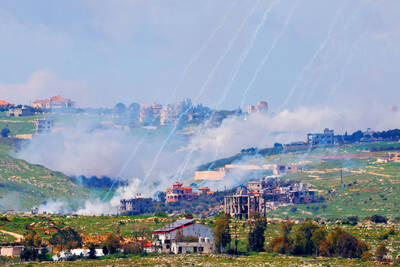
The Israeli military has demolished entire villages as part of its invasion of south Lebanon, rigging homes with explosives and razing them to the ground in massive remote detonations. The Guardian reviewed three videos posted by the Israeli military and on social media, which showed Israel carrying out mass detonations in the villages of Taybeh, Naqoura and Deir Seryan along the Israel-Lebanon border. Lebanese media has reported more mass detonations in other border villages, but satellite imagery was not readily available to verify these claims. The demolitions came after Israeli Minister of Defense Israel Katz called for the destruction of

A US YouTuber who caused outrage for filming himself kissing a statue commemorating Korean wartime sex slaves has been sentenced to six months in prison, a court in Seoul said yesterday. Johnny Somali, 25, gained notoriety several years ago for recording himself doing a series of provocative stunts in South Korea and Japan, and streaming them on platforms such as YouTube and Twitch. South Korean authorities indicted Somali — whose real name is Ramsey Khalid Ismael — in 2024 on public order violations and obstruction of business, and banned him from leaving the country. “The court has sentenced him to six months in
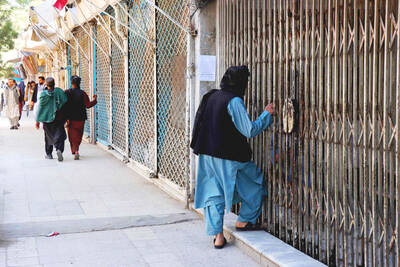
The death toll from a shooting in western Afghanistan rose to 11 on Saturday, after gunmen targeted civilians at a picnic spot in Herat, the provincial authority said. Bullet marks were visible on a wall of the Sayed Mohammad Agha Shia shrine, while bloodstains marked a blanket abandoned at the scene. “Eleven people have been recorded dead and eight others wounded from Friday’s incident, with the condition of two of the wounded reported as critical,” Herat’s information office said in a statement. The update raises a toll of seven killed provided on Friday by the Afghan Ministry of Interior Affairs


 RSS
RSS