


Croatia is resuming mandatory military training after nearly two decades, with the initial recruits joined by far more volunteers than officials were expecting.?
Beginning this week, 800 Croats are to fan out across three sites, where they will learn a range of combat skills, from shooting an assault rifle, to Krav Maga defense and operating drones. About half of them are volunteers, the other half were drafted.
Authorities aim for most men born in 2007 — about 20,000 Croats — to be trained in batches by the end of this year, with subsequent generations called up after that.
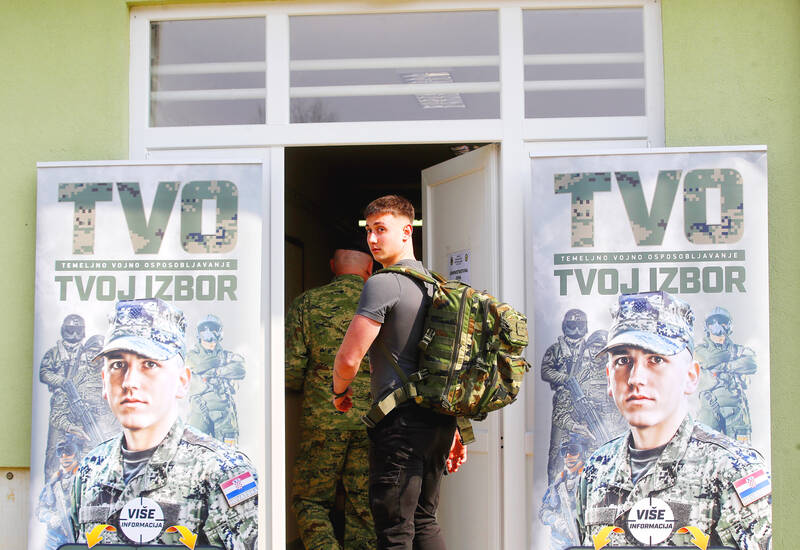
Photo: EPA
As Russia’s war with Ukraine grinds into a fifth year, countries around Europe are boosting their defenses, increasing military spending and introducing military service programs, with Germany pledging to build Europe’s strongest conventional army.
Croatia — a country of 3.9 million people — is the first in the volatile western Balkan region to introduce compulsory basic army training, and is to be joined by neighboring Serbia later this year.
“We are positively surprised with the excellent results of the draft and high number of volunteers,” Croatian Minister of Defense Ivan Anusic said. “Our goal is not to send our young people to the front or into a war, but to equip them with useful skills and teach them how to react in a crisis situation.”
In October, Croatian Prime Minister Andrej Plenkovic discussed the two-month training program in parliament, telling lawmakers that Europe was “trying to respond to changed security circumstances, and this is part of our answer.”
Although Croatia has a professional volunteer army and is a member of NATO, the idea was met with widespread skepticism.
That is largely because while Russia feels far away in this part of Europe, scars from the wars in the 1990s that destroyed former Yugoslavia run deep:
Thousands of men mobilized to defend Croatia after it declared independence were killed in fighting, along with civilians.
The country’s biggest opposition party — the Social Democrats — was among those that argued the program should be mostly voluntary.
Training should be “conscription light, or training for those who are most motivated and most prepared,” party leader Sinisa Hajdas Doncic said.
Its final shape is the result of compromise.
Along with room and board, recruits are to each receive 1,100 euros (US$1,280) a month. Draftees also get priority for public sector jobs. Most women, who can volunteer, but will not be called up, will not benefit from this perk, nor will conscientious objectors, who will instead be allowed to join a civilian service.
Students can defer service until they finish their education, but must enter it before they reach 29 years old. A total of 82 women are among the current batch of volunteers.
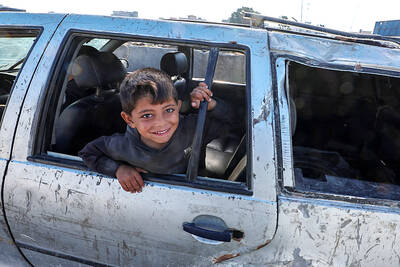
Gaza is rapidly running out of its limited fuel supply and stocks of food staples might become tight, officials said, after Israel blocked the entry of fuel and goods into the war-shattered territory, citing fighting with Iran. The Israeli military closed all Gaza border crossings on Saturday after announcing airstrikes on Iran carried out jointly with the US. Israeli authorities late on Monday night said that they would reopen the Kerem Shalom crossing from Israel to Gaza yesterday, for “gradual entry of humanitarian aid” into the strip, without saying how much. Israeli authorities previously said the crossings could not be operated safely during
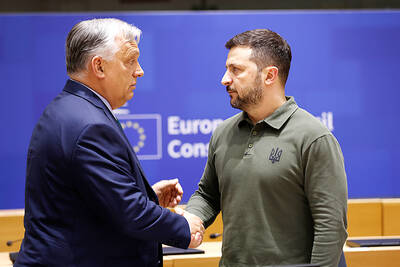
Hungarian authorities temporarily detained seven Ukrainian citizens and seized two armored cars carrying tens of millions of euros in cash across Hungary on suspicion of money laundering, officials said on Friday. The Ukrainians were released on Friday, following their detention on Thursday, but Hungarian officials held onto the cash, prompting Ukraine to accuse Hungary’s Russia-friendly government of illegally seizing the money. “We will not tolerate this state banditism,” Ukrainian Minister of Foreign Affairs Andrii Sybiha said. The seven detained Ukrainians were employees of the Ukrainian state-owned Oschadbank, who were traveling in the two armored cars that were carrying the money between Austria and
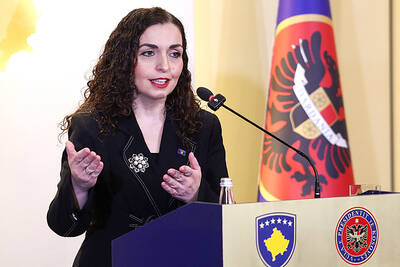
Kosovar President Vjosa Osmani on Friday after dissolving the Kosovar parliament said a snap election should be held as soon as possible to avoid another prolonged political crisis in the Balkan country at a time of global turmoil. Osmani said it is important for Kosovo to wrap up the upcoming election process and form functional institutions for political stability as the war rages in the Middle East. “Precisely because the geopolitical situation is that complex, it is important to finish this electoral process which is coming up,” she said. “It is very hard now to imagine what will happen next.” Kosovo, which declared

MORE BANS: Australia last year required sites to remove accounts held by under-16s, with a few countries pushing for similar action at an EU level and India considering its own ban Indonesia on Friday said it would ban social media access for children under 16, citing threats from online pornography, cyberbullying, online fraud and Internet addiction. “Accounts belonging to children under 16 on high-risk platforms will start to be deactivated, beginning with YouTube, TikTok, Facebook, Instagram, Threads, X, Bigo Live and Roblox,” Indonesian Minister of Communications and Digital Meutya Hafid said. “The government is stepping in so that parents no longer have to fight alone against the giants of the algorithm. Implementation will begin on March 28, 2026,” she said. The social media ban would be introduced in stages “until all platforms fulfill their


 RSS
RSS