


As dengue surges globally, an Indian vaccine candidate has entered the final stage of testing, raising hopes for one of the world’s first single-dose shots against the deadly mosquito-borne disease.
Dengue, which causes severe flu-like symptoms and debilitating body aches, has exploded globally, fueled by rising temperatures and densely populated cities.
The WHO said that almost half of the world’s population is now at risk, with 100 million to 400 million infections every year. India alone has recorded more than 1 million cases and at least 1,500 deaths since 2021.
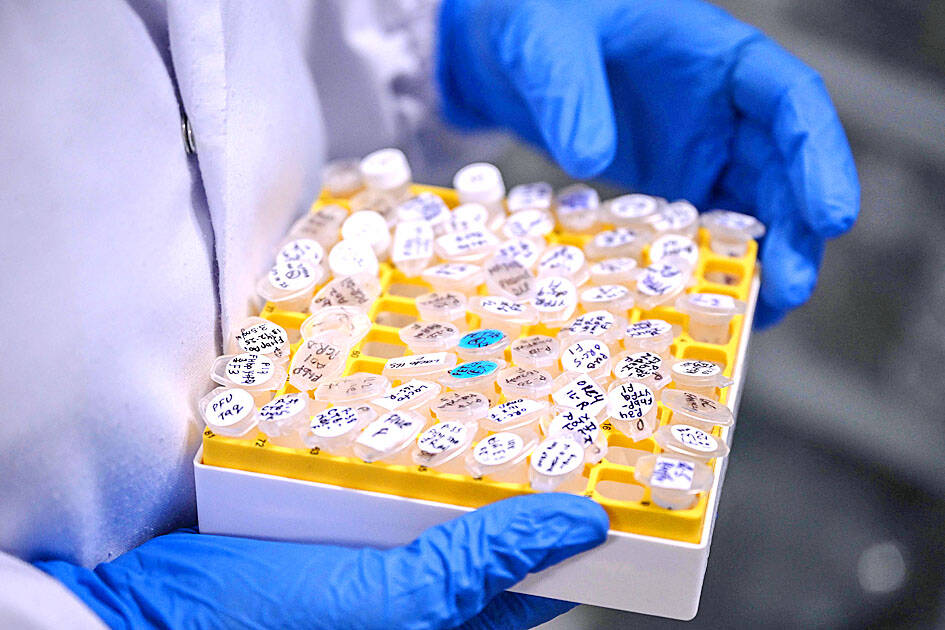
Photo: AFP
Hoping to stem the global epidemic, Panacea Biotec has begun the final and third phase of trials for its vaccine, DengiAll, which it has been pursuing for nearly 15 years. More than 10,000 volunteers across the country are enrolled in the study, overseen by the Indian Council of Medical Research, with the vaccine on track for rollout as early as next year if the trial results are favorable.
“We will try to get this vaccine out there as soon as possible,” Panacea chief scientific officer Syed Khalid Ali said.
Monsoon outbreaks regularly push Indian hospitals to their limits, crowding urban wards and leaving rural regions grappling with late diagnoses and poor access to care.
Higher temperatures and changing rainfall patterns create ideal conditions for Aedes mosquitoes — the vectors of dengue — to reproduce and spread the virus.
Children are particularly vulnerable to the more severe form, called dengue hemorrhagic fever, as they are more likely to suffer low platelet counts and shock.
Participants in the phase three trials, which started in 2024, were randomly assigned to receive either the vaccine or a placebo, with the results expected later this year.
Vaccines against all four dengue serotypes have long posed a scientific challenge. Immunity to one strain does not protect against others, and secondary infections could be more severe. Most existing candidates require multiple doses.
If approved, DengiAll would become one of the world’s first single-dose dengue vaccines, following Brazil’s approval of a similar shot last year. It would also be the first such vaccine available in India, where no dengue shot is licensed for public use.
Inside the Panacea’s research labs, doctor Priyanka Priyadarsiny, head of biological research and development, said vaccine development involves several steps, from proof-of-concept studies to regulatory checks.
“We are extremely cautious about purity, safety and adverse effects,” she said. “Only after meeting regulatory specifications can a product be considered safe for public use.”
The WHO recommends only one dengue vaccine, Qdenga, produced by Japan’s Takeda for children aged six to 16 in high-transmission settings. Qdenga, which requires two doses administered three months apart, is not available in India.
Ali said DengiAll could be given to people aged one to 60 and is expected to offer long-term protection.
In India, final approval would come from the Drugs Controller General of India, while WHO prequalification would be required for large-scale international use.
Experts said a successful Indian vaccine could be key to affordability and mass rollout in lower-income countries.
Virologist and Oxford University fellow Shahid Jameel — who is not connected with the trial — warned that dengue incidence could rise by 50 percent to 75 percent by 2050 given climate change trends.
Still, he cautioned that only phase three results would determine whether a candidate meets the criteria for a safe and effective dengue vaccine.
“Phase III testing and follow-up are needed to show if the above conditions are met,” he said. “Only then can we have a useful dengue vaccine. It is still early days, but there is hope for the future.”
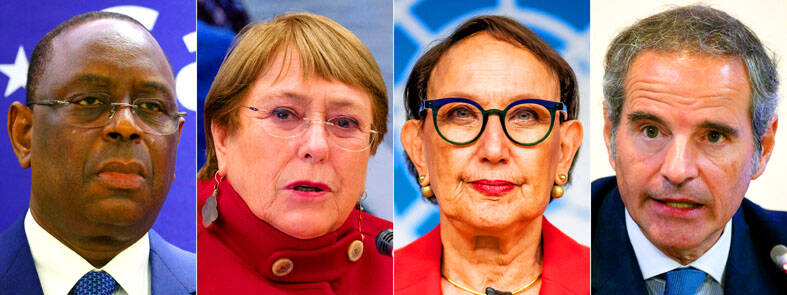
Four contenders are squaring up to succeed Antonio Guterres as secretary-general of the UN, which faces unprecedented global instability, wars and its own crushing budget crisis. Chile’s Michelle Bachelet, Argentina’s Rafael Grossi, Costa Rica’s Rebeca Grynspan and Senegal’s Macky Sall are each to face grillings by 193 member states and non-governmental organizations for three hours today and tomorrow. It is only the second time the UN has held a public question-and-answer, a format created in 2016 to boost transparency. Ultimately the five permanent members of the UN’s top body, the Security Council, hold the power, wielding vetoes over who leads the
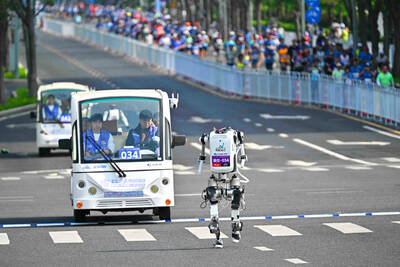
A humanoid robot that won a half-marathon race for robots in Beijing on Sunday ran faster than the human world record in a show of China’s technological leaps. The winner from Honor, a Chinese smartphone maker, completed the 21km race in 50 minutes and 26 seconds, said a WeChat post by the Beijing Economic-Technological Development Area, also known as Beijing E-Town, where the race began. That was faster than the human world record holder, Ugandan Jacob Kiplimo, who finished the same distance in about 57 minutes in March at the Lisbon road race. The performance by the robot marked a significant step forward

An earthquake registering a preliminary magnitude of 7.7 off northern Japan on Monday prompted a short-lived tsunami alert and the advisory of a higher risk of a possible mega-quake for coastal areas there. The Cabinet Office and the Japan Meteorological Agency said there was a 1% chance for a mega-quake, compared to a 0.1% chance during normal times, in the next week or so following the powerful quake near the Chishima and Japan trenches. Officials said the advisory was not a quake prediction but urged residents in 182 towns along the northeastern coasts to raise their preparedness while continuing their daily lives. Prime
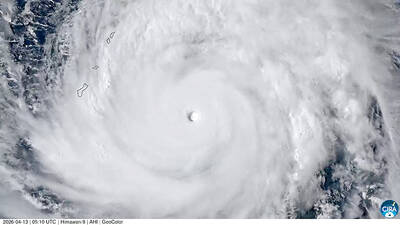
HAZARDOUS CONDITION: The typhoon’s sheer size, with winds extending 443km from its center, slowed down the ability of responders to help communities, an official said The US Coast Guard was searching for six people after losing contact with their disabled boat off the coast of Guam following Typhoon Sinlaku. The crew of the 44m dry cargo vessel, the US-registered Mariana, on Wednesday notified the coast guard that the boat had lost its starboard engine and needed assistance, Petty Officer 3rd Class Avery Tibbets said yesterday. The coast guard set up a one-hour communication schedule with the vessel, but lost contact on Thursday. A Coast Guard HC-130 Hercules aircraft was launched to search for the six people on board, but it had to return to Guam because of


 RSS
RSS