


Wealthy Americans are dominating applications for New Zealand’s “golden visa,” driven by a love for the country’s natural beauty and entrepreneurial spirit, as well a desire to escape US President Donald Trump’s policies.
New rules for the Active Investor Plus visa came into effect in April last year, lowering investment thresholds, removing English-language requirements and cutting the amount of time applicants must spend in the country to establish residency from three years to three weeks. Successful applicants can only purchase homes in New Zealand worth more than US$5 million.
Immigration New Zealand said the new scheme offering residency to wealthy foreigners has attracted 573 applications, representing 1,833 people. Before the changes, the visa attracted 116 applications over two-and-a-half years.
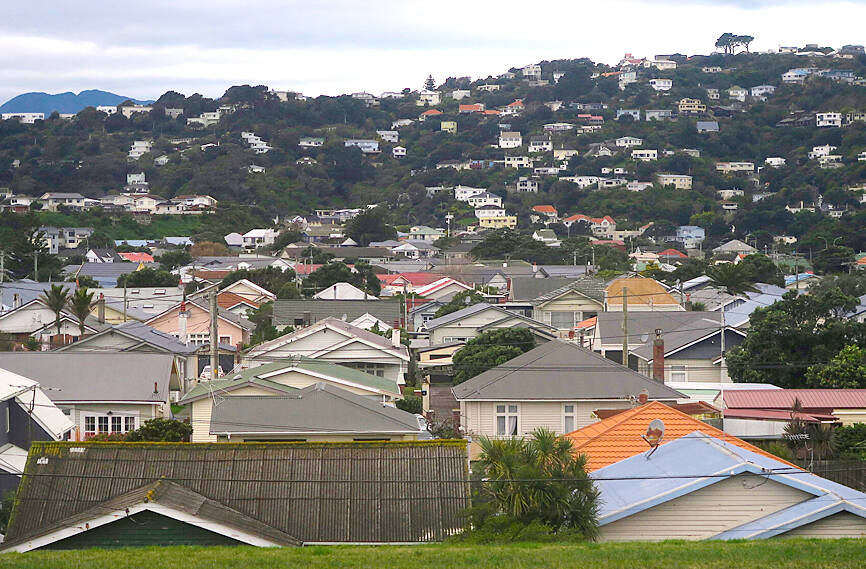
Photo: Reuters
The most recent government data showed that investors from the US made up nearly 40 percent of applicants, followed by China and Hong Kong. Since August last year, the number of applications from China more than doubled, from 45 to 95.
The remaining top 10 countries in order included Germany, Taiwan, Singapore, Vietnam, Japan and South Korea tied, and the UK.
There are two categories of “golden visa” in New Zealand. Most have applied under the “growth” category, which requires a minimum NZ$5 million (US$3 million) investment over three years. A smaller group applied under the “balanced” category, which sets a minimum investment of US$10 million over five years. The previous scheme required an investment of US$15 million.
Courtney and Jim Andelman, a couple from California who run a venture capital firm, were, alongside their twin daughters, the 100th family to be granted a visa.
The visa provided an opportunity for the family to spend more time in New Zealand — a country Courtney Andelman fell in love with during a backpacking trip 30 years ago, and a chance to “give back” to the community, she said.
The visa was also good for business, she added.
“This is not just about fun and games and having a chance to live in one of the most amazing countries on the planet — this is also a really smart investment scheme. It’s smart for us,” she said.
New Zealand was an “underserved” market with “incredible entrepreneurial habits, history and technologies,” she said.
The family has invested in venture funds and is also eyeing up companies for direct investment. They are particularly interested in New Zealand’s “deep-tech” industry, including artificial intelligence, robotics and biotechnologies.
The couple have decided not to buy a home in New Zealand, in part because the US$5 million price tag is too hefty, and because they do not want to add strain to the housing market. Meanwhile, they would split their time between New Zealand and Santa Barbara, where they live.
“We feel a real responsibility to participating, not just in one country, but in both countries,” Courtney Andelman.
Robbie Paul, the chief executive of Auckland-based venture capital firm Icehouse Ventures, has worked with more than 30 people who have applied for a golden visa. He helps applicants fulfill their visa requirements by assisting with their investments in New Zealand.
Many of the Americans Paul has worked with have said the visa provides an opportunity to escape the Trump administration.
“I’ll put it this way, never in my time in New Zealand, did I have an applicant reference [former US presidents Joe] Biden or [Barack] Obama ... and then, absolutely, a lot of references to people’s feelings towards MAGA and Trump,” he said.
New Zealand had become an appealing option for those investors because it is English-speaking, political stable, beautiful and “very connected to the world,” Paul said.
It is not the first time New Zealand has attracted the interest of Trump-weary Americans and other wealthy foreigners seeking to make New Zealand their “bolthole” at a time of societal division.
After Trump’s first election victory in 2016, visits to the country’s immigration Web site soared almost 2,500 percent. After the US Supreme Court ruled there was no constitutional right to abortion — upending the landmark Roe v Wade ruling — visits to New Zealand’s immigration site quadrupled to 77,000. After Trump’s 2024 election win, there was a surge of interest from the US in New Zealand’s property market.
Billionaires acquiring residency or citizenship in New Zealand have been subject to controversy in the past. After Peter Thiel, the billionaire cofounder of PayPal, was granted citizenship in 2017 despite spending only 12 days in the country, then-New Zealand prime minister Jacinda Ardern tightened the rules on investment visas.
Ardern also banned foreign home ownership in 2018, because of concern that foreign buyers were driving up prices during a housing crisis.
The government last year announced that while the ban largely remains, holders of a “golden visa” would be able to buy homes valued at more than US$5 million.
At the same time wealthy investors are flocking to the golden visa, New Zealand citizens have been leaving the country in record numbers in the past few years, due to a weak economy, high living costs and high unemployment.
However, the most recent migration statistics released this month show signs of improvement, with 66,300 citizens departing last year compared with 67,200 in 2024.
The Active Investor Plus visa scheme has generated US$3.39 billion investment in New Zealand, Immigration NZ said.
New Zealand Minister of Immigration Erica Stanford said the new visa settings are helping to open up investment in New Zealand.
“International investment is critical for lifting productivity, supporting jobs, and helping New Zealand businesses to expand,” she said in a statement.

School bullies in Singapore are to face caning under new guidelines, but the education minister on Tuesday said it would be meted out only as a last resort with strict safeguards. Human rights groups regularly criticize Singapore for the use of corporal punishment, which remains part of the school and criminal justice systems, but authorities have defended it as a deterrent to crime and serious misconduct. Caning was discussed in the parliament after legislators asked how it would be used in relation to bullying in schools. The debate followed stricter guidelines on serious student misconduct, including bullying, unveiled by the Singaporean Ministry of
‘GROSS NEGLIGENCE?’ Despite a spleen typically being significantly smaller than a liver, the surgeon said he believed Bryan’s spleen was ‘double the size of what is normal’ A Florida surgeon who is facing criminal charges after allegedly removing a patient’s liver instead of his spleen has said he is “forever traumatized” by that person’s death. In a deposition from November last year that was recently obtained by NBC, 44-year-old Thomas Shaknovsky described the death of 70-year-old William Bryan as an “incredibly unfortunate event that I regret deeply.” Bryan died after the botched surgery; and last month, a grand jury in Tallahassee indicted Shaknovsky on a charge of manslaughter. “I’m forever traumatized by it and hurt by it,” Shaknovsky added, also saying that wrong-site surgeries can happen “during

A MESSAGE: Japan’s participation in the Balikatan drills is a clear deterrence signal to China not to attack Taiwan while the US is busy in the Middle East, an analyst said The Japan Self-Defense Forces yesterday fired a Type 88 anti-ship missile during a joint maritime exercise with US, Australian and Philippine forces, hitting a decommissioned Philippine Navy ship in waters facing the disputed South China Sea, in drills that underscore Tokyo’s rising willingness to project military power on China’s doorstep. The drill took place as Manila and Tokyo began talks on a potential defense equipment transfer, made possible by Japan’s decision to scrap restrictions on military exports. The discussions include the possible early transfer of Abukuma-class destroyers and TC-90 aircraft to the Philippines, Japanese Minister of Defense Shinjiro Koizumi said. Philippine Secretary of

A South Korean judge who last week more than doubled former South Korean first lady Kim Keon-hee’s prison sentence was found dead yesterday, police said. Shin Jong-o was found unconscious at about 1am at the Seoul High Court building, an investigator at the Seocho District Police Station in Seoul said. Shin was taken to a hospital and pronounced dead, he said. “There is no sign of foul play in the death,” the investigator added. Local media reported that Shin had left a suicide note, but the investigator said there was none. On Tuesday last week, Shin presided over 53-year-old Kim’s appeal trial, finding her guilty


 RSS
RSS