


Rodrigo Paz, a pro-business conservative, on Saturday took office as Bolivia’s president, ending nearly 20 years of socialist rule and inheriting acute economic woes.
Paz, the 58-year-old son of a former president, drew applause at the swearing-in ceremony at the Bolivian seat of congress while a torrential downpour fell outside.
“God, family and country: yes, I take the oath of office,” said Paz, who won a run-off election last month.

Photo: Bloomberg
In his inauguration speech, he said Bolivia would now be different and open to the world after two decades of leftist rule that many here blame for the country’s economic ills.
Under former Bolivian president Evo Morales, in office from 2006 to 2019, Bolivia took a sharp turn to the left, nationalizing energy resources, breaking ties with Washington, and making alliances with China and Russia, as well as fellow leftists in Cuba, Venezuela and elsewhere in Latin America.
In one of his first official acts, Paz restored ambassador-level diplomatic relations with the US after a 17-year break — a rift that came after Morales accused the former US envoy of supporting a right-wing conspiracy.
“Never again an isolated Bolivia, bound by failed ideologies, or a Bolivia with its back turned to the world,” Paz said during a ceremony attended by delegations from more than 70 countries and prominent local figures.
Paz would have to address Bolivia’s worst economic crisis in 40 years, with year-on-year inflation at more than 20 percent and a chronic shortage of fuel and US dollars. Long queues for motorists seeking to fill their tanks have become a way of life.
The outgoing government of former Bolivian president Luis Arce exhausted almost all of Bolivia’s hard currency reserves to prop up gasoline and diesel subsidies.
On the campaign trail, the Christian Democrat Paz promised a “capitalism for all” approach to economic reform, with decentralization, lower taxes and fiscal discipline mixed with continued social spending.
He also promised to maintain social programs while stabilizing the economy, but economists have said the two things are not possible at the same time.

An American scientist convicted of lying to US authorities about payments from China while he was at Harvard University has rebuilt his research lab in Shenzhen, China, to pursue technology the Chinese government has identified as a national priority: embedding electronics into the human brain. Charles Lieber, 67, is among the world’s leading researchers in brain-computer interfaces. The technology has shown promise in treating conditions such as amyotrophic lateral sclerosis and restoring movement in paralyzed people. It also has potential military applications: Scientists at the Chinese People’s Liberation Army have investigated brain interfaces as a way to engineer super soldiers by boosting
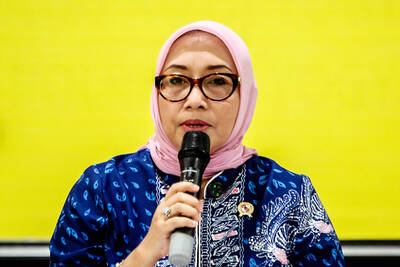
Indonesian police have arrested 13 people after shocking images of alleged abuse against small children at a daycare center went viral, sparking outrage across the nation, officials said on Monday. Police on Friday last week raided Little Aresha, a daycare center in Yogyakarta on Java island, following a report from a former employee. CCTV footage circulating on social media showed children, most younger than two, lying on the floor wearing only diapers, their hands and feet bound with rags. The police have confirmed that the footage is authentic. Police said they also found 20 children crammed into a room just 3m by 3m. “So
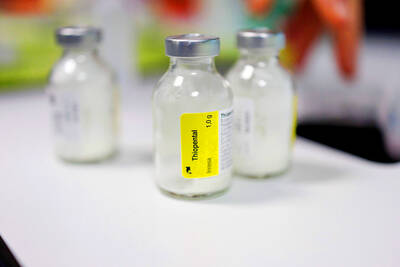
A grieving mother has ended her life at a clinic in Switzerland four years after the death of her only child. Wendy Duffy, 56, a physically healthy woman, died at the Pegasos clinic in Basel after struggling to cope with the death of her 23-year-old son, Marcus. The former care worker, from the West Midlands, England, had previously attempted to take her own life. The case comes as assisted dying would not become law in England and Wales after proposed legislation, branded “hopelessly flawed” by opponents, ran out of time. Ruedi Habegger, the founder of Pegasos, described Duffy’s death as
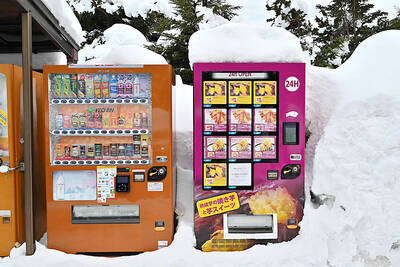
From post offices and parks to stations and even the summit of Mount Fuji, Japan’s vending machines are ubiquitous, but with the rapid pace of inflation cooling demand for their drinks, operators are being forced to rethink the business. Last month beverage giant DyDo Group Holdings announced it would remove about 20,000 vending machines — about 7 percent of their stock nationwide — by January next year, to “reconstruct a profitable network.” Pokka Sapporo Food & Beverage, based in Nagoya, also said last month it would sell its 40,000-machine operation to Osaka-based Lifedrink Co. “The strength of the vending machine


 RSS
RSS