


Recent raids on one of Myanmar’s most notorious Internet scam hubs sparked a recruitment rush as fleeing workers scrambled to enlist at nearby fraud factories, experts and insiders said.
Online scam hubs have mushroomed across Southeast Asia, draining unsuspecting victims of billions of US dollars annually in elaborate romance and crypto cons.
Many workers are trafficked into the Internet sweatshops, analysts say, but others go willingly to secure attractive salaries.

Photo: AFP
Raids late last month roiled Myanmar fraud factory KK Park, sending more than 1,500 people fleeing over the border to Thailand — but many stayed behind to pursue new opportunities in the black market.
A Chinese voluntary scam worker said that a few hundred people who left KK Park arrived at his own compound 3km away on Oct. 23 — lured by monthly salaries of up to US$1,400. The man spoke on condition of anonymity for security reasons, but shared with reporters a live location on a messaging app showing he was in Myanmar, near the Thai border.
“Some people will be picked up by unscrupulous bosses, while others will be picked up by good companies,” he said. “It all depends on your luck.”
Jason Tower, senior expert at the Global Initiative against Transnational Organized Crime, said many KK Park scammers have simply been “re-recruited” by other gangs.
“There are some people looking for a new location to engage in scamming from,” he said. “They might see this as a job.”
Webs of anonymous crypto payments and chronic underreporting by embarrassed victims make losses to scam centers hard to quantify. However, victims in Southeast and East Asia alone were conned out of up to US$37 billion in 2023, according to a UN report, which said global losses were likely “much larger.”
War-torn Myanmar’s loosely governed border regions have proven particularly fertile ground for the hubs.
The embattled junta — which seized power in a 2021 coup — has been accused of turning a blind eye to scam centers enriching its domestic militia allies. However, it has also faced pressure to curb the black market by its international backer China, galled at hubs recruiting as well as targeting its citizens.
Last month, the junta said its troops had occupied about 200 buildings in KK Park and found more than 2,000 scammers.
Analysts say the raid was likely limited and heavily choreographed — designed to vent pressure to take action without too badly denting profits. But it nonetheless prompted an exodus of 1,500 people from 28 nationalities into Thailand, Thai provincial authorities said.
Among them were about 500 Indian nationals and about 200 Filipinos.
Authorities face the daunting task of discerning trafficking victims from willing scammers.
Speaking on condition of anonymity, one Filipino man described fleeing KK Park on Oct. 22 with about around 30 compatriots as a pro-junta militia arrived to aid the crackdown.
“Everyone ran outside,” he said. “This was our chance to escape.”
Grabbing what few possessions he could, the man fled the compound he says he was trafficked into and crossed by boat to western Thailand.
With one expert estimating about 20,000 people had been working in KK Park — the vast majority believed to be Chinese nationals — those who fled to Thailand likely made up less than 10 percent.
However, those who stayed behind are not necessarily willing participants.
After the KK Park exodus, the Chinese scammer at the nearby compound said that local armed groups scrambled to cash in — with unemployed scammers “sold” to other operations for up to US$70,000.
Whether they are willing workers being headhunted or human trafficking victims is unclear.
The scammer who spoke to AFP reported hearing “booms every evening” after the raids, but dismissed it as “all for show” rather than a meaningful crackdown by Burmese authorities.
And with the continuing flow of scam workers — willing or coerced — rights advocates say the problem can only be solved by targeting the Chinese bosses running the show.
“[They] must be arrested, prosecuted, and have all their assets seized,” Jay Kritiya from the Civil Society Network for Human Trafficking Victims Assistance said. “That’s the real crackdown.”
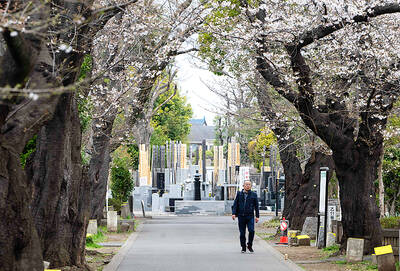
ROCKY RELATIONS: The figures on residents come as Chinese tourist numbers drop following Beijing’s warnings to avoid traveling to Japan The number of Chinese residents in Japan has continued to rise, even as ties between the two countries have become increasingly fractious, data released on Friday showed. As of the end of December last year, the number of Chinese residents had increased by 6.5 percent from the previous year to 930,428. Chinese people accounted for 22.6 percent of all foreign residents in Japan, making them by far the largest group, Japanese Ministry of Justice data showed. Beijing has criticized Tokyo in increasingly strident terms since Japanese Prime Minister Sanae Takaichi last year suggested that a military conflict around Taiwan could

A retired US colonel behind a privately financed rocket launch site in the Dominican Republic sees the project as a response to China’s dominance of the space race in Latin America. Florida-based Launch on Demand is slated to begin building a US$600 million facility in a remote region near the border with Haiti late this year. The project is designed to meet surging demand for the heavy-lift rockets needed to put clusters of satellites into orbit. It is also an answer to China’s growing presence in the region, said CEO Burton Catledge, a former commander of the US Air Force’s 45th Operations

Germany is considering Australia’s Ghost Bat robot fighter as it looks to select a combat drone to modernize its air force, German Minister of Defense Boris Pistorius said yesterday. Germany has said it wants to field hundreds of uncrewed fighter jets by 2029, and would make a decision soon as it considers a range of German, European and US projects developing so-called “collaborative combat aircraft.” Australia has said it will integrate the Ghost Bat, jointly developed by Boeing Australia and the Royal Australian Air Force, into its military after a successful weapons test last year. After inspecting the Ghost Bat in Queensland yesterday,

A pro-Iran hacking group claimed to breach FBI Director Kash Patel’s personal e-mail inbox and posted some of the contents online. The e-mails provided by the hacking group include travel details, correspondence with leasing agents in Washington and global entry, and loyalty account numbers. The e-mail address the hackers claim to have compromised has been previously tied to Patel’s personal details, and the leaked e-mails contain photos of Patel and others, in addition to correspondence with family members and colleagues. “The FBI is aware of malicious actors targeting Director Patel’s personal email information,” the agency said in a statement on


 RSS
RSS