


Botswanan President Mokgweetsi Masisi yesterday conceded defeat in Botswana’s general election, ending the ruling party’s 58 years in power.
Masisi’s concession came before final results were announced, with his Botswana Democratic Party (BDP) trailing in fourth place in the parliamentary elections.
The main opposition Umbrella for Democratic Change held a strong lead in the partial results, making its candidate, Duma Boko, the favorite to become president of the southern African country, which is one of the world’s biggest producers of mined diamonds.
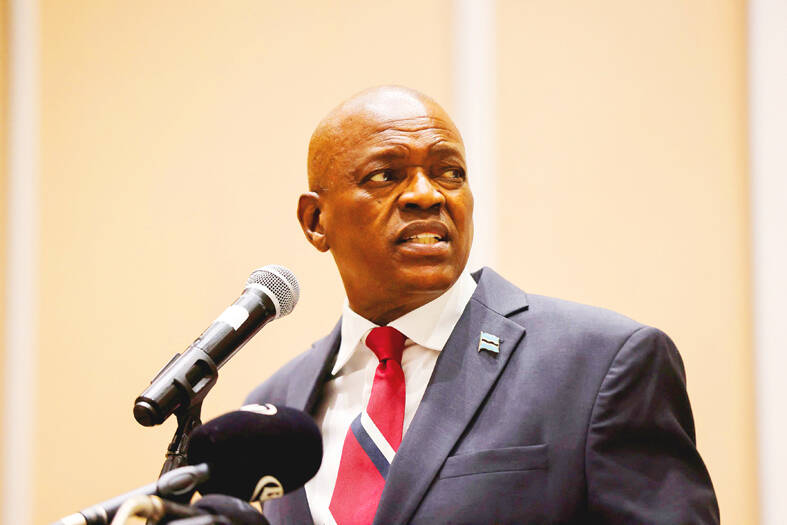
Photo: Reuters
Masisi said he had called Boko to inform him he was conceding defeat.
“I concede the election,” Masisi told an early-morning news conference two days after the election. “I am proud of our democratic processes. Although I wanted a second term, I will respectfully step aside and participate in a smooth transition process.”
“I look forward to attending the coming inauguration and cheering on my successor. He will enjoy my support,” he said.
Masisi’s BDP dominated politics in Botswana for nearly six decades, since independence from Britain in 1966. The nation of just 2.5 million people will now be governed by another party for the first time in its democratic history.
Botswana has been held up as one of Africa’s most stable democracies, with its economy largely relying on diamonds. Botswana is the world’s second-biggest producer of natural diamonds behind Russia.
However, the mood for change was evident as a downturn in the global demand for diamonds badly affected Botswana’s economy, with unemployment rising to more than 27 percent this year as the government saw a sharp decrease in revenue from diamonds.
Masisi and his party had faced criticism for not having done enough to diversify the economy.
Doko is a 54-year-old lawyer who also contested elections in 2014 and 2019.

END OF AN ERA: The vote brings the curtain down on 20 years of socialist rule, which began in 2005 when Evo Morales, an indigenous coca farmer, was elected president A center-right senator and a right-wing former president are to advance to a run-off for Bolivia’s presidency after the first round of elections on Sunday, marking the end of two decades of leftist rule, preliminary official results showed. Bolivian Senator Rodrigo Paz was the surprise front-runner, with 32.15 percent of the vote cast in an election dominated by a deep economic crisis, results published by the electoral commission showed. He was followed by former Bolivian president Jorge “Tuto” Quiroga in second with 26.87 percent, according to results based on 92 percent of votes cast. Millionaire businessman Samuel Doria Medina, who had been tipped
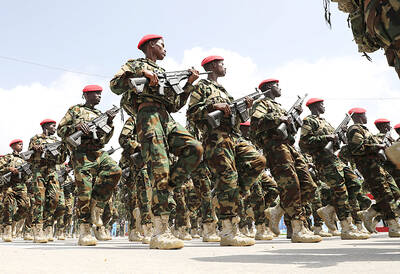
ELECTION DISTRACTION? When attention shifted away from the fight against the militants to politics, losses and setbacks in the battlefield increased, an analyst said Recent clashes in Somalia’s semi-autonomous Jubaland region are alarming experts, exposing cracks in the country’s federal system and creating an opening for militant group al-Shabaab to gain ground. Following years of conflict, Somalia is a loose federation of five semi-autonomous member states — Puntland, Jubaland, Galmudug, Hirshabelle and South West — that maintain often fractious relations with the central government in the capital, Mogadishu. However, ahead of elections next year, Somalia has sought to assert control over its member states, which security analysts said has created gaps for al-Shabaab infiltration. Last week, two Somalian soldiers were killed in clashes between pro-government forces and

Ten cheetah cubs held in captivity since birth and destined for international wildlife trade markets have been rescued in Somaliland, a breakaway region of Somalia. They were all in stable condition despite all of them having been undernourished and limping due to being tied in captivity for months, said Laurie Marker, founder of the Cheetah Conservation Fund, which is caring for the cubs. One eight-month-old cub was unable to walk after been tied up for six months, while a five-month-old was “very malnourished [a bag of bones], with sores all over her body and full of botfly maggots which are under the

BRUSHED OFF: An ambassador to Australia previously said that Beijing does not see a reason to apologize for its naval exercises and military maneuvers in international areas China set off alarm bells in New Zealand when it dispatched powerful warships on unprecedented missions in the South Pacific without explanation, military documents showed. Beijing has spent years expanding its reach in the southern Pacific Ocean, courting island nations with new hospitals, freshly paved roads and generous offers of climate aid. However, these diplomatic efforts have increasingly been accompanied by more overt displays of military power. Three Chinese warships sailed the Tasman Sea between Australia and New Zealand in February, the first time such a task group had been sighted in those waters. “We have never seen vessels with this capability


 RSS
RSS