


A group of indigenous women are hoping to stop the bulldozers at a former Montreal hospital that they believe could hold the truth about children still missing from a grisly half-century-old CIA experiment.
They have spent the past two years trying to delay the construction project by McGill University and the Quebec government.
“They took our children and had all kinds of things done to them. They were experimenting on them,” said Kahentinetha, an 85-year-old rights advocate from the Mohawk community of Kahnawake, southwest of Montreal, who goes by just one name.
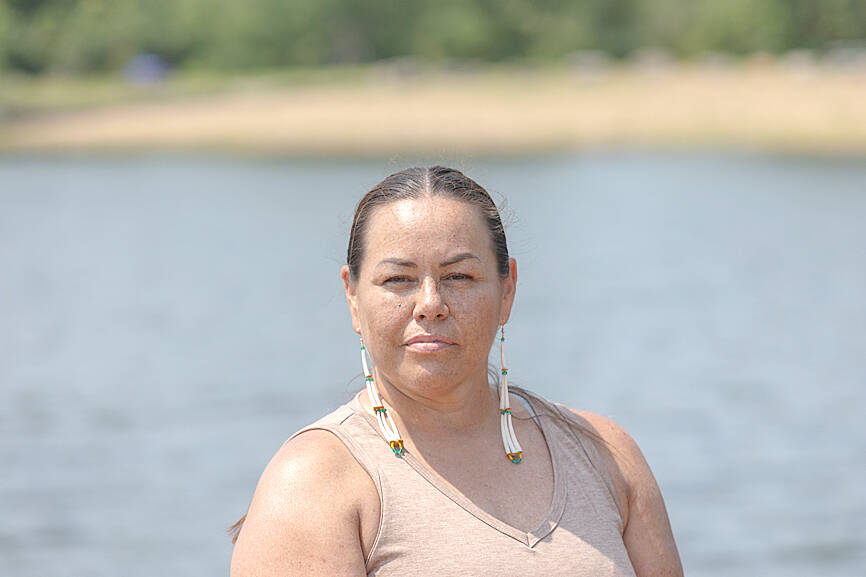
Photo: AFP
The women are relying on archives and testimonies that suggest the site contains unmarked graves of children formerly interned at the Royal Victoria Hospital and Allan Memorial Institute, a neighboring psychiatric hospital.
In the 1950s and 1960s, behind the walls of the old psychiatric institute, the US CIA funded a human experiments program called MK Ultra. During the Cold War, the program aimed to develop procedures and drugs to effectively brainwash people.
Experiments were conducted in the UK, Canada and the US, subjecting people — including indigenous children in Montreal — to electroshocks, hallucinogenic drugs and sensory deprivation.
“They wanted to erase us,” Kahentinetha said.
A leading figure in the indigenous rights movement who has traveled to the UK and the US to denounce colonialism, she called this fight “the most important of [her] life.”
“We want to know why they did this and who’s going to take the blame for it,” she said.
In the fall of 2022, the mothers obtained an injunction to suspend work on a new university campus and research center at the site — a project worth C$870 million (US$643 million).
Fellow rights advocate Kwetiio, 52, who also uses just one name, said they insisted on arguing the case themselves without lawyers, “because in our ways, no one speaks for us.”
Last summer, sniffer dogs and specialized probes were brought in to search the property’s expansive and dilapidated buildings. They identified three areas of interest for excavations.
However, McGill and the government’s Societe Quebecoise des Infrastructure say that “no human remains have been discovered.”
The Mohawk mothers accuse the university and the government infrastructure agency of breaching an agreement by selecting the archeologists who did the search and then ending their work too soon.
“They gave themselves the power to lead the investigation of crimes that were potentially committed by their own employees in the past,” said Philippe Blouin, an anthropologist working with the women.
Even though their appeal was dismissed earlier this month, they have vowed to continue their fight.
“People should know history, so that it does not repeat itself,” Kwetiio said.
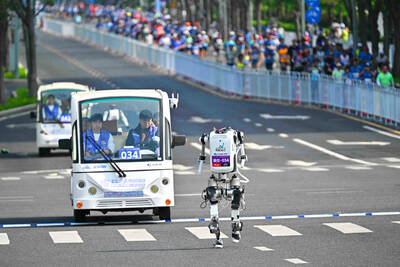
A humanoid robot that won a half-marathon race for robots in Beijing on Sunday ran faster than the human world record in a show of China’s technological leaps. The winner from Honor, a Chinese smartphone maker, completed the 21km race in 50 minutes and 26 seconds, said a WeChat post by the Beijing Economic-Technological Development Area, also known as Beijing E-Town, where the race began. That was faster than the human world record holder, Ugandan Jacob Kiplimo, who finished the same distance in about 57 minutes in March at the Lisbon road race. The performance by the robot marked a significant step forward
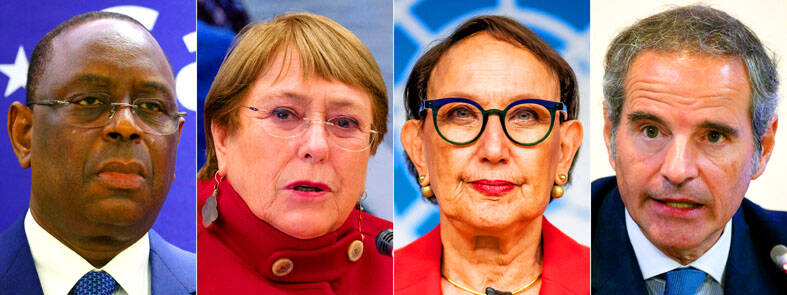
Four contenders are squaring up to succeed Antonio Guterres as secretary-general of the UN, which faces unprecedented global instability, wars and its own crushing budget crisis. Chile’s Michelle Bachelet, Argentina’s Rafael Grossi, Costa Rica’s Rebeca Grynspan and Senegal’s Macky Sall are each to face grillings by 193 member states and non-governmental organizations for three hours today and tomorrow. It is only the second time the UN has held a public question-and-answer, a format created in 2016 to boost transparency. Ultimately the five permanent members of the UN’s top body, the Security Council, hold the power, wielding vetoes over who leads the
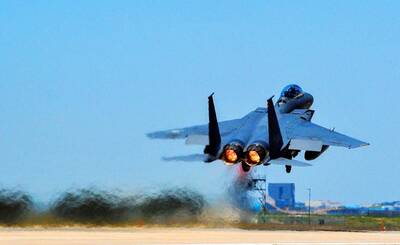
South Korea’s air force yesterday apologized for a 2021 midair collision involving two fighter jets, a day after auditors said the pilots were taking selfies and filming during the flight and held them responsible for the accident. “We sincerely apologize to the public for the concern caused by the accident that occurred in 2021,” an air force spokesman told a news conference, adding that one of the pilots involved had been suspended from flying duties, received severe disciplinary action and has since left the military. The apology followed a report released on Wednesday by the South Korean Board of Audit and Inspection,

An earthquake registering a preliminary magnitude of 7.7 off northern Japan on Monday prompted a short-lived tsunami alert and the advisory of a higher risk of a possible mega-quake for coastal areas there. The Cabinet Office and the Japan Meteorological Agency said there was a 1% chance for a mega-quake, compared to a 0.1% chance during normal times, in the next week or so following the powerful quake near the Chishima and Japan trenches. Officials said the advisory was not a quake prediction but urged residents in 182 towns along the northeastern coasts to raise their preparedness while continuing their daily lives. Prime


 RSS
RSS