


Hoang Thi Minh Hong had worried for months that she could become the next environmental advocate swept up in Vietnam’s crackdown, so she closed her non-governmental organization (NGO) and began keeping a low profile.
However, it was not enough. Last month she became the fifth environmentalist jailed for tax evasion in what they call a campaign to silence them.
Her conviction came less than a year after a group of donors including the US and EU pledged to mobilize US$15.5 billion in funding as part of a Just Energy Transition Partnership (JETP) to help Vietnam switch to clean energy faster.

Photo: AFP / Hoang Vinh Nam
The deal was hailed by US President Joe Biden as part of Vietnam’s “ambitious clean energy future.”
“Hong doesn’t deserve a single day in jail, because she’s innocent,” her husband, Hoang Vinh Nam, 54, told reporters. “She worked for the environment, for wildlife, for a better place. And now she’s been severely punished for doing that.”
Just a week before Hong’s conviction, Ngo Thi To Nhien, director of an independent energy policy think tank working on the JETP implementation, and a leading Vietnamese energy expert, was also arrested.
She was accused of appropriating documents from a state-owned power firm.
The Vietnamese government’s focus on environmental advocates appears to carry a particular message, said Jonathan London, an expert on contemporary Vietnam.
“What I think we’re seeing is a concerted effort ... to declare that all matters of public concern are to be addressed by the party and its state alone,” London said.
Environmental advocacy could pose a singular threat because it targets powerful economic interests, which in Vietnam “are always closely affiliated with state power,” he said.
The arrests began in 2021 with the detention of Dang Dinh Bach, a legal adviser and NGO worker who focused on coal issues.
He was sentenced to five years in prison on evidence that his wife, Tran Phuong Thao, said was fabricated.
“He pursued justice and he was on the side of the weak, but his work touched upon the interests of companies and authorities, and they wanted to shut his mouth,” the 29-year-old told reporters.
In January last year, authorities detained Nguy Thi Khanh, founder of Green ID, one of Vietnam’s most prominent environmental organizations.
She was an early and rare voice challenging Hanoi’s plans to increase coal power to fuel economic development. She was jailed later that year.
The 88 Project, which advocates for freedom of expression in Vietnam, found “serious irregularities” in the way criminal procedures and sentences were applied to Bach and Khanh — as well as two other jailed environmental advocates: Mai Phan Loi and Bach Hung Duong.
Bach received one of the heaviest sentences for someone convicted of tax evasion, despite the amount involved being much lower than in other cases with similar sentences, the group said.
Pham Thu Hang, a spokeswoman for the Vietnamese Ministry of Foreign Affairs, strongly rejected claims of a “politically motivated” crackdown on environmentalists, saying that each individual had contravened national law.
Khanh and Loi were both released from jail this year.
However, Bach is still in prison, has been intimidated and beaten, and is refusing to pay back the US$55,000 he is alleged to owe, his wife said.
Authorities have threatened to confiscate the apartment where she lives with their two-year-old son, she said.
One NGO worker, who declined to be named, said that several accountants in the industry had quit their jobs, fearful of Vietnam’s complex tax laws.
Nam said that Hong wrote to the tax department more than a year before her arrest and was told that CHANGE, her NGO, did not owe anything.
However, now she has to pay back US$300,000 — “more than the total income she received in the last 10 years,” he said. “It’s an injustice.”
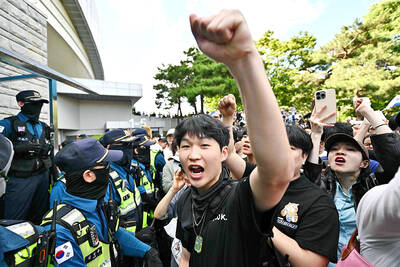
‘ABSURD MISTAKE’: The election commission said that there had been a failure to anticipate turnout after 14 polling stations ran short of ballot papers South Korean riot police yesterday cleared protesters from a Seoul polling station after a 35-hour blockade sparked by a shortage of ballot papers during local elections earlier this week. Wednesday’s election was the first nationwide vote since South Korean President Lee Jae-myung took office following the ouster of Yoon Suk-yeol over his short-lived martial law declaration. Lee’s ruling Democratic Party swept most races, but failed to flip the crucial Seoul mayoral seat. The South Korean National Election Commission apologized, blaming a failure to anticipate turnout after 14 polling stations in Seoul ran short of ballot papers. Some polling stations stayed open until 10pm to

France experienced its hottest spring on record, the French weather service said on Tuesday, after an exceptional early heat wave that also broke highs for the season in England and Wales. Meteo-France said the average nationwide temperature over March to May was 13.8°C — about 1.7°C above the norm, and surpassing records set in 2011 and 2020. “The warmest spring since records began in 1900,” it said in a bulletin. All three months were warmer than average, but the onset of an “unprecedented heatwave” late last month pushed the mercury to highs typically seen at the height of the summer. “Our country had never

A Sherpa guide was found crawling to base camp on Mount Everest a week after he went missing and was reunited with his family, who had given up hope he would return. Dawa Sherpa was last seen on Friday last week descending the mountain, but he did not reach base camp even though his client did. The pair were among the last climbers on the mountain as the climbing season came to an end and the route was dismantled. Dawa was located by a cleaning crew on Thursday morning as he was crawling down the snowy slopes around the Khumbu Icefall, just above
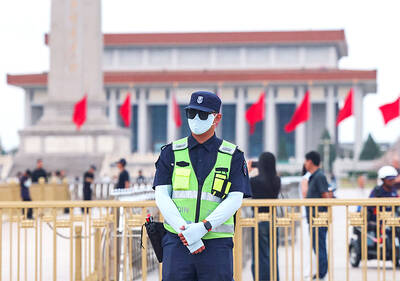
Chinese authorities are snuffing out any remembrance of the deadly 1989 military crackdown on student-led pro-democracy protests in Tiananmen Square, which happened 37 years ago yesterday, in a further tightening of a years-long campaign to erase what happened from public memory. Police told relatives of the victims they would not be allowed to visit a cemetery in Beijing on the anniversary of the crackdown, a person with knowledge of the matter said. Relatives of the victims visited the cemetery on the anniversary for more than 30 years to read memorial statements with police keeping watch, Amnesty International said. Hundreds of people,


 RSS
RSS