


Japan began releasing the second batch of treated wastewater from the Fukushima Dai-ichi nuclear power plant yesterday, an incremental step in a decades-long process that has drawn strong condemnation from China.
The discharge, a small portion of the 1.34 million tonnes of wastewater built up since a tsunami struck the facility in 2011, began at 10:18am, a spokesman for operator Tokyo Electric Power Co Holdings (TEPCO) told AFP.
While Japan has insisted the treated water poses no health risks — a view backed by the UN’s nuclear watchdog — Beijing has repeatedly criticized the release and banned all Japanese seafood imports in response.
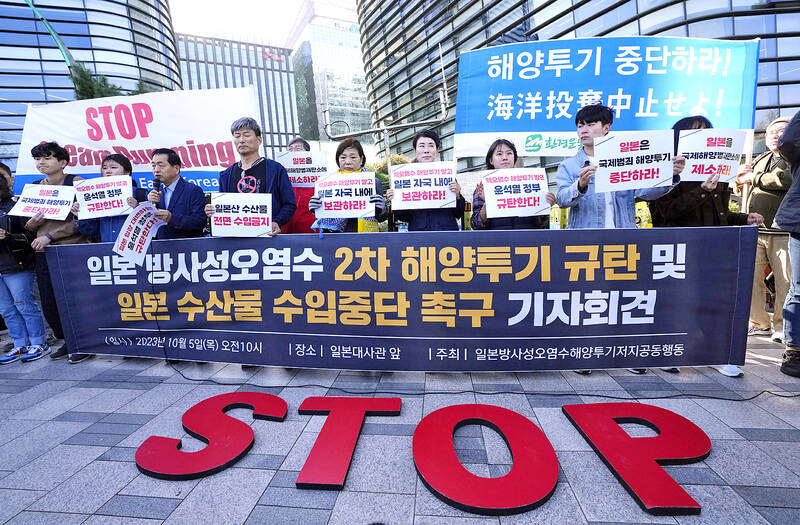
Photo: AP
TEPCO has said the wastewater has been filtered of all radioactive elements except tritium, which is within internationally recognized safe levels.
“It has been confirmed that the first release has been conducted as planned and in a safe manner,” Japanese government spokesman Hirokazu Matsuno told reporters yesterday, adding that no abnormalities had been detected.
The government would “continue to communicate, both domestically and internationally, results of monitoring data in a highly transparent manner,” Matsuno said.
Japan is also urging China to “immediately scrap import bans on Japanese food, and act based on scientific justifications,” he added.
Russia, which has frosty relations of its own with Japan, is reportedly considering following suit on the seafood ban.
Food exports from Japan to China plunged 41.2 percent in August to ¥14 billion (US$94 million), Japanese Ministry of Finance data showed.
China has accused Japan of using the ocean like a “sewer,” an assertion echoed at the UN last week by Solomon Islands Prime Minister Manasseh Sogavare, whose improving ties with Beijing have drawn alarm from traditional Western allies such as Australia.
Following August’s initial release, numerous Japanese businesses reported having trouble conducting daily operations after being flooded with angry calls from Chinese numbers.
Tokyo, meanwhile, demanded that China ensure the safety of Japanese citizens after a brick was thrown at its embassy in Beijing.
The release of wastewater is aimed at making space to eventually begin removing highly dangerous radioactive fuel and rubble from the plant’s wrecked reactors.
TEPCO would be rigorous in overseeing the second round, an official told reporters at a briefing on Wednesday, while exercising “the utmost vigilance to ensure that there is no unintentional discharge” of treated water into the sea.
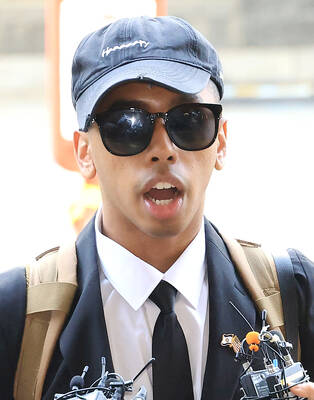
A US YouTuber who caused outrage for filming himself kissing a statue commemorating Korean wartime sex slaves has been sentenced to six months in prison, a court in Seoul said yesterday. Johnny Somali, 25, gained notoriety several years ago for recording himself doing a series of provocative stunts in South Korea and Japan, and streaming them on platforms such as YouTube and Twitch. South Korean authorities indicted Somali — whose real name is Ramsey Khalid Ismael — in 2024 on public order violations and obstruction of business, and banned him from leaving the country. “The court has sentenced him to six months in

Former Lima mayor Rafael Lopez Aliaga, a Peruvian presidential hopeful, gathered hundreds of supporters in Lima on Tuesday and gave authorities 24 hours to annul the first round of the country’s election over allegations of fraud. Lopez Aliaga is locked in a tight three-way race with two other candidates for second place in Sunday’s vote. The election runner-up wins a ticket to June’s presidential run-off against front-runner Keiko Fujimori. “I am giving them 24 hours to declare this electoral fraud null and void,” said Lopez Aliaga, surrounded by a crowd of several hundred supporters. “If it is not declared null and void tomorrow,

PAPAL RETORT: Pope Leo told reporters that he has ‘no fear, neither of the Trump administration nor speaking out loudly about the message of the Gospel’ US President Donald Trump has feuded with Pope Leo XIV over the Iran conflict — setting off an unholy row that could have serious political implications for the Republican leader back in the US. Trump has drawn barbs even from some allies over the attacks on the US-born pontiff, who has criticized the Trump administration over its immigration crackdown, the intervention in Venezuela and the Iran war. The president risks alienating the religious right in November’s crucial US midterm elections. So far the unprecedented clash between the leader of the most powerful military on Earth and the head of the world’s 1.4 billion

A 16-year-old boy has been charged with murder and aggravated sexual abuse in Florida in the death of his 18-year-old stepsister on a Carnival Cruise ship, the US Department of Justice said on Monday. Timothy Hudson was initially charged in February and subsequently indicted on March 10, but the breadth of the case was not known until a seal was lifted on Friday last week, weeks after US District Judge Beth Bloom in Miami said that he would be prosecuted as an adult at the request of the government. Anna Kepner had been traveling on the Carnival Horizon ship in November last


 RSS
RSS