


During his trial, Anatoly Berezikov repeatedly said that he was afraid of “disappearing.” Two weeks later, on June 14, he was found dead in his cell in southwest Russia.
Berezikov is the first known critic of the Ukraine conflict to have died in custody since the Kremlin launched large-scale hostilities in February last year.
The circumstances of his death are unclear, but the cause given by authorities is suicide.
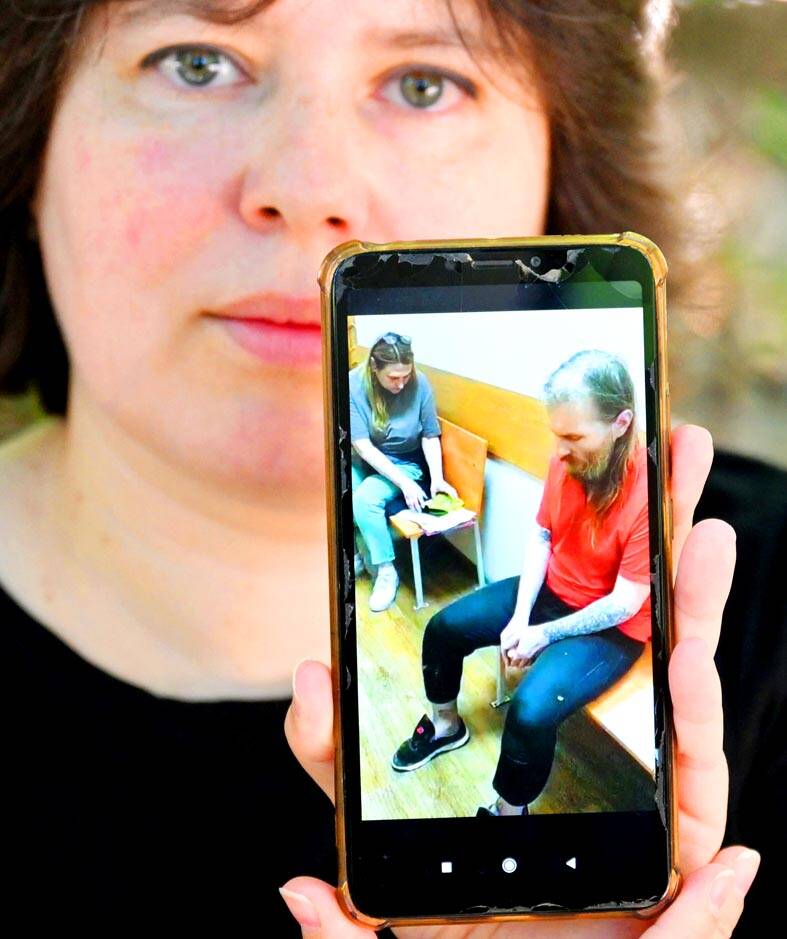
Photo: AFP
His friends and allies dismiss that account, saying they believe Berezikov was tortured in detention, possibly leading to his death.
“People can be repressed without trial or investigation. They can kidnap you, imprison you, search you, intimidate you, torture you and kill you,” said Tatiana Sporycheva, a rights advocate who supported Berezikov.
In Rostov in southern Russia, Berezikov had developed a reputation as a cheerful nonconformist, a lover of experimental music and staunch critic of Russian President Vladimir Putin.
He was one among thousands of people in Russia to have spoken out against the conflict and subsequently been threatened, fined or jailed.
Born in 1983 in the Siberian city of Biysk, Berezikov moved to Rostov in the 2010s, where he was active in the cultural underground scene.
“He worked as a tattooist and body-piercer. He made tattooing machines and sold them,” a friend told reporters on the condition of anonymity.
Berezikov’s friends and allies have also been pursued by security services.
With his talent for tinkering, Berezikov also built synthesizers for his experiments in “noise music.”
“He was a God-given technician,” said fellow musician Valentin Sokhorev, 52.
Berezikov looked everywhere for spare parts. In a 2019 photograph, he can been seen at a snow-covered flea market wearing just shorts, his chest bare. The skimpy combo was Berezikov’s usual uniform.
In the southern city of Rostov-on-Don, the 40-year-old with a beard and long blond hair rode around the city shirtless on his bike.
Berezikov was also an advocate for leading opposition figure Alexei Navalny’s anti-corruption movement.
By default, that made him an opponent of Russia’s military intervention in Ukraine.
He claimed to have put up posters from an Ukrainian campaign that offers Russian soldiers guidance on how to surrender.
Berezikov was arrested in May by police and given three short consecutive jail terms for alleged misdemeanors, mirroring a trend deployed against Kremlin critics before serious charges are brought.
In custody, Berezikov was beaten and tortured with electric shocks, his lawyers said.
Sporycheva saw him in court on May 31 and recorded a video clip of Berezikov looking exhausted.
“He had lost a lot of weight. He kept saying: ‘They want to take me away. I will disappear and no one will find me,’” she said.
Berezikov died on June 14 having hung himself in his cell, officials said.
No expert medical assessment has been made public.
Authorities have opened a probe into potential abuses that could have led to the alleged suicide.
Sokhorev, who saw himself nearly as an older brother to Berezikov, said he tried for a long time to convince the tattooist to swear off activism.
“I said to him: ‘My friend, you shouldn’t do that. If you wave your ass in front of a hornet’s nest, expect them to sting you very hard. So don’t do it,’ but he didn’t see that, he didn’t see the danger,” Sokhorev said.
“He was brave, but mad,” the musician added.
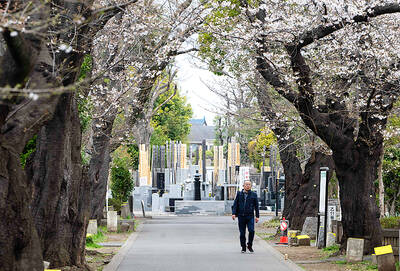
ROCKY RELATIONS: The figures on residents come as Chinese tourist numbers drop following Beijing’s warnings to avoid traveling to Japan The number of Chinese residents in Japan has continued to rise, even as ties between the two countries have become increasingly fractious, data released on Friday showed. As of the end of December last year, the number of Chinese residents had increased by 6.5 percent from the previous year to 930,428. Chinese people accounted for 22.6 percent of all foreign residents in Japan, making them by far the largest group, Japanese Ministry of Justice data showed. Beijing has criticized Tokyo in increasingly strident terms since Japanese Prime Minister Sanae Takaichi last year suggested that a military conflict around Taiwan could

A retired US colonel behind a privately financed rocket launch site in the Dominican Republic sees the project as a response to China’s dominance of the space race in Latin America. Florida-based Launch on Demand is slated to begin building a US$600 million facility in a remote region near the border with Haiti late this year. The project is designed to meet surging demand for the heavy-lift rockets needed to put clusters of satellites into orbit. It is also an answer to China’s growing presence in the region, said CEO Burton Catledge, a former commander of the US Air Force’s 45th Operations

Germany is considering Australia’s Ghost Bat robot fighter as it looks to select a combat drone to modernize its air force, German Minister of Defense Boris Pistorius said yesterday. Germany has said it wants to field hundreds of uncrewed fighter jets by 2029, and would make a decision soon as it considers a range of German, European and US projects developing so-called “collaborative combat aircraft.” Australia has said it will integrate the Ghost Bat, jointly developed by Boeing Australia and the Royal Australian Air Force, into its military after a successful weapons test last year. After inspecting the Ghost Bat in Queensland yesterday,
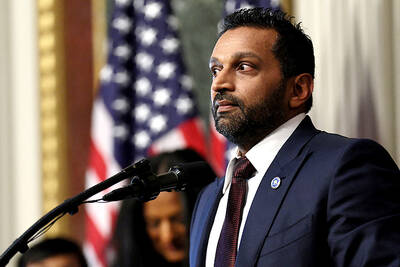
A pro-Iran hacking group claimed to breach FBI Director Kash Patel’s personal e-mail inbox and posted some of the contents online. The e-mails provided by the hacking group include travel details, correspondence with leasing agents in Washington and global entry, and loyalty account numbers. The e-mail address the hackers claim to have compromised has been previously tied to Patel’s personal details, and the leaked e-mails contain photos of Patel and others, in addition to correspondence with family members and colleagues. “The FBI is aware of malicious actors targeting Director Patel’s personal email information,” the agency said in a statement on


 RSS
RSS