


China received a grilling on Wednesday over its human rights record as a two-day hearing opened at the Office of the UN High Commissioner for Human Rights, with rights advocates raising issues such as relocations from Tibet, COVID-19, reprisals against human rights defenders and a security law that sparked protests in Hong Kong.
With advocates of China’s Uighur minority demonstrating outside, Chinese Ambassador to the UN Chen Xu (陳旭) and a delegation of about 40 envoys from China, Hong Kong and Macau faced questions from the UN Committee on Economic, Social and Cultural Rights.
The six-hour hearings mark the first time a Chinese delegation has traveled to answer to a UN body in Geneva, Switzerland, since the COVID-19 pandemic broke out in 2020, UN officials said.

Photo: EPA
In his opening remarks, Chen listed Chinese accomplishments, including poverty alleviation, education, longer life spans in China and support for other countries.
“No one can claim a perfect record in human rights protection, as there is always room for improvement. China still faces multiple problems and challenges in promoting and protecting economic, social and cultural rights,” including “glaringly unbalanced” development and “stumbling blocks” in some areas of reform, Chen said.
He cited problems in areas such as education, employment, medical care, housing and the environment.
The hearing was built around questions from submissions from about 20 non-governmental groups, and conducted by independent experts working with the UN who make up the committee, which aims to help countries uphold their commitments under the International Covenant on Economic, Social and Cultural Rights.
The committee’s rapporteur on China Michael Windfuhr laid out questions on issues as diverse as discrimination, access to lawyers and assurances that Chinese multinational firms would not undermine human rights abroad.
“Dealing with China in six hours devoted to a state review is a challenge for the committee,” he said. “The committee will therefore prioritize the most pressing human rights issues under the covenant.”
He asked how many organizations have been classified as having endangered national security under the contested National Security Law in Hong Kong, and how China would improve transparency in the sharing of data about COVID-19 with the international community.
However, Hong Kong officials, speaking in English, insisted that the security law has specific provisions for respecting human rights, particularly in the context of some trade union activities, which they considered to have contravened the law and had nothing to do with labor rights.
“The Hong Kong [Special Administrative Region] government is dedicated to defend and protect the lawful rights and freedom of association in Hong Kong,” Hong Kong Labor Department Assistant Commissioner Cheung Hoi-shan (張凱珊) said.
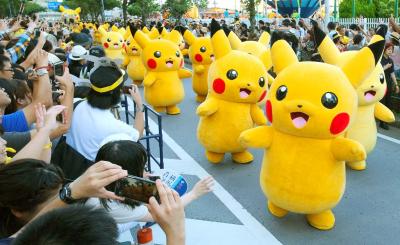
China’s military news agency yesterday warned that Japanese militarism is infiltrating society through series such as Pokemon and Detective Conan, after recent controversies involving events at sensitive sites. In recent days, anime conventions throughout China have reportedly banned participants from dressing as characters from Pokemon or Detective Conan and prohibited sales of related products. China Military Online yesterday posted an article titled “Their schemes — beware the infiltration of Japanese militarism in culture and sports.” The article referenced recent controversies around the popular anime series Pokemon, Detective Conan and My Hero Academia, saying that “the evil influence of Japanese militarism lives on in

DIPLOMATIC THAW: The Canadian prime minister’s China visit and improved Beijing-Ottawa ties raised lawyer Zhang Dongshuo’s hopes for a positive outcome in the retrial China has overturned the death sentence of Canadian Robert Schellenberg, a Canadian official said on Friday, in a possible sign of a diplomatic thaw as Canadian Prime Minister Mark Carney seeks to boost trade ties with Beijing. Schellenberg’s lawyer, Zhang Dongshuo (張東碩), yesterday confirmed China’s Supreme People’s Court struck down the sentence. Schellenberg was detained on drug charges in 2014 before China-Canada ties nosedived following the 2018 arrest in Vancouver of Huawei chief financial officer Meng Wanzhou (孟晚舟). That arrest infuriated Beijing, which detained two Canadians — Michael Spavor and Michael Kovrig — on espionage charges that Ottawa condemned as retaliatory. In January

Two medieval fortresses face each other across the Narva River separating Estonia from Russia on Europe’s eastern edge. Once a symbol of cooperation, the “Friendship Bridge” connecting the two snow-covered banks has been reinforced with rows of razor wire and “dragon’s teeth” anti-tank obstacles on the Estonian side. “The name is kind of ironic,” regional border chief Eerik Purgel said. Some fear the border town of more than 50,0000 people — a mixture of Estonians, Russians and people left stateless after the fall of the Soviet Union — could be Russian President Vladimir Putin’s next target. On the Estonian side of the bridge,

Jeremiah Kithinji had never touched a computer before he finished high school. A decade later, he is teaching robotics, and even took a team of rural Kenyans to the World Robotics Olympiad in Singapore. In a classroom in Laikipia County — a sparsely populated grasslands region of northern Kenya known for its rhinos and cheetahs — pupils are busy snapping together wheels, motors and sensors to assemble a robot. Guiding them is Kithinji, 27, who runs a string of robotics clubs in the area that have taken some of his pupils far beyond the rural landscapes outside. In November, he took a team


 RSS
RSS