


No single adjective could do justice to the events that rocked Ireland in July and August 1982, so the then taoiseach, Charles Haughey, used four: “Grotesque, unbelievable, bizarre and unprecedented.” An acronym was soon born: GUBU.
That summer, Malcolm MacArthur, a socialite with a yen for bow ties and cravats, had bludgeoned a young woman to death, killed a farmer with his own shotgun and attempted to rob a retired US diplomat, sparking a huge manhunt.
Police tracked MacArthur down to the Dublin apartment of then-attorney general Patrick Connolly, who had hosted the fugitive as a guest, unaware of his crimes. After police led MacArthur away, Connolly flew to London to catch a Concorde flight to New York for a holiday.
Haughey was left to try to explain the affair at a chaotic press conference in which he unwittingly gave rise to the new acronym and undermined his government, which tottered and finally fell on Nov. 4, 1982.
Forty years later, the saga and its strange aftermath have again transfixed Ireland. A seven-part Irish Times podcast, GUBU, topped the charts in Ireland this summer, while another seven-part podcast, Obscene: the Dublin Scandal, narrated by actor Adrian Dunbar, launched in September on the BBC. Both span the anniversaries of the crimes and the political convulsions that followed.
Irish Twitter users have suggested the acronym should be dusted off and applied to Britain’s political turmoil.
“I can’t think of a story that was more sensational. You had this extraordinary series of murders, and then the jaw-dropping revelation that the chief suspect was found in the home of the state’s top law enforcement officer,” said Harry McGee, who presented and produced the Irish Times podcast.
“What surprised me is that there was also a very large number of younger listeners, most born many years after the events,” he said.
Haughey’s reputation for intrigue fueled conspiracy theories that destabilized his government, even though, in this instance, the taoiseach was blameless, he said.
“But that acronym followed him around like a stray dog for the rest of his career. The scandal defined the whole era,” he said.
The podcasts debunk several myths, including that the state covered up a clandestine pedophile ring in the upper echelons of Irish society.
The case inspired John Banville’s 1989 novel, The Book of Evidence, which was shortlisted for the Booker prize.
In some ways the drama still plays out. MacArthur, released in 2012 after 30 years in prison, pops up at Dublin cafes and book launches.
It was haunting to see the murderer so unchanged, as if frozen, the author and commentator Fintan O’Toole told the BBC podcast.
“It was as if this figure had disappeared and come back as he was. It’s a sort of weird, ghostly presence that he still has in Dublin,” he said.
Another contributor said he confronted MacArthur in a cafe: “I went over and said: ‘You murdered my best friend’s daughter.’ He glanced up at me, and then put his eyes back down and never gave me any recognition whatsoever.”
MacArthur has declined interview requests, saying that as a condition of bail he cannot discuss his crimes.
What drove him remains an enigma. The only child of wealthy landowners, his parents had a toxic marriage and he grew up a loner. He studied in the US, then returned to Ireland in the 1970s, a tweedy, raffish figure who never worked, lived off his inheritance and frequented fashionable bars.
He had a child with his partner, Brenda Little, and it was through her that he met Connolly. In early 1982, the couple moved to Spain, but MacArthur’s inheritance was spent; he was broke. He returned to Dublin alone, intending to steal a car and a gun to rob banks, believing that the police would blame the Irish Republican Army.
Described by some as a fantasist and others as amoral, MacArthur stalked sunbathers in the Phoenix park on July 22. He forced a young nurse, Bridie Gargan, into her car and beat her savagely with a hammer. He drove off and abandoned the car, leaving Gargan fatally injured.
Two days later he took a bus to County Offaly to meet a farmer, Donal Dunne, who had advertised a shotgun for sale. MacArthur shot Dunne in the head and drove off with his car, and the shotgun, back to Dublin.
On Aug. 4, he called on Harry Bieling, a retired US diplomat living in Dalkey, an affluent suburb of Dublin. Brandishing the gun, MacArthur demanded £1,000 (US$1,138). Bieling managed to flee, prompting MacArthur to move to the nearby apartment of Connolly, who agreed to host him.
On Aug. 13, detectives arrested MacArthur. He confessed everything, saying he could not cope with his dwindling finances.
“This all goes back to money,” he said.
As for Connolly, his fate was sealed as he was summoned back home after just one night in New York, to resign.
Haughey’s government collapsed a few months later.
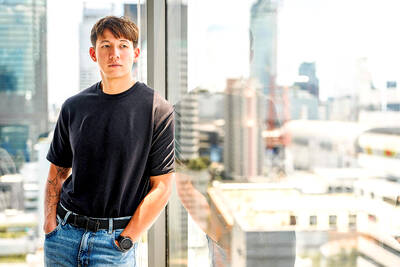
SPEAKING OUT: After Siranudh Scott’s allegations surfaced, celebrities and public figures took to social media to share their own experiences of sexual misconduct and abuse A high-profile alleged sexual abuse case within a wealthy Thai beer brewing family has prompted a wave of painful accounts from survivors of unconnected abuse in the conservative nation. Siranudh Scott, a member of the billionaire Thai family that founded the ubiquitous Singha beer brand, posted an emotional video this month accusing his elder brother Sunit of repeatedly abusing him when he was a teenager. Sunit, who is in his 30s, later denied the allegations in a video posted online, but Singha parent Boonrawd dismissed him from his executive role with the company on Tuesday last week. “I felt I needed to speak

A Hong Kong astronaut is to join a Chinese space mission for the first time as part of a three-person crew launching today, as Beijing edges closer to its goal of landing people on the moon. The Tiangong space station — crewed by teams of three astronauts that are typically rotated every six months — is the crown jewel of China’s space program, boosted by billions in state investment in a bid to catch up with the US and Russia. The Shenzhou-23 mission is to blast off at 11:08pm from the Jiuquan Satellite Launch Center in northwestern China, carrying three astronauts to
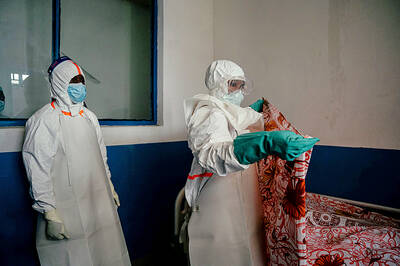
UPGRADED ALERT: The risk inside DR Congo is now considered ‘very high,’ while neighboring countries face a ‘high’ threat as the outbreak continues, the WHO said Ebola is spreading faster than responders can track it in eastern Congo, where health workers managed to follow up with barely one in five identified contacts in a single day. Authorities in the Democratic Republic of the Congo (DR Congo) reported 83 confirmed infections, 746 suspected cases and 1,603 identified contacts as of Thursday, but health workers were able to follow up on only 342 contacts that day — about 21 percent of the total under monitoring — data released by the DR Congo Ministry of Public Health on Friday showed. The figures suggest the response is falling behind the outbreak itself,

SEEKING ORDER: Rodrigo Paz said that ‘anyone who wants to destroy the nation will have to deal with this president and the full force of the constitution’ Bolivian President Rodrigo Paz on Wednesday said that the nation was at a “breaking point” after nearly a month of protests that have caused shortages of food, fuel and medicine. Paz, who took office six months ago amid the worst economic crisis there in four decades, is battling a groundswell of fury over his policies. The political capital, La Paz, has been besieged by low-income workers and members of the indigenous majority calling for his resignation. “The country needs order and is reaching breaking point,” the 58-year-old said at a public event in La Paz, renewing his appeal for dialogue. On Tuesday, the Bolivian


 RSS
RSS