


Moscow on Tuesday said that it was leaving the International Space Station (ISS) “after 2024” amid tensions with the West, in a move analysts said could lead to a halt of Russian-crewed flights.
The confirmation of the long-mooted move comes as ties unravel between the Kremlin and the West over Moscow’s military intervention in Ukraine and several rounds of devastating sanctions against Russia, including its space sector.
Space experts said Russia’s departure from the International Space Station would seriously affect the nation’s space sector and deal a significant blow to its program of crewed flights, a major source of Russian pride.
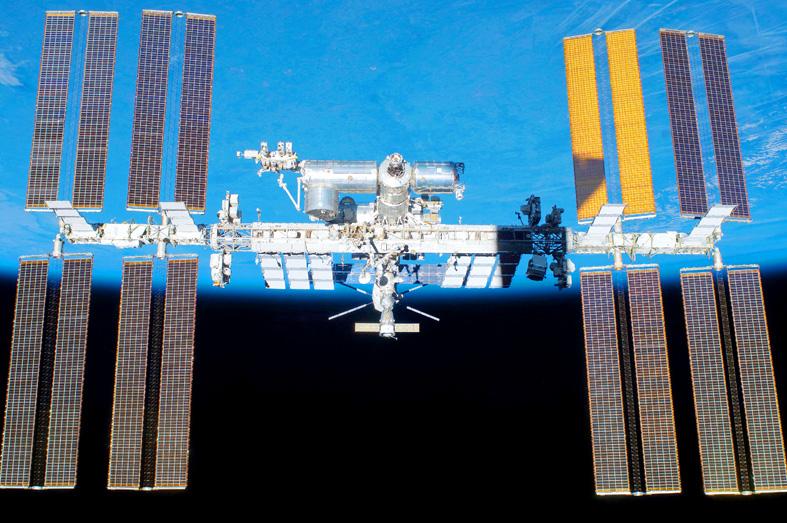
Photo: AFP / NASA
“Of course, we will fulfill all our obligations to our partners, but the decision to leave this station after 2024 has been made,” Yury Borisov, the new head of Russian space agency Roscosmos, told Russian President Vladimir Putin, according to a Kremlin account of their meeting.
“I think that by this time we will start putting together a Russian orbital station,” Borisov said, calling it the domestic space program’s main “priority.”
“Good,” Putin replied.
The ISS is due to be retired after 2024, although NASA says it can remain operational until at least 2030.
The space station was launched in 1998 at a time of hope for US-Russia cooperation following their space race during the Cold War.
The US said it was taken by surprise by the announcement.
“It’s an unfortunate development given the critical scientific work performed at the ISS, the valuable professional collaboration our space agencies have had over the years,” US Department of State spokesman Ned Price said.
NASA Administrator Bill Nelson said the agency “has not been made aware of decisions from any of the partners, though we are continuing to build future capabilities to assure our major presence in low-Earth orbit.”
Until now, space exploration has been one of the few areas where cooperation between Russia and the US and its allies had not been wrecked by tensions over Ukraine and elsewhere.
Russia is heavily reliant on imports of everything from manufacturing equipment to consumer goods, and the effects of Western sanctions are expected to wreak havoc on the country’s economy in the long term.
Space expert Vadim Lukashevich said space science cannot flourish in a heavily sanctioned country.
“If the ISS ceases to exist in 2024, we will have nowhere to fly,” Lukashevich said. “At stake is the very preservation of manned flights in Russia, the birthplace of cosmonautics.”
Pointing to Russia’s growing scientific and technological isolation, Lukashevich said the authorities could not plan more than several months in advance and even if Russia builds an orbiting station, it would be a throwback to the 1980s.
“It will be archaic, like an old woman’s flat, with a push-button telephone and a record player,” he said.
Space analyst Vitaly Yegorov struck a similar note, saying it was next to impossible to build a new orbiting station from scratch in a few years.
“Neither in 2024, nor in 2025, nor in 2026 will there be a Russian orbital station,” Yegorov said.
He added that creating a fully-fledged space station would take at least a decade of “the most generous funding.”
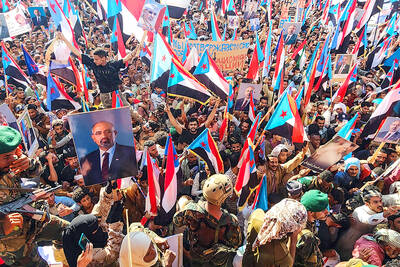
Yemen’s separatist leader has vowed to keep working for an independent state in the country’s south, in his first social media post since he disappeared earlier this month after his group briefly seized swathes of territory. Aidarous al-Zubaidi’s United Arab Emirates (UAE)-backed Southern Transitional Council (STC) forces last month captured two Yemeni provinces in an offensive that was rolled back by Saudi strikes and Riyadh’s allied forces on the ground. Al-Zubaidi then disappeared after he failed to board a flight to Riyadh for talks earlier this month, with Saudi Arabia accusing him of fleeing to Abu Dhabi, while supporters insisted he was

The Chinese Embassy in Manila yesterday said it has filed a diplomatic protest against a Philippine Coast Guard spokesman over a social media post that included cartoonish images of Chinese President Xi Jinping (習近平). Philippine Coast Guard spokesman Jay Tarriela and an embassy official had been trading barbs since last week over issues concerning the disputed South China Sea. The crucial waterway, which Beijing claims historic rights to despite an international ruling that its assertion has no legal basis, has been the site of repeated clashes between Chinese and Philippine vessels. Tarriela’s Facebook post on Wednesday included a photo of him giving a

‘MOBILIZED’: While protesters countered ICE agents, Minnesota Governor Tim Walz activated the state’s National Guard to ‘support the rights of Minnesotans’ to assemble Hundreds of counterprotesters drowned out a far-right activist’s attempt to hold a small rally in support of US President Donald Trump’s latest immigration crackdown in Minneapolis, Minnesota, on Saturday, as the governor’s office announced that National Guard troops were mobilized and ready to assist law enforcement, although not yet deployed to city streets. There have been protests every day since the US Department of Homeland Security (DHS) ramped up immigration enforcement in the Twin Cities of Minneapolis and Saint Paul by bringing in more than 2,000 federal officers. Conservative influencer Jake Lang organized an anti-Islam, anti-Somali and pro-US Immigration and Customs Enforcement
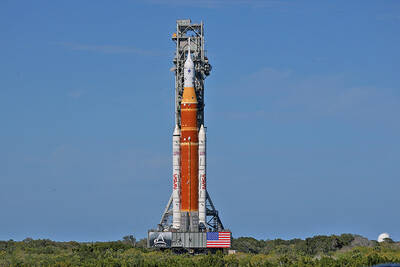
NASA on Saturday rolled out its towering Space Launch System (SLS) rocket and Orion spacecraft as it began preparations for its first crewed mission to the Moon in more than 50 years. The maneuver, which takes up to 12 hours, would allow the US space agency to begin a string of tests for the Artemis 2 mission, which could blast off as early as Feb. 6. The immense orange and white SLS rocket, and the Orion vessel were slowly wheeled out of the Vehicle Assembly Building at the Kennedy Space Center in Florida, and painstakingly moved 6.5km to Launch Pad 39B. If the


 RSS
RSS