


Beibei sleeps beside thousands of strangers in rows of cots in a high-ceilinged exhibition center. The lights stay on all night, and the 30-year-old real-estate saleswoman has yet to find a hot shower.
Beibei and her husband were ordered into the massive National Exhibition and Convention Center in Shanghai on Tuesday last week after spending 10 days isolated at home following a positive COVID-19 test. Their two-year-old daughter, who was negative, went to her grandfather, while her nanny also went into quarantine.
The convention center, with 50,000 beds, is among more than 100 quarantine facilities set up in Shanghai for people such as Beibei who test positive but have no symptoms. It is part of official efforts to contain China’s biggest COVID-19 outbreak since the two-year-old pandemic began.
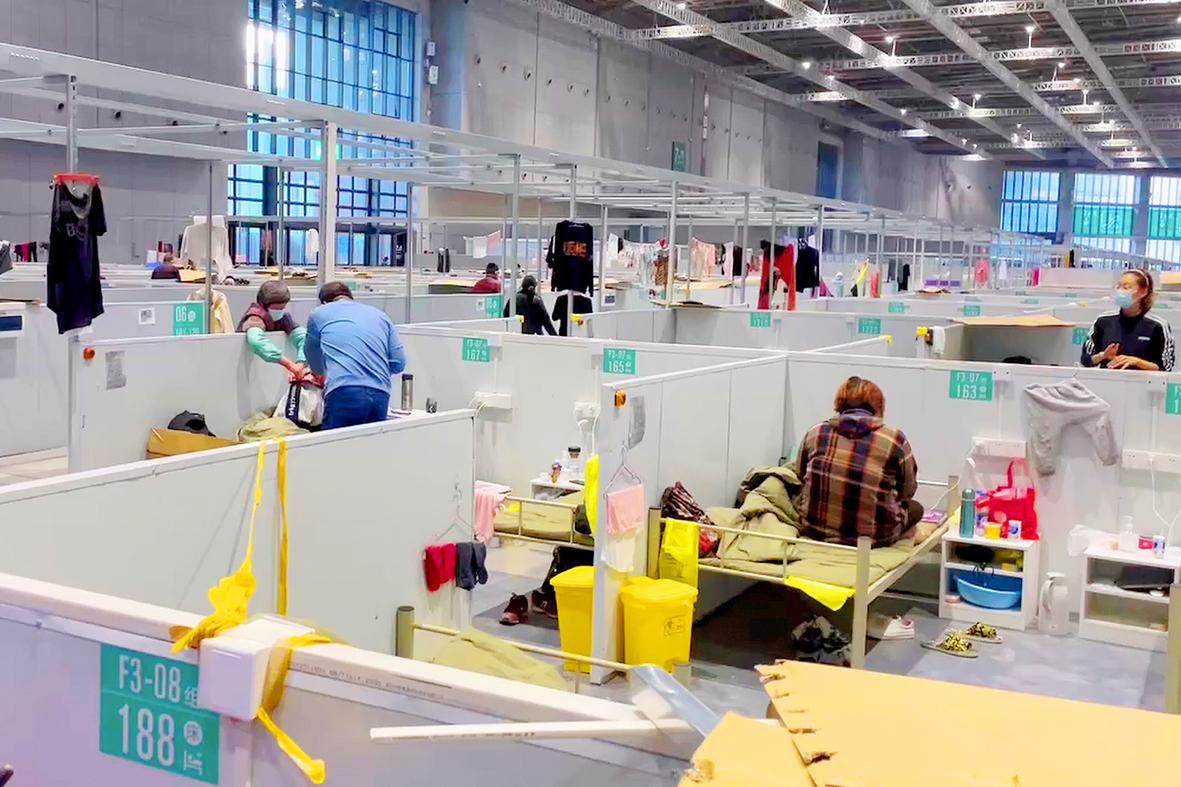
Photo: Beibei via AP
Residents show “no obvious symptoms,” Beibei, who asked to be identified only by her given name, said in an interview by video phone.
“There are people coughing,” she said. “But I have no idea if they have laryngitis or [the] Omicron” variant of SARS-CoV-2.
The shutdown of Shanghai, which confined most of its 25 million people to their homes, is testing patience of people who are increasingly fed up with China’s “zero COVID-19” policy that aims to isolate every case.
“At the beginning people were frightened and panicked,” Beibei said. “But with the publication of daily figures, people have started to accept that this particular virus is not that horrible.”
Beibei was told she was due to be released yesterday after two negative tests while at the convention center.
Most of Shanghai shut down starting on March 28. That led to complaints about food shortages and soaring economic losses.
Anyone who tests positive, but shows few or no symptoms, is required to spend one week in a quarantine facility.
Beibei said she had a stuffy nose and briefly lost part of her senses of taste and smell, but those symptoms passed in a few days.
Yesterday, the government reported 23,460 new cases in mainland China — only 2,742 of which had symptoms. Shanghai accounted for 95 percent of the total, or 22,251 cases, including 2,420 with symptoms.
The city has reported more than 300,000 cases since late last month. Shanghai began easing restrictions last week, although a health official warned that the city did not have its outbreak under control.
At the convention center, residents are checked twice per day for fever and told to record health information on mobile phones, Beibei said.
Most pass the time by reading, square dancing, taking online classes or watching videos on mobile phones.
The 420,000m2 exhibition center is best known as the site of the world’s biggest auto show. Other quarantine sites include temporary prefabricated buildings.
Residents of other facilities have complained about leaky roofs, inadequate food supplies and delays in treatment for medical problems.
“We haven’t found a place with a hot shower,” Beibei said. “Lights are on all night, and it’s hard to fall asleep.”
A video obtained by the Associated Press showed wet beds and floors due to a leaky roof in a different facility in a prefabricated building.
“Bathrooms are not very clean” at the convention center, Beibei said. “So many people use them, and volunteers or cleaners can’t keep up.”

An American scientist convicted of lying to US authorities about payments from China while he was at Harvard University has rebuilt his research lab in Shenzhen, China, to pursue technology the Chinese government has identified as a national priority: embedding electronics into the human brain. Charles Lieber, 67, is among the world’s leading researchers in brain-computer interfaces. The technology has shown promise in treating conditions such as amyotrophic lateral sclerosis and restoring movement in paralyzed people. It also has potential military applications: Scientists at the Chinese People’s Liberation Army have investigated brain interfaces as a way to engineer super soldiers by boosting
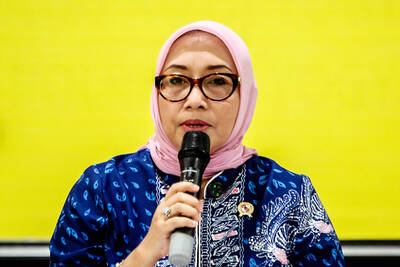
Indonesian police have arrested 13 people after shocking images of alleged abuse against small children at a daycare center went viral, sparking outrage across the nation, officials said on Monday. Police on Friday last week raided Little Aresha, a daycare center in Yogyakarta on Java island, following a report from a former employee. CCTV footage circulating on social media showed children, most younger than two, lying on the floor wearing only diapers, their hands and feet bound with rags. The police have confirmed that the footage is authentic. Police said they also found 20 children crammed into a room just 3m by 3m. “So
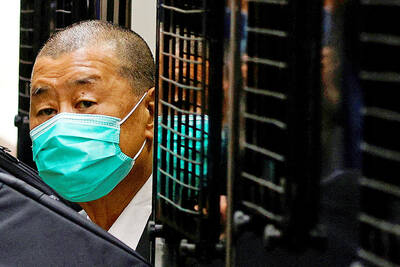
Jailed media entrepreneur Jimmy Lai (黎智英) has been awarded Deutsche Welle’s (DW) freedom of speech award for his contribution to Hong Kong’s pro-democracy movement. The German public broadcaster on Thursday said Lai would be presented in absentia with the 12th iteration of the award on June 23 at the DW Global Media Forum in Bonn. Deutsche Welle director-general Barbara Massing praised the 78-year-old founder of the now-shuttered news outlet Apple Daily for standing “unwaveringly for press freedom in Hong Kong at great personal risk.” “With Apple Daily, he gave journalists a platform for free reporting and a voice to the democracy movement in
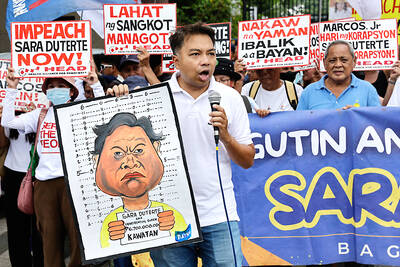
PHILIPPINE COMMITTEE: The head of the committee that made the decision said: ‘If there is nothing to hide, there is no reason to hide, there is no reason to obstruct’ A Philippine congressional committee on Wednesday ruled that there was “probable cause” to impeach Philippine Vice President Sara Duterte after hearing allegations of unexplained wealth, misuse of state funds and threats to have the president assassinated. The unanimous decision of the 53-member committee in the Philippine House of Representatives sends the two impeachment complaints to deliberations and voting by the entire lower chamber, which has more than 300 lawmakers. The complaints centered on Duterte’s alleged illegal use and mishandling of intelligence funds from the vice president’s office, and from her time as education secretary under Philippine President Ferdinand Marcos Jr. Duterte and the


 RSS
RSS