


On a cloudy spring day, hundreds lined up in their vehicles on the Canadian side of the border crossing that separates Alberta and Montana. They had driven for hours and camped out in their vehicles in hopes of receiving a COVID-19 vaccine from a Native American tribe that was giving out its excess doses.
The Blackfeet tribe in northern Montana last month provided about 1,000 surplus vaccines to its First Nations relatives and others from across the border, in an illustration of the disparity in speed at which the US and Canada are distributing doses.
While more than 30 percent of adults in the US are fully vaccinated, in Canada that figure is about 3 percent, as Canada lacks the ability to manufacture the vaccine.
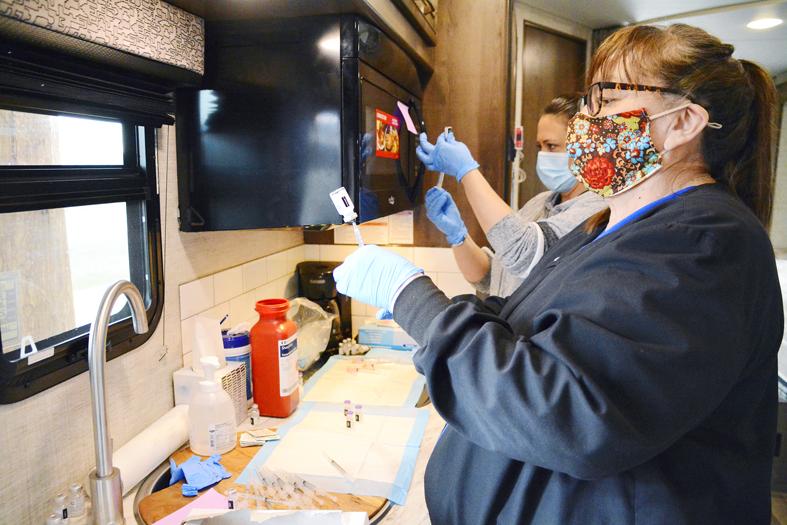
Photo: AP
Among those who received the vaccine at the Piegan-Carway border crossing were Sherry Cross Child and Shane Little Bear, of Stand Off, about 50km north of the border.
Cross Child and her husband have family and friends in Montana, but have not been able to visit them since the border closed last spring to all but essential travel.
“It’s been stressful because we had some deaths in the family, and they couldn’t come,” she said. “Just for the support, they rely on us, and we rely on them. It’s been tough.”
More than 95 percent of the Blackfeet reservation’s roughly 10,000 residents who are eligible for the vaccine are fully immunized, after the state prioritized Native American communities — among the most vulnerable US populations — in the early stages of its COVID-19 vaccination campaign.
The tribe received vaccine allotments from the federal Indian Health Service and the Montana Department of Public Health and Human Services, leaving some doses unused. With an expiration date fast approaching, it turned to other nations in the Blackfoot Confederacy, which includes the Blackfeet, and three tribes in southern Alberta that share a language and culture.
“The idea was to get to our brothers and sisters that live in Canada, and then the question came up: What if a nontribal member wants a vaccine? Well, this is about saving lives. We’re not going to turn anybody away” said Robert DesRosier, emergency services manager for the Blackfeet tribe.
The tribe distributed the Pfizer and Moderna vaccines over four days last month at the remote Piegan Port of Entry.
As news of the effort spread in Canada, first by word of mouth, then through social media platforms and media reports, people traveled from farther away. Some drove five hours from the city of Edmonton.
Blackfoot Confederacy health administrator Bonnie Healy said she was glad the vaccination effort reached both First Nations and other communities in the province.
“We have family members that live in those areas,” she said. “If we can get these places safe, then it’s safe for our children to go to school there. It’s safe for our elders to go shopping in their stores.”
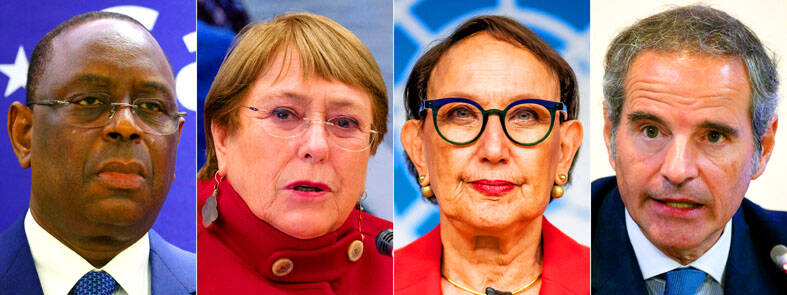
Four contenders are squaring up to succeed Antonio Guterres as secretary-general of the UN, which faces unprecedented global instability, wars and its own crushing budget crisis. Chile’s Michelle Bachelet, Argentina’s Rafael Grossi, Costa Rica’s Rebeca Grynspan and Senegal’s Macky Sall are each to face grillings by 193 member states and non-governmental organizations for three hours today and tomorrow. It is only the second time the UN has held a public question-and-answer, a format created in 2016 to boost transparency. Ultimately the five permanent members of the UN’s top body, the Security Council, hold the power, wielding vetoes over who leads the
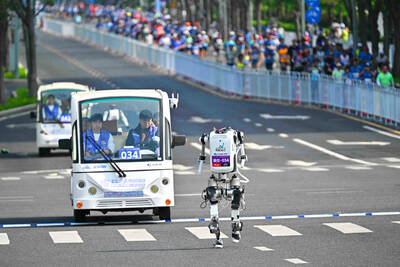
A humanoid robot that won a half-marathon race for robots in Beijing on Sunday ran faster than the human world record in a show of China’s technological leaps. The winner from Honor, a Chinese smartphone maker, completed the 21km race in 50 minutes and 26 seconds, said a WeChat post by the Beijing Economic-Technological Development Area, also known as Beijing E-Town, where the race began. That was faster than the human world record holder, Ugandan Jacob Kiplimo, who finished the same distance in about 57 minutes in March at the Lisbon road race. The performance by the robot marked a significant step forward

An earthquake registering a preliminary magnitude of 7.7 off northern Japan on Monday prompted a short-lived tsunami alert and the advisory of a higher risk of a possible mega-quake for coastal areas there. The Cabinet Office and the Japan Meteorological Agency said there was a 1% chance for a mega-quake, compared to a 0.1% chance during normal times, in the next week or so following the powerful quake near the Chishima and Japan trenches. Officials said the advisory was not a quake prediction but urged residents in 182 towns along the northeastern coasts to raise their preparedness while continuing their daily lives. Prime
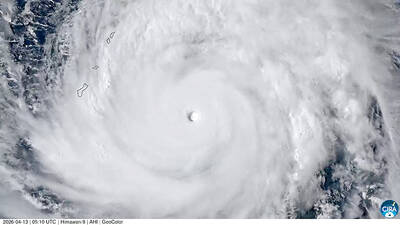
HAZARDOUS CONDITION: The typhoon’s sheer size, with winds extending 443km from its center, slowed down the ability of responders to help communities, an official said The US Coast Guard was searching for six people after losing contact with their disabled boat off the coast of Guam following Typhoon Sinlaku. The crew of the 44m dry cargo vessel, the US-registered Mariana, on Wednesday notified the coast guard that the boat had lost its starboard engine and needed assistance, Petty Officer 3rd Class Avery Tibbets said yesterday. The coast guard set up a one-hour communication schedule with the vessel, but lost contact on Thursday. A Coast Guard HC-130 Hercules aircraft was launched to search for the six people on board, but it had to return to Guam because of


 RSS
RSS