


US Secretary of State Mike Pompeo assails China almost every day, but he says his dog is not part of his campaign.
Pompeo raised eyebrows among students of the social media tea leaves when he posted a photograph of his dog looking ready to tear into a Winnie the Pooh toy.
“Mercer and all of her favorite toys!” dog-loving Pompeo wrote on his personal Twitter account.

Photo: screen grab from Twitter
Chinese social media users have frequently used the bear as a meme for Chinese President Xi Jinping (習近平), although Beijing’s thorough censors have little sense of humor about it.
Asked in a radio interview on Wednesday whether this was “Winnie the Pooh-gate,” Pompeo appeared oblivious.
“No, I imagine there were a series of stuffed animals and they were equally distributed for Mercer’s benefit,” Pompeo told radio host Simon Conway in Iowa.
When told that the BBC had run a story musing about a deeper meaning, Pompeo laughed and said: “I hadn’t seen that.”
A.A. Milne’s loveable, but slow-witted bear with a weakness for honey was picked up as a meme after pictures were published of Xi alongside more slender former US president Barack Obama, who drew comparisons to Pooh’s friend Tigger.
China has since sought to scrub the meme from Internet accessible inside the nation.
Beijing in 2018 rejected the release of the Disney film Christopher Robin, which stars the bear.


Showcasing phallus-shaped portable shrines and pink penis candies, Japan’s annual fertility festival yesterday teemed with tourists, couples and families elated by its open display of sex. The spring Kanamara Matsuri near Tokyo features colorfully dressed worshipers carrying a trio of giant phallic-shaped objects as they parade through the street with glee. The festival, as legend has it, honors a local blacksmith in the Edo Period (1603-1868) who forged an iron dildo to break the teeth of a sharp-toothed demon inhabiting a woman’s vagina that had been castrating young men on their wedding nights. A 1m black steel phallus sits in the courtyard of

JAN. 1 CLAUSE: As military service is voluntary, applications for permission to stay abroad for over three months for men up to age 45 must, in principle, be granted A little-noticed clause in sweeping changes to Germany’s military service policy has triggered an uproar after it emerged that the law requires men aged up to 45 to get permission from the armed forces before any significant stay abroad, even in peacetime. The legislation, which went into effect on Jan. 1 aims to bolster the military and demands all 18-year-old men fill out a questionnaire to gauge their suitability to serve in the armed forces, but stops short of conscription. If the “modernized” model fails to pull in enough recruits, parliament will be compelled to discuss the reintroduction of compulsory service, German
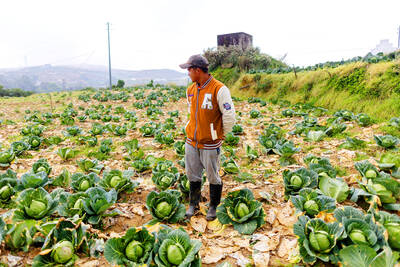
Filipino farmers like Romeo Wagayan have been left with little choice but to let their vegetables rot in the field rather than sell them at a loss, as rising oil prices linked to the Iran war drive up the cost of harvesting, labor and transport. “There’s nothing we can do,” said Wagayan, a 57-year old vegetable farmer in the northern Philippine province of Benguet. “If we harvest it, our losses only increase because of labor, transportation and packing costs. We don’t earn anything from it. That’s why we decided not to harvest at all,” he said. Soaring costs caused by the Middle East

For two decades, researchers observed members of the Ngogo chimpanzee group of Kibale National Park in Uganda spend their days eating fruits and leaves, resting, traveling and grooming in their tropical rainforest abode, but this stable community then fractured and descended into years of deadly violence. The researchers are now describing the first clearly documented example of a group of wild chimpanzees splitting into two separate factions, with one launching a series of coordinated attacks against the other. Adult males and infants were targeted, with 28 deaths. “Biting, pounding the victim with their hands, dragging them, kicking them — mostly adult males,


 RSS
RSS