


In a farm deep in the southern region of China lives a very big pig that is as heavy as a polar bear.
The 500kg animal is part of a herd that is being bred to become giant swine. At slaughter, some of the pigs can sell for more than 10,000 yuan (US$1,399), more than three times higher than the average monthly disposable income in Nanning, the capital of Guangxi Province, where Pang Cong, the farm’s owner, lives.
While Pang’s pigs might be an extreme example of the lengths to which farmers are going to fill China’s swelling pork shortage problem, the idea that bigger is better has been spreading across the country, home to the world’s most voracious consumers of the meat.
High pork prices in the northeastern province of Jilin is prompting farmers to raise pigs to reach an average weight of 175kg to 200kg, higher than the normal weight of 125kg.
They want to raise them “as big as possible,”said Zhao Hailin, a hog farmer in the region.
The trend is not limited to small farms either. Major protein producers in China, including Wens Foodstuffs Group, the country’s top pig breeder, Cofco Meat Holdings and Beijing Dabeinong Technology Group have said they are trying to increase the average weight of their pigs.
Big farms are focusing on boosting the heft by at least 14 percent, said Lin Guofa, a senior analyst with consulting firm Bric Agriculture Group.
The average weight of pigs at slaughter at some large-scale farms has climbed to as much as 140kg, compared with about 110kg normally, Lin said.
That could boost profits by more than 30 percent, he said.
The large swine are being bred during a desperate time for China. With African swine fever reducing the nation’s hog herd — in half, by some estimates — prices of pork have soared to record levels, leading the Chinese government to urge farmers to boost production to temper inflation.
Chinese Vice Premier Hu Chunhua (胡春華) said that the supply situation would be “extremely severe” through the first half of next year.
China would face a pork shortage of 9 million tonnes this year, more than what is available in global trade, meaning it needs to increase production domestically, he said.
During a recent visit to major livestock provinces of Shandong, Hebei and Henan, Hu urged local governments to resume pig production as soon possible, with a target of returning to normal levels next year.
Still, many farmers are wary about restocking swine after being hurt by an earlier outbreak.
Also, piglet and breeding sow prices have surged, making it more expensive for backyard farms to afford rebuilding their herds. Increasing the size of pigs they already own might be the next best step.

ROCKY RELATIONS: The figures on residents come as Chinese tourist numbers drop following Beijing’s warnings to avoid traveling to Japan The number of Chinese residents in Japan has continued to rise, even as ties between the two countries have become increasingly fractious, data released on Friday showed. As of the end of December last year, the number of Chinese residents had increased by 6.5 percent from the previous year to 930,428. Chinese people accounted for 22.6 percent of all foreign residents in Japan, making them by far the largest group, Japanese Ministry of Justice data showed. Beijing has criticized Tokyo in increasingly strident terms since Japanese Prime Minister Sanae Takaichi last year suggested that a military conflict around Taiwan could

Germany is considering Australia’s Ghost Bat robot fighter as it looks to select a combat drone to modernize its air force, German Minister of Defense Boris Pistorius said yesterday. Germany has said it wants to field hundreds of uncrewed fighter jets by 2029, and would make a decision soon as it considers a range of German, European and US projects developing so-called “collaborative combat aircraft.” Australia has said it will integrate the Ghost Bat, jointly developed by Boeing Australia and the Royal Australian Air Force, into its military after a successful weapons test last year. After inspecting the Ghost Bat in Queensland yesterday,

A pro-Iran hacking group claimed to breach FBI Director Kash Patel’s personal e-mail inbox and posted some of the contents online. The e-mails provided by the hacking group include travel details, correspondence with leasing agents in Washington and global entry, and loyalty account numbers. The e-mail address the hackers claim to have compromised has been previously tied to Patel’s personal details, and the leaked e-mails contain photos of Patel and others, in addition to correspondence with family members and colleagues. “The FBI is aware of malicious actors targeting Director Patel’s personal email information,” the agency said in a statement on
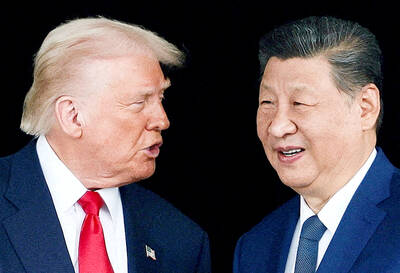
RIVALRY: ‘We know that these are merely symbolic investigations initiated by China, which is in fact the world’s most profligate disrupter of supply chains,’ a US official said China has started a pair of investigations into US trade practices, retaliating against similar probes by US President Donald Trump’s administration as the superpowers stake out positions before an expected presidential summit in May. The move, announced by the Chinese Ministry of Commerce on Friday, is a direct mirror of steps Trump took to revive his tariff agenda after the US Supreme Court last month struck down some of his duties. “China expresses its strong dissatisfaction and firm opposition to these actions,” a ministry spokesperson said in a statement, referring to the so-called Section 301 investigations initiated on March 11.


 RSS
RSS