


Kangaroos tend to be lefties, according to a study on Thursday that sheds new light on the capacity for mammals, particularly those that walk upright, to prefer one paw over the other.
The study was published in the journal Current Biology.
Lead researcher Yegor Malashichev of Saint Petersburg State University in Russia studied kangaroos for the first time, after previously focusing on handedness in jumping frogs, walking frogs and gray short-tailed opossums.
Wild kangaroos in Australia and Tasmania showed “a natural preference for their left hands when performing particular actions — grooming the nose, picking a leaf or bending a tree branch, for example,” the study said. “Left-handedness was particularly apparent in eastern grey and red kangaroos.”
When it came to red-necked wallabies, they appeared to favor their left hand for some tasks — like those involving fine motor skills — and their right for others that used more physical strength.
“According to a special-assessment scale of handedness adopted for primates, kangaroos pulled down the highest grades,” Malashichev said. “We observed a remarkable consistency in responses across bipedal species in that they all prefer to use the left, not the right, hand.”
A key reason that researchers were surprised at the finding was that kangaroo brains lack the same neural circuit that bridges the left and right hemispheres of the brain seen in other mammals.
“What we observed in reality, we did not initially expect, but the more we observed, the more it became obvious that there is something really new and interesting in the wild,” Malashichev said.
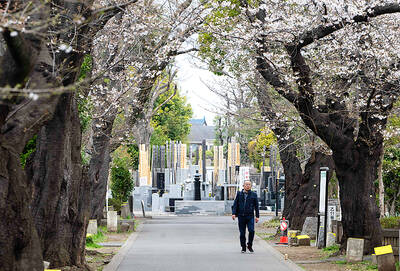
ROCKY RELATIONS: The figures on residents come as Chinese tourist numbers drop following Beijing’s warnings to avoid traveling to Japan The number of Chinese residents in Japan has continued to rise, even as ties between the two countries have become increasingly fractious, data released on Friday showed. As of the end of December last year, the number of Chinese residents had increased by 6.5 percent from the previous year to 930,428. Chinese people accounted for 22.6 percent of all foreign residents in Japan, making them by far the largest group, Japanese Ministry of Justice data showed. Beijing has criticized Tokyo in increasingly strident terms since Japanese Prime Minister Sanae Takaichi last year suggested that a military conflict around Taiwan could

Germany is considering Australia’s Ghost Bat robot fighter as it looks to select a combat drone to modernize its air force, German Minister of Defense Boris Pistorius said yesterday. Germany has said it wants to field hundreds of uncrewed fighter jets by 2029, and would make a decision soon as it considers a range of German, European and US projects developing so-called “collaborative combat aircraft.” Australia has said it will integrate the Ghost Bat, jointly developed by Boeing Australia and the Royal Australian Air Force, into its military after a successful weapons test last year. After inspecting the Ghost Bat in Queensland yesterday,
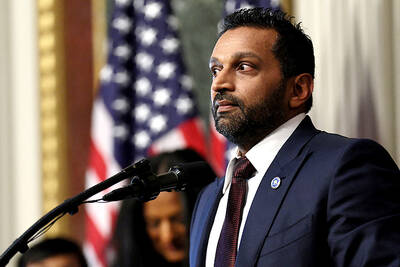
A pro-Iran hacking group claimed to breach FBI Director Kash Patel’s personal e-mail inbox and posted some of the contents online. The e-mails provided by the hacking group include travel details, correspondence with leasing agents in Washington and global entry, and loyalty account numbers. The e-mail address the hackers claim to have compromised has been previously tied to Patel’s personal details, and the leaked e-mails contain photos of Patel and others, in addition to correspondence with family members and colleagues. “The FBI is aware of malicious actors targeting Director Patel’s personal email information,” the agency said in a statement on
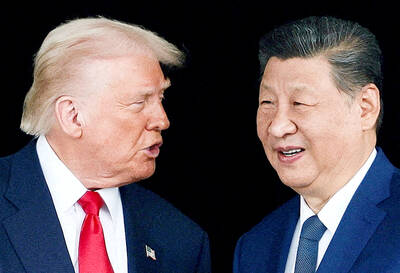
RIVALRY: ‘We know that these are merely symbolic investigations initiated by China, which is in fact the world’s most profligate disrupter of supply chains,’ a US official said China has started a pair of investigations into US trade practices, retaliating against similar probes by US President Donald Trump’s administration as the superpowers stake out positions before an expected presidential summit in May. The move, announced by the Chinese Ministry of Commerce on Friday, is a direct mirror of steps Trump took to revive his tariff agenda after the US Supreme Court last month struck down some of his duties. “China expresses its strong dissatisfaction and firm opposition to these actions,” a ministry spokesperson said in a statement, referring to the so-called Section 301 investigations initiated on March 11.


 RSS
RSS