


Three times a day dozens of men pack the auditorium, the air heavy with hashish smoke, to watch graphic sex movies: Welcome to the Shama — a pornographic cinema in Pakistan’s Taliban heartland.
For more than 30 years it has supplied erotic fantasies in Peshawar, the main city of northwestern Pakistan which borders the tribal districts that are a haven for Taliban and al-Qaeda-linked militants.
Terrified of being recognized, the Shama’s customers hide their faces as they make their way to the cinema between a goat market and a bus station.
There are three X-rated shows a day in the Shama’s discreet back room, while the main hall is reserved for mainstream movies — the only ones advertised outside.
“Class X” customers pay 200 rupees (US$1.90) and after a brief search by a Kalashnikov-toting guard, they are whisked through a courtyard and down a concrete passageway.
Inside the auditorium a thick cloud of cannabis smoke hangs over the 20-odd rows of tattered fake-leather seats.
During one showing, the hall was more than half full, populated by laborers, farmers, students and others who had come to escape the day-to-day claustrophobia of life in a deeply conservative Muslim region where family and neighbors keep a close eye on everything.
Most arrive alone and want to remain so, arranging themselves around the seats to avoid sitting next to anyone. They are all soon gripped by the drama of the day’s offering, Dostana (“Friendship”), a semi-amateur production made for the Shama in the more liberal eastern city of Lahore.
The plot hinges on a romantic dilemma: The hero, Shah Sawar (“the Horseman” in the local language) cannot decide whether to marry his sweetheart Gulpana or his cousin Doa, chosen for him as a wife by his family.
He decides to “test” his would-be brides and much of the film’s two hours is taken up with long and extremely graphic sex scenes between the Horseman and his paramours.
A reverential hush reigns over the audience throughout, broken only by a few suspicious noises from certain rows, while at least half sneak out before the end.
The formula has made the Shama one of Peshawar’s most successful cinemas at a time when many others have been forced to close.
The Islamization that Pakistan witnessed in the 1980s persuaded many that the silver screen was a sinful depravation bad for the soul of a good Muslim.
The rise of videos, DVDs and the Internet accelerated the decline and now of around 15 cinemas in Peshawar 20 years ago, only seven remain.
Three of them show pornography, sometimes discreetly via clips hidden part way through mainstream action movies. The Shama, the best-known of the three, is regularly full, with tickets three or four times the price of normal films.
Key to its success is showing local-made pornography, which is much harder to find in Peshawar — or on the Internet — than Western adult films.
Coming to see Dostana for a second time, Khaliq Khan, 30, said: “Like a lot of people here I prefer films with Pakistani girls. It’s better, it seems more amateur, more real.”
Dostana is certainly amateurish, with actors regularly turning to the camera quizzically, looking for direction for their next move.
The dialogue is dubbed in Pashto, the main language of the northwest, with an enthusiasm somewhat at odds with the bored, uninterested way the actors seem to be speaking in the original Punjabi.
However, Janus Khan is quite happy. After the screening the laborer, 22, admitted he regularly came to the Shama “to enjoy myself, alone or with one or two friends.”
“I’m not very pious but I’m not a rapist or unfaithful,” he said.
The Shama has provoked controversy in Pakistan, a constitutional Islamic republic with a very conservative attitude to sex and nudity.
Jamaat-e-Islami (JI), one of the country’s leading religious political parties, has demanded the closure of the cinema.
However, the cinema has powerful owners — the Bilour family, one of the most influential in Peshawar and a pillar of the Pashtun nationalist ANP party.
Twice in the past 10 years, Islamist activists including JI students have attacked the Shama, but both times the cinema has risen again.
Burned down in September last year, it reopened a month later just in time for the Muslim festival of Eid al-Adha, which saw the Shama full.
How the cinema has avoided the attentions of the government censors, who cut even kissing from films, and the Taliban, who have destroyed countless supposedly “immoral” CD and DVD shops in recent years, is not clear.
In private, officials point to the wealth and influence of the Bilours — always useful in a chaotic and corrupt country.
Back on the screen, Dostana draws to its conclusion with the indecisive Shah Sawar drowning his sorrows in alcohol. Still unable to decide he summons the two women for a final menage-a-trois and in the film’s climax at last resolves to marry them both.

School bullies in Singapore are to face caning under new guidelines, but the education minister on Tuesday said it would be meted out only as a last resort with strict safeguards. Human rights groups regularly criticize Singapore for the use of corporal punishment, which remains part of the school and criminal justice systems, but authorities have defended it as a deterrent to crime and serious misconduct. Caning was discussed in the parliament after legislators asked how it would be used in relation to bullying in schools. The debate followed stricter guidelines on serious student misconduct, including bullying, unveiled by the Singaporean Ministry of
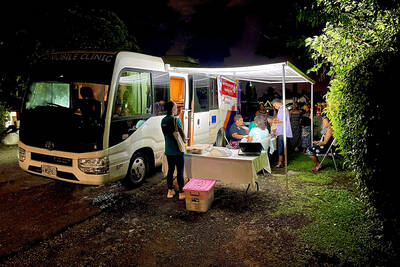
As evening falls in Fiji’s capital, a steady stream of people approaches a makeshift clinic that is a first line of defense against one of the world’s fastest-growing HIV epidemics. In the South Pacific nation — a popular tourist destination of just under a million people — more than 2,000 new HIV cases were recorded last year, a 26 percent increase from 2024. The government has declared an HIV outbreak and described it as a national crisis. “It’s spreading like wildfire,” said Siteri Dinawai, 46, who came to be tested. The Moonlight Clinic, a converted minibus parked in a suburban cul-de-sac in Suva, is
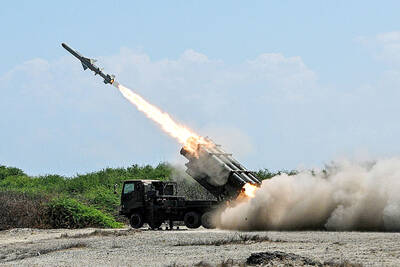
A MESSAGE: Japan’s participation in the Balikatan drills is a clear deterrence signal to China not to attack Taiwan while the US is busy in the Middle East, an analyst said The Japan Self-Defense Forces yesterday fired a Type 88 anti-ship missile during a joint maritime exercise with US, Australian and Philippine forces, hitting a decommissioned Philippine Navy ship in waters facing the disputed South China Sea, in drills that underscore Tokyo’s rising willingness to project military power on China’s doorstep. The drill took place as Manila and Tokyo began talks on a potential defense equipment transfer, made possible by Japan’s decision to scrap restrictions on military exports. The discussions include the possible early transfer of Abukuma-class destroyers and TC-90 aircraft to the Philippines, Japanese Minister of Defense Shinjiro Koizumi said. Philippine Secretary of
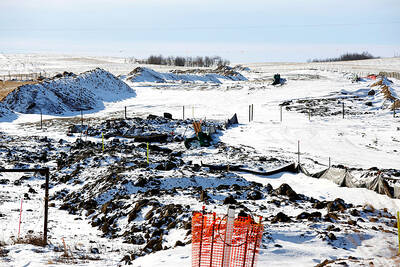
Separatists in Alberta are preparing to submit a petition tomorrow that they said has enough signatures to force a referendum on independence for the oil-rich Canadian province. Polls indicate the pro-independence camp remains a minority among Alberta’s 5 million people, but has hit a historic high of roughly 30 percent. Alberta separatists are also closer than ever to forcing a referendum, riding momentum fueled by intensifying grievances over Ottawa’s control of the provincial oil industry. They have also undeniably gotten a boost from the return to power of US President Donald Trump. After launching a petition in January, Stay Free Alberta, the group


 RSS
RSS