


Argentine police and soldiers searched house to house, in creeks and culverts and even in trees for bodies on Thursday after floods killed at least 59 people in La Plata and Buenos Aires.
As torrential rains stopped and the waters receded, the crisis shifted to guaranteeing public health and safety in La Plata. Safe drinking water was in short supply, and more than a quarter-million people were without power, although authorities said most would get their lights back on overnight.
Many people barely escaped with their lives after seeing everything they own disappear under water reeking with sewage and fuel that rose more than 2m high inside some homes.
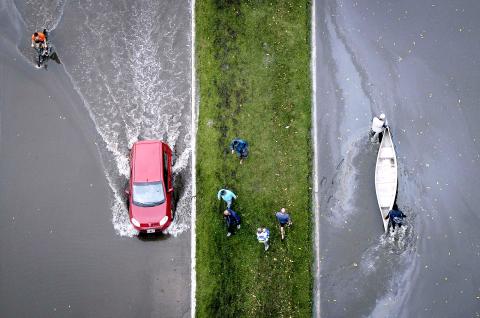
Photo: Reuters
The wreckage was overwhelming: piles of broken furniture, overturned cars, ruined food and other debris.
Their frustration was uncontainable as politicians arrived making promises. Argentine President Cristina Fernandez de Kirchner, Buenos Aires Province Governor Daniel Scioli, Argentine Social Welfare Minister Alicia Kirchner and the mayors of Buenos Aires and La Plata were all booed when they tried to talk with victims.
Many yelled “go away” and “you came too late.”
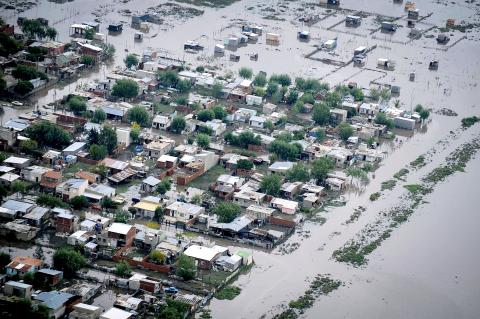
Photo: Reuters
“I understand you, I understand you’re angry,” Alicia Kirchner said before she and the governor fled in their motorcade from an angry crowd.
“There is no water, there is no electricity. We have nothing,” said Nelly Cerrado, who was looking for donated clothing at a local school. “Terrible, terrible what we are going through. And no one comes. No one. Because here, it is neighbors who have to do everything.”
The nearby Ensenada refinery, Argentina’s largest, remained offline after flooding caused a fire that took hours to quench in the middle of the rainstorm, the state-run YPF oil company said. YPF said it would take them 36 more hours just to drain excess water from the damaged refinery, and at least another seven days before the refinery can renew operations.
The company also said it was putting into place an emergency plan to guarantee gasoline supplies, and would invest US$800 million to replace a damaged coking unit where the flood caused a fire with a newer, higher-capacity unit.
Scioli said the death toll had risen to 51 people in and around La Plata, following six deaths in the national capital from flooding two days earlier.
However, he said nearly all of the missing had been accounted for.
The victims included a member of the Grandmothers of the Plaza de Mayo human rights group, Lucila Ahumada de Inama, who was found under 1.7m of water inside her home.
She died without having found her grandson, born in captivity after her pregnant daughter-in-law was kidnapped by Argentina’s dictatorship in 1977.
Several flooded residents were being lauded as heroes. Alejandro Fernandez, a 44-year-old policeman who was off-duty when the rains started, pulled out his rubber boat and shuttled about 100 neighbors to higher ground. His neighbor, Dr Jose Alberto Avelar, turned his home into a clinic, treating dozens for hypothermia.
Fernandez “won’t say it, because he’s too humble, but what he did was incredible,” Avelar said. “His action got everyone else helping as well.”
A store and an elementary school were looted, but police and troops were helping residents guard neighborhoods to prevent more crimes. In addition to 750 provincial police officers, the national government sent in army, coast guard, police and social welfare workers.
Mobile hospitals were activated after two major hospitals were flooded, and government workers were handing out donated water, canned food and clothing. Argentine provincial Health Minister Alejandro Collia said hepatitis shots were being given at 33 evacuation centers, and that spraying would kill mosquitoes that spread dengue fever.
“The humanitarian question comes first. The material questions will be resolved in time,” said Scioli, who promised subsidies, loans and tax exemptions for the victims.
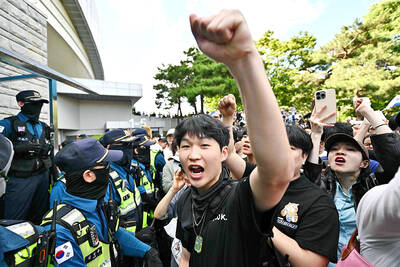
‘ABSURD MISTAKE’: The election commission said that there had been a failure to anticipate turnout after 14 polling stations ran short of ballot papers South Korean riot police yesterday cleared protesters from a Seoul polling station after a 35-hour blockade sparked by a shortage of ballot papers during local elections earlier this week. Wednesday’s election was the first nationwide vote since South Korean President Lee Jae-myung took office following the ouster of Yoon Suk-yeol over his short-lived martial law declaration. Lee’s ruling Democratic Party swept most races, but failed to flip the crucial Seoul mayoral seat. The South Korean National Election Commission apologized, blaming a failure to anticipate turnout after 14 polling stations in Seoul ran short of ballot papers. Some polling stations stayed open until 10pm to

France experienced its hottest spring on record, the French weather service said on Tuesday, after an exceptional early heat wave that also broke highs for the season in England and Wales. Meteo-France said the average nationwide temperature over March to May was 13.8°C — about 1.7°C above the norm, and surpassing records set in 2011 and 2020. “The warmest spring since records began in 1900,” it said in a bulletin. All three months were warmer than average, but the onset of an “unprecedented heatwave” late last month pushed the mercury to highs typically seen at the height of the summer. “Our country had never
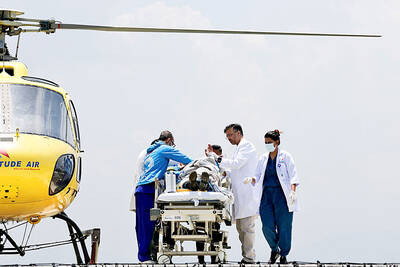
A Sherpa guide was found crawling to base camp on Mount Everest a week after he went missing and was reunited with his family, who had given up hope he would return. Dawa Sherpa was last seen on Friday last week descending the mountain, but he did not reach base camp even though his client did. The pair were among the last climbers on the mountain as the climbing season came to an end and the route was dismantled. Dawa was located by a cleaning crew on Thursday morning as he was crawling down the snowy slopes around the Khumbu Icefall, just above
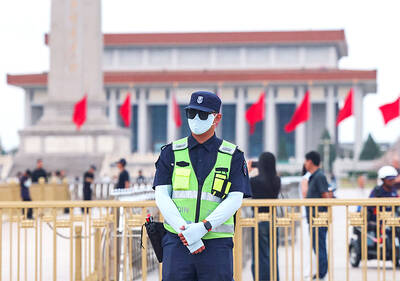
Chinese authorities are snuffing out any remembrance of the deadly 1989 military crackdown on student-led pro-democracy protests in Tiananmen Square, which happened 37 years ago yesterday, in a further tightening of a years-long campaign to erase what happened from public memory. Police told relatives of the victims they would not be allowed to visit a cemetery in Beijing on the anniversary of the crackdown, a person with knowledge of the matter said. Relatives of the victims visited the cemetery on the anniversary for more than 30 years to read memorial statements with police keeping watch, Amnesty International said. Hundreds of people,


 RSS
RSS