


Tonga's King George Tupou V was anointed yesterday as the South Pacific's newest king in a centuries-old ritual that included receiving gifts of dozens of roasted pigs and drinking the mild narcotic, kava.
The rites performed with dozens of tribal chiefs were the opening salvo in days of festivities marking George V’s formal coronation, though he in effect has been Tonga’s head of state and leader since his father’s death in 2006.
In the Taumafakava ceremony, the king was bestowed with the traditional chiefly Tui Kanokupolu title — making George V the 23rd head of the South Pacific nation’s ruling dynasty, founded in the 17th century. The ceremonies culminate tomorrow with a Christian coronation before foreign heads of state and other dignitaries.
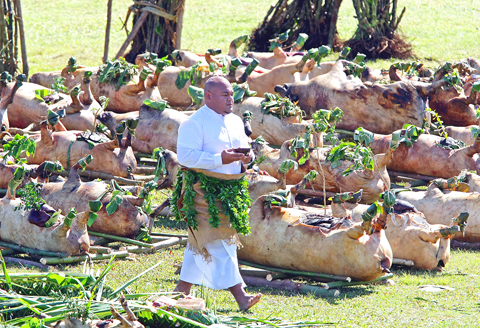
PHOTO: AFP
Tribal leaders went through elaborate procedures preparing, presenting and drinking kava — a gritty concoction made from the roots of a pepper plant that numbs the lips and mouth and is widely used at important occasions across the South Pacific.
The kava bowl was presented to George V, who drank it in one gulp as is customary. Thousands of spectators roared their approval in cheers and wild applause.
“From that moment his majesty became king of Tonga, the country was his,” said Motu’puaka, the king’s official orator.
George V has agreed to give up much of the near-absolute power his family has held for generations over his tiny South Pacific nation in favor of a mainly elected parliament.
The decision announced on Monday moves Tonga a step closer to giving up its absolute monarchy. It is one of just a handful of countries in the world where the monarch runs the government day-to-day.
No time frame was given for the proposed changes to take effect.
The palace has for years promised democratic reforms, but progress has been slow and public dissatisfaction has been building.
Tensions at a pro-democracy rally in the capital, Nuku’alofa, boiled over into riots in 2006 that killed eight and left the downtown razed.
George V also accepted dozens of roast pigs and hundreds of baskets of food yesterday from the crowd — gifts meant to symbolize the abundance of the king’s lands.
Tu’ivanuavou, a senior official in the royal household, said the ceremony was a key tribal event, with the more conventional coronation to follow.
“It marked the sealing by the nobles, the chiefs and the people of the sacred authority from his majesty derived from his ancestry,” said Tu’ivanuavou, who like many Tongan nobles uses just one name. “It was an act of homage and a confirmation of allegiance.”
George V sat in an open-sided pavilion filled with layers of prized fine mats and topped by 183m lengths of folded mulberry bark tapa cloth.
He sat with his back against a framed piece of tree trunk — a centuries-old practice designed to protect against potential attacks by enemy assassins.
When King George arrived he was escorted by the spear-wielding Tui’soso, a Fijian chief whose task was to drive away evil spirits.
The chiefly families of Tonga and Fiji are closely linked by blood and marriage.
As night fell, schoolchildren held up 30,000 flaming torches to announce to the world that George V was the anointed King of Tonga.

An American scientist convicted of lying to US authorities about payments from China while he was at Harvard University has rebuilt his research lab in Shenzhen, China, to pursue technology the Chinese government has identified as a national priority: embedding electronics into the human brain. Charles Lieber, 67, is among the world’s leading researchers in brain-computer interfaces. The technology has shown promise in treating conditions such as amyotrophic lateral sclerosis and restoring movement in paralyzed people. It also has potential military applications: Scientists at the Chinese People’s Liberation Army have investigated brain interfaces as a way to engineer super soldiers by boosting
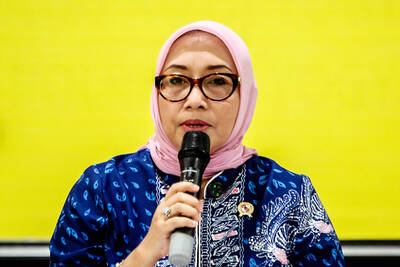
Indonesian police have arrested 13 people after shocking images of alleged abuse against small children at a daycare center went viral, sparking outrage across the nation, officials said on Monday. Police on Friday last week raided Little Aresha, a daycare center in Yogyakarta on Java island, following a report from a former employee. CCTV footage circulating on social media showed children, most younger than two, lying on the floor wearing only diapers, their hands and feet bound with rags. The police have confirmed that the footage is authentic. Police said they also found 20 children crammed into a room just 3m by 3m. “So
A grieving mother has ended her life at a clinic in Switzerland four years after the death of her only child. Wendy Duffy, 56, a physically healthy woman, died at the Pegasos clinic in Basel after struggling to cope with the death of her 23-year-old son, Marcus. The former care worker, from the West Midlands, England, had previously attempted to take her own life. The case comes as assisted dying would not become law in England and Wales after proposed legislation, branded “hopelessly flawed” by opponents, ran out of time. Ruedi Habegger, the founder of Pegasos, described Duffy’s death as
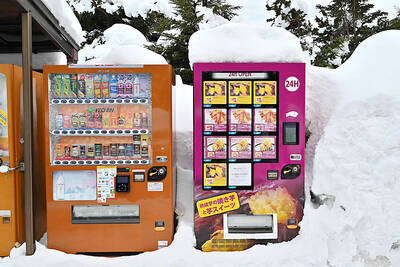
From post offices and parks to stations and even the summit of Mount Fuji, Japan’s vending machines are ubiquitous, but with the rapid pace of inflation cooling demand for their drinks, operators are being forced to rethink the business. Last month beverage giant DyDo Group Holdings announced it would remove about 20,000 vending machines — about 7 percent of their stock nationwide — by January next year, to “reconstruct a profitable network.” Pokka Sapporo Food & Beverage, based in Nagoya, also said last month it would sell its 40,000-machine operation to Osaka-based Lifedrink Co. “The strength of the vending machine


 RSS
RSS