


Thailand's prime minister yesterday distanced himself from ousted prime minister Thaksin Shinawatra, hoping to ease pressure on his four-month-old government as parliament gears up for a no-confidence vote.
Thai Prime Minister Samak Sundaravej took office after winning elections in December, which ended more than a year of rule by the royalist generals who toppled Thaksin in 2006.
Samak openly campaigned as a proxy for Thaksin but their ties have now sparked protests in the streets and in parliament, which is set to hold a vote of no confidence on Thursday.
Critics accuse him of attempting to shelter Thaksin from a raft of corruption investigations that have already resulted in the freezing of US$2 billion of his assets.
Called before the Senate for a debate on his performance, Samak refuted charges that he was Thaksin’s puppet.
“We are different,” he said. “The members of our political parties may come from the same groups, but it’s normal in Thai politics for people to change parties.”
Senator Sumon Sutaviriyawat opened the debate by accusing the prime minister of trying to amend the nation’s military-backed Constitution to curb the investigation into Thaksin, while ignoring Thailand’s economic problems.
“The government has failed to solve our economic problems and focused on amending the Constitution, which clearly shows that they want to help the former prime minister,” Sumon said.
“The country is in a crisis caused by this government,” she said in the nationally televised proceedings. “The country is not peaceful, and economic problems have not been solved.”
The Senate, in which nearly half the seats were appointed under the army-backed Constitution, will not vote at the end of the debate. However, the more powerful lower house will open a no-confidence debate today that will lead to a vote two days later.
Samak’s coalition controls about two-thirds of the 480 seats in the House of Representatives, and analysts say he is expected to easily survive the vote. But he still faces pressure from street protesters led by the so-called People’s Alliance for Democracy (PAD), which brought 25,000 people to the gates of Samak’s offices on Friday.
The PAD had led protests against Thaksin in the months before the coup, and their latest rallies have raised fears of a new putsch.
Their rallies pull together a mainly middle class following, but they exert a strong influence because the leadership is seen as a reflection of Thailand’s traditional power centers in the palace and the military.
Thaksin, a self-made billionaire, had antagonized Bangkok’s elite with populist policies that endeared him to Thailand’s populous heartland by providing universal healthcare, affordable loans and other programs.
Analysts say that even if Samak were somehow forced out of office, tensions would remain between the traditional elite and Thaksin’s populist allies, who would likely win any new election.
“If Samak resigns, then what? You have another election, the same people will win,” said Giles Ji Ungpakorn, a politics professor at Chulalongkorn University.
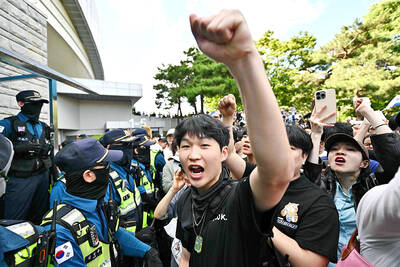
‘ABSURD MISTAKE’: The election commission said that there had been a failure to anticipate turnout after 14 polling stations ran short of ballot papers South Korean riot police yesterday cleared protesters from a Seoul polling station after a 35-hour blockade sparked by a shortage of ballot papers during local elections earlier this week. Wednesday’s election was the first nationwide vote since South Korean President Lee Jae-myung took office following the ouster of Yoon Suk-yeol over his short-lived martial law declaration. Lee’s ruling Democratic Party swept most races, but failed to flip the crucial Seoul mayoral seat. The South Korean National Election Commission apologized, blaming a failure to anticipate turnout after 14 polling stations in Seoul ran short of ballot papers. Some polling stations stayed open until 10pm to

France experienced its hottest spring on record, the French weather service said on Tuesday, after an exceptional early heat wave that also broke highs for the season in England and Wales. Meteo-France said the average nationwide temperature over March to May was 13.8°C — about 1.7°C above the norm, and surpassing records set in 2011 and 2020. “The warmest spring since records began in 1900,” it said in a bulletin. All three months were warmer than average, but the onset of an “unprecedented heatwave” late last month pushed the mercury to highs typically seen at the height of the summer. “Our country had never

A Sherpa guide was found crawling to base camp on Mount Everest a week after he went missing and was reunited with his family, who had given up hope he would return. Dawa Sherpa was last seen on Friday last week descending the mountain, but he did not reach base camp even though his client did. The pair were among the last climbers on the mountain as the climbing season came to an end and the route was dismantled. Dawa was located by a cleaning crew on Thursday morning as he was crawling down the snowy slopes around the Khumbu Icefall, just above
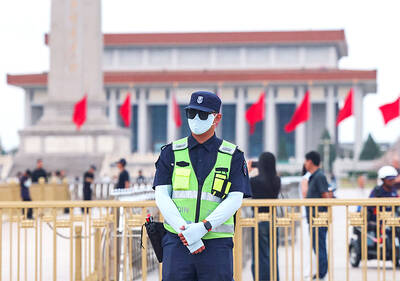
Chinese authorities are snuffing out any remembrance of the deadly 1989 military crackdown on student-led pro-democracy protests in Tiananmen Square, which happened 37 years ago yesterday, in a further tightening of a years-long campaign to erase what happened from public memory. Police told relatives of the victims they would not be allowed to visit a cemetery in Beijing on the anniversary of the crackdown, a person with knowledge of the matter said. Relatives of the victims visited the cemetery on the anniversary for more than 30 years to read memorial statements with police keeping watch, Amnesty International said. Hundreds of people,


 RSS
RSS