


Sherpas, mountaineers and a grateful nation mourned Everest conqueror Sir Edmund Hillary at a state funeral yesterday, more than half a century after he first stood on the roof of the world.
Thousands of mourners packed the church in Auckland, lined the streets as his coffin was driven by or watched on giant screens across New Zealand to pay their last respects to a man New Zealand Prime Minister Helen Clark called a colossus.
The funeral was beamed around the world, including Antarctica, where Hillary also led the first expedition to the South Pole by vehicle.
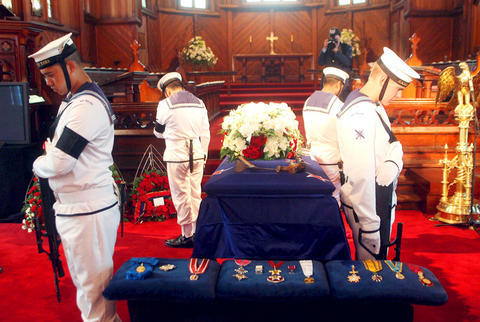
PHOTO: EPA
The ceremony was not, however, broadcast live in Nepal, contrary to earlier reports, because of the time difference.
At the start of the ceremony, Sherpa representatives laid Buddhist mourning scarves over the coffin, draped in a New Zealand flag and bearing the ice axe he used during his epic 1953 ascent.
Afterwards, the casket was borne out of the church through an honor guard of mountaineers, their ice picks held aloft in salute.
Students from Sir Edmund Hillary College performed a traditional Maori challenge, or haka, before the cortege drove to a private family cremation along streets lined with thousands of applauding bystanders.
Clark said Hillary, who died on Jan. 11 of a heart attack at the age of 88, was "the most famous New Zealander of our times."
"Sir Ed described himself as a person of modest abilities," she added. "In reality he was a colossus, he was our hero. How privileged we were to have that living legend with us for 88 years."
She was among some 600 guests inside St Mary's church along with Hillary's widow June, son Peter and daughter Sarah, and the eldest son of the Nepalese guide who accompanied him on his Everest expedition.
"I think Dad was a real people's hero," Peter Hillary, a mountaineer in his own right, who has twice scaled Everest, said in his eulogy. "He was real, he was the genuine article."
The Sherpa people from Nepal's Himalayan region reminded mourners that the lanky former beekeeper meant as much to them as to New Zealanders.
In the years after he and Sherpa Norgay Tenzing stood on the summit of the 8,848m peak on May 29, 1953, Hillary opened a foundation to build schools and medical facilities in the impoverished region.
The Himalayan Foundation built or supported 63 schools, two hospitals, a dozen medical clinics, bridges and miles of trails and provided safe drinking water, said Norbu Tenzing Norgay, the eldest son of Hillary's companion.
It epitomized the true meaning of giving, Norbu said.
"His love and dedication towards the Sherpas was like a parent for a child, absolutely unconditional," he said. "When the Sherpas heard the news of his death, their grief spiraled into mourning only comparable to the loss of a parent."
The head of the Himalayan Trust, Ang Rita Sherpa, described Hillary as "a man with a big heart" and a "second father."
"His loss for us is bigger and heavier than Mount Everest," he said.
High-level political and diplomatic representatives from around the world joined in the funeral service in the wooden, gothic-style church alongside the four surviving members of the 1953 expedition.
No member of the British royal family was present, in what some New Zealand and British newspapers had labeled a snub, although a royal memorial service is due to be held for Hillary at Windsor Castle near London in April.
Hillary's feat has always been closely linked with Elizabeth II -- it was announced on the day of her coronation on June 2, 1953, and she knighted him soon after.
It is thought his ashes may be scattered on Auckland's Hauraki Gulf, after he said in one of his autobiographies that he would like to be "washed gently ashore maybe on the many pleasant beaches near the place where I was born."
"Then the full circle of my life will be complete," he wrote.
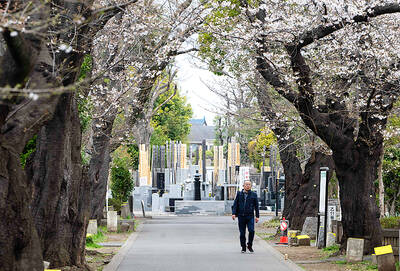
ROCKY RELATIONS: The figures on residents come as Chinese tourist numbers drop following Beijing’s warnings to avoid traveling to Japan The number of Chinese residents in Japan has continued to rise, even as ties between the two countries have become increasingly fractious, data released on Friday showed. As of the end of December last year, the number of Chinese residents had increased by 6.5 percent from the previous year to 930,428. Chinese people accounted for 22.6 percent of all foreign residents in Japan, making them by far the largest group, Japanese Ministry of Justice data showed. Beijing has criticized Tokyo in increasingly strident terms since Japanese Prime Minister Sanae Takaichi last year suggested that a military conflict around Taiwan could
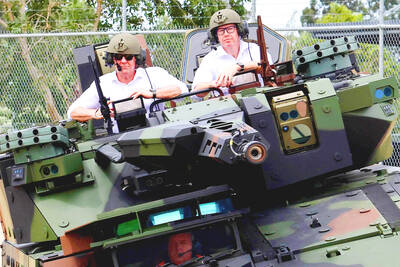
Germany is considering Australia’s Ghost Bat robot fighter as it looks to select a combat drone to modernize its air force, German Minister of Defense Boris Pistorius said yesterday. Germany has said it wants to field hundreds of uncrewed fighter jets by 2029, and would make a decision soon as it considers a range of German, European and US projects developing so-called “collaborative combat aircraft.” Australia has said it will integrate the Ghost Bat, jointly developed by Boeing Australia and the Royal Australian Air Force, into its military after a successful weapons test last year. After inspecting the Ghost Bat in Queensland yesterday,
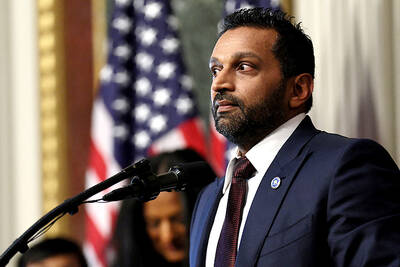
A pro-Iran hacking group claimed to breach FBI Director Kash Patel’s personal e-mail inbox and posted some of the contents online. The e-mails provided by the hacking group include travel details, correspondence with leasing agents in Washington and global entry, and loyalty account numbers. The e-mail address the hackers claim to have compromised has been previously tied to Patel’s personal details, and the leaked e-mails contain photos of Patel and others, in addition to correspondence with family members and colleagues. “The FBI is aware of malicious actors targeting Director Patel’s personal email information,” the agency said in a statement on
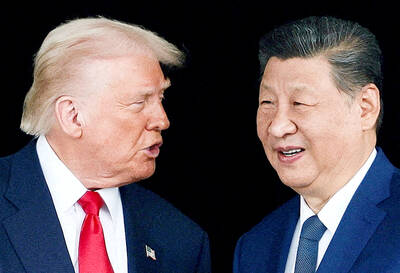
RIVALRY: ‘We know that these are merely symbolic investigations initiated by China, which is in fact the world’s most profligate disrupter of supply chains,’ a US official said China has started a pair of investigations into US trade practices, retaliating against similar probes by US President Donald Trump’s administration as the superpowers stake out positions before an expected presidential summit in May. The move, announced by the Chinese Ministry of Commerce on Friday, is a direct mirror of steps Trump took to revive his tariff agenda after the US Supreme Court last month struck down some of his duties. “China expresses its strong dissatisfaction and firm opposition to these actions,” a ministry spokesperson said in a statement, referring to the so-called Section 301 investigations initiated on March 11.


 RSS
RSS