


The Washington Post described Jessica Cutler as "our blog slut."
The National Enquirer opined that she was "beautiful, untalented and morally corrupted."
Now the blogger who wrote about her attempts to juggle affairs with six men while keeping a job as an aide to a senator has a new role: the star defendant in a case that could help define what can and cannot be published in a blog.
Writing under the pseudonym Washingtonienne, Cutler described in detail the sexual intricacies of her life on the Hill. The blog, which Cutler claimed was intended to keep her friends up to date on her social life in Washington, achieved notoriety and its author fame and a book contract, after it was brought to a wider public by another blog, Wonkette.
Almost immediately, Washingtonienne shut down, but not before millions had read about "X = married man who pays me for sex," "K = a sugar daddy" and "YZ = the current favorite."
But YZ -- code for Robert Steinbuch, a legal counsel working for the same senator -- objected to the revelations about his private life.
While Cutler lost her job with Republican Senator Mike DeWine, Steinbuch moved to a teaching post in Arkansas and filed a lawsuit alleging invasion of privacy and seeking US$20 million in damages.
The case dating from the 2004 blog is expected to go to trial soon. In establishing whether people who keep online journals are obliged to respect the privacy of those they interact with offline, the case could have a profound effect on the content of social networking sites such as MySpace and Facebook.
"Anybody who wants to reveal their own private life has a right to do that," said Marc Rotenberg, director of the Electronic Privacy Information Cen-ter. "It's a different question when you reveal someone else's private life."
Steinbuch's attorney, Jonathan Rosen, told a judge in a pre-trial hearing that his client wants to restore his good name.
"It's not funny and it's damaging," Rosen said. "It's horrible, absolutely horrible."
Cutler's attorney, Matthew Billips, had a different view.
"I have no idea what he wants," he said. "He's never said, `This is what I think should be done.'"
The judge, too, seemed bemused by the case.
"I don't know why we're here in federal court to begin with," Judge Paul Friedman told attorneys in April. "I don't know why this guy thought it was smart to file a lawsuit and lay out all of his private, intimate details."
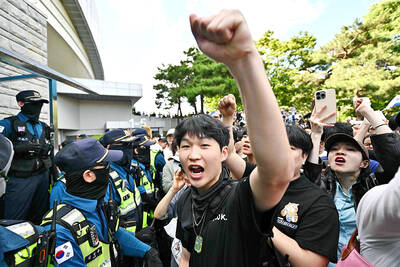
‘ABSURD MISTAKE’: The election commission said that there had been a failure to anticipate turnout after 14 polling stations ran short of ballot papers South Korean riot police yesterday cleared protesters from a Seoul polling station after a 35-hour blockade sparked by a shortage of ballot papers during local elections earlier this week. Wednesday’s election was the first nationwide vote since South Korean President Lee Jae-myung took office following the ouster of Yoon Suk-yeol over his short-lived martial law declaration. Lee’s ruling Democratic Party swept most races, but failed to flip the crucial Seoul mayoral seat. The South Korean National Election Commission apologized, blaming a failure to anticipate turnout after 14 polling stations in Seoul ran short of ballot papers. Some polling stations stayed open until 10pm to

France experienced its hottest spring on record, the French weather service said on Tuesday, after an exceptional early heat wave that also broke highs for the season in England and Wales. Meteo-France said the average nationwide temperature over March to May was 13.8°C — about 1.7°C above the norm, and surpassing records set in 2011 and 2020. “The warmest spring since records began in 1900,” it said in a bulletin. All three months were warmer than average, but the onset of an “unprecedented heatwave” late last month pushed the mercury to highs typically seen at the height of the summer. “Our country had never

A Sherpa guide was found crawling to base camp on Mount Everest a week after he went missing and was reunited with his family, who had given up hope he would return. Dawa Sherpa was last seen on Friday last week descending the mountain, but he did not reach base camp even though his client did. The pair were among the last climbers on the mountain as the climbing season came to an end and the route was dismantled. Dawa was located by a cleaning crew on Thursday morning as he was crawling down the snowy slopes around the Khumbu Icefall, just above
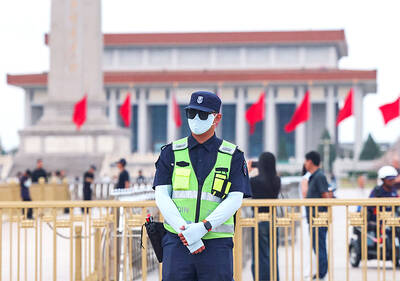
Chinese authorities are snuffing out any remembrance of the deadly 1989 military crackdown on student-led pro-democracy protests in Tiananmen Square, which happened 37 years ago yesterday, in a further tightening of a years-long campaign to erase what happened from public memory. Police told relatives of the victims they would not be allowed to visit a cemetery in Beijing on the anniversary of the crackdown, a person with knowledge of the matter said. Relatives of the victims visited the cemetery on the anniversary for more than 30 years to read memorial statements with police keeping watch, Amnesty International said. Hundreds of people,


 RSS
RSS