


Efforts to hold two Asian summits limped to a dreary end yesterday as officials who had come to the Philippines tackled what little work they could while arranging flights home as Typhoon Utor hit the country.
Steady rain fell from the leading edge of the typhoon, which officials blamed on Friday for postponing for a month the scheduled ASEAN summit and an East Asia summit.
The officials insisted the postponement had nothing to do with warnings of a possible terror attack that several foreign embassies had issued on Thursday.
"I think the Philippine authorities decided not to take chances," ASEAN Secretary-General Ong Keng Yong said.
"It could be a moderate typhoon, but then when power outages and all that happen, what have we?" he said.
Eight of the 10 ASEAN foreign ministers, along with their counterparts from China and Japan, arrived before the postponement and managed to squeeze in a meeting late on Friday.
Yesterday some leaders met again at a sparsely attended breakfast get-together.
Their agenda included possible dates to try holding the two summits again.
"I assured them there will be no typhoon in January," Philippine Foreign Secretary Alberto Romulo joked.
"Almost to a man, they all want to come back here in Cebu," he said.
Cebu, located in the central Philippines, had been the planned venue for the summits.
An official from the Philippine Department of Foreign Affairs said Jan. 8 to 13 was being proposed as the new dates.
Despite the postponement, China's Foreign Minister Li Zhaoxing (
Tokyo firmed up its invitation to China's top two leaders to visit Japan early next month.
Late on Friday evening, economic ministers signed six agreements on integrating their economies, but 20 other agreements will have to wait until the proceedings resume.
Also put on hold was a binding treaty on cross-border cooperation in fighting terrorism.
As the economic ministers met behind closed doors, dozens of aides and diplomats on mobile phones feverishly arranged for flights and other transport on short notice.
Philippine Trade Secretary Peter Favila pitched in to help by phoning Philippine Airlines to arrange diplomats' flights back to Manila.
Officials said they did not want to take a chance with the highly unpredictable weather.
Only a week has passed since Super Typhoon Durian -- the fourth typhoon to strike the Philippines in as many months -- left more than 1,000 people dead or missing and caused the evacuation of over 100,000 people.
A Foreign Affairs senior official said the decision to postpone had come after a flurry of consultations between Romulo, senior Philippine diplomats in Cebu and Philippine President Gloria Macapagal Arroyo in Manila.
After considering options and consulting with other ministers, Arroyo made the final decision to postpone.
"It's better to postpone the summit rather than hold it in an atmosphere where there is destruction all around. It goes against the grain of the theme of ASEAN, which is `One caring and sharing community,'" Arroyo spokesman Ignacio Bunye told reporters.
That left those in Cebu trying to work out the logistics of getting people out early.
Maggie Garcia of the Shangri-la Mactan hotel, where officials were staying and meeting, said the hotel had brought in at least 50 culinary experts and trained butlers from around Asia to work during the summit, and had pre-ordered the meals for leaders.
"They're still in the freezers," she said.
"We can easily put them out in a buffet now for other guests," she said.
The Shangri-la has about 500 rooms, with about 85 percent reserved for ASEAN.
The hotel has not assessed whether it will incur a loss because of the postponement, she said.
The Philippines inherited the summits after military-ruled Myanmar decided to pass on its turn to host the annual ASEAN meeting.
Myanmar did not want to draw even more than the usual attention to its dismal human rights record and lack of progress in restoring democracy.
That passed the baton on to the Philippines, which had frantically rushed in order to finish a new convention center in Cebu a year earlier than planned to host the ASEAN summit.
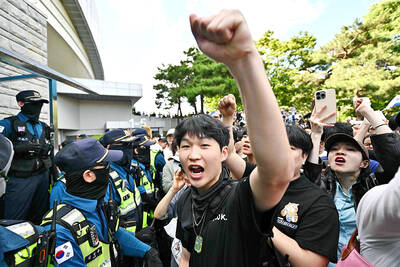
‘ABSURD MISTAKE’: The election commission said that there had been a failure to anticipate turnout after 14 polling stations ran short of ballot papers South Korean riot police yesterday cleared protesters from a Seoul polling station after a 35-hour blockade sparked by a shortage of ballot papers during local elections earlier this week. Wednesday’s election was the first nationwide vote since South Korean President Lee Jae-myung took office following the ouster of Yoon Suk-yeol over his short-lived martial law declaration. Lee’s ruling Democratic Party swept most races, but failed to flip the crucial Seoul mayoral seat. The South Korean National Election Commission apologized, blaming a failure to anticipate turnout after 14 polling stations in Seoul ran short of ballot papers. Some polling stations stayed open until 10pm to

France experienced its hottest spring on record, the French weather service said on Tuesday, after an exceptional early heat wave that also broke highs for the season in England and Wales. Meteo-France said the average nationwide temperature over March to May was 13.8°C — about 1.7°C above the norm, and surpassing records set in 2011 and 2020. “The warmest spring since records began in 1900,” it said in a bulletin. All three months were warmer than average, but the onset of an “unprecedented heatwave” late last month pushed the mercury to highs typically seen at the height of the summer. “Our country had never

A Sherpa guide was found crawling to base camp on Mount Everest a week after he went missing and was reunited with his family, who had given up hope he would return. Dawa Sherpa was last seen on Friday last week descending the mountain, but he did not reach base camp even though his client did. The pair were among the last climbers on the mountain as the climbing season came to an end and the route was dismantled. Dawa was located by a cleaning crew on Thursday morning as he was crawling down the snowy slopes around the Khumbu Icefall, just above
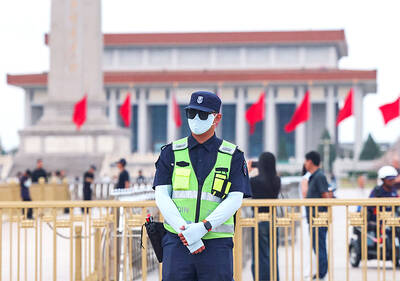
Chinese authorities are snuffing out any remembrance of the deadly 1989 military crackdown on student-led pro-democracy protests in Tiananmen Square, which happened 37 years ago yesterday, in a further tightening of a years-long campaign to erase what happened from public memory. Police told relatives of the victims they would not be allowed to visit a cemetery in Beijing on the anniversary of the crackdown, a person with knowledge of the matter said. Relatives of the victims visited the cemetery on the anniversary for more than 30 years to read memorial statements with police keeping watch, Amnesty International said. Hundreds of people,


 RSS
RSS