


Iranian President Mahmoud Ahmadinejad has already stirred international anger by dismissing the Holocaust as a "myth," and now Iran is drumming up further anti-Israel rhetoric by staging the "International Holocaust Cartoon Contest."
The month-long competition opened on Monday in the Palestine Contemporary Art Museum, a recently renovated two-story house in downtown Tehran.
Visitors are greeted by a poster and the word "Holocust" in huge letters, with no explanation offered for the misspelling.
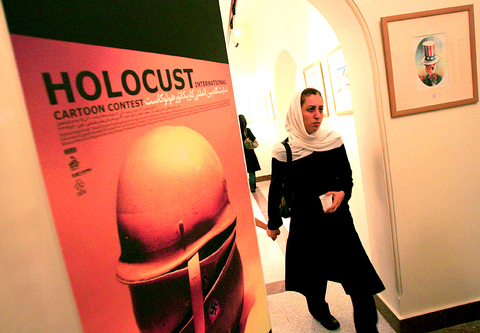
PHOTO: AFP
The poster also depicts a World War II German helmet emblazoned with the Jewish Star of David, equating the Nazis with "the Zionists" -- the term used by Iranian officials to refer to Israel.
On Tuesday the museum was packed with art students clutching invitations from the organizers, and also with ordinary people who had heard about the exhibition from television or read about it in Tehran's newspapers.
The contest was jointly arranged by Iran Cartoon, the country's caricature association, and the nation's largest-circulation newspaper Hamshahri, which is published by Tehran's conservative municipality.
It was staged in response to the publication in the Western press last September of caricatures of the Prophet Mohammed that were first printed in Denmark and then picked up and published throughout the world.
The cartoons enraged Muslims, and the Holocaust cartoon contest was announced in February in a tit-for-tat move, the organizers said.
"We staged this fair to explore the limits of freedom Westerners believe in," said Masoud Shojai, the head of Iran Cartoon.
"They can freely write anything they like about our prophet, but if one raises doubts about the Holocaust he is either fined or sent to prison," he told reporters.
"Though we do not deny that fact that Jews were killed in the war, why should the Palestinians pay for it?" said Shojai, 43, who holds a masters degree in graphics.
"Since the president had spoken about the Holocaust, I was curious to know more and I think some of the cartoons have taught me something," teenage visitor Toktam told reporters.
"The cartoons are diverse, and not all of them are about the Holocaust. I personally think that the matter is exaggerated," civil servant Hossein said.
Pinocchio's long nose, which grows longer when he tells lies, was a common motif among entries to the contest, as were the supposedly large noses of Jews.
The inability of the UN to secure the implementation of most of its resolutions concerning Israel also featured strongly, as did the US Statue of Liberty transformed into a skull.
The Nazi swastika turning into a barbed wire Star of David to strangle Palestinians -- and even depictions of Adolf Hitler ordering current Israeli leaders to launch a holocaust -- were also evident.
Shojai said that the top three cartoons will be announced on Sept. 2, with the winners awarded prizes of US$12,000, US$8,000 and US$5,000 respectively.
He did not elaborate on the source of the prize money, but said that it did not come from any governmental body.
Shojai dodged the question of who the three winners might be, but said a jury of five "famous" Iranian cartoonists had judged more than 1,100 entries submitted from over 60 countries.
Two hundred entries have been put on display for the exhibition.
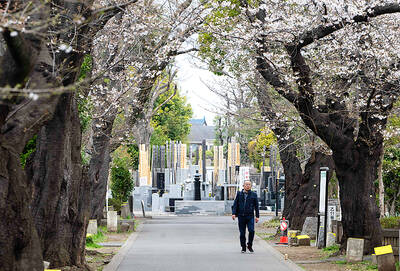
ROCKY RELATIONS: The figures on residents come as Chinese tourist numbers drop following Beijing’s warnings to avoid traveling to Japan The number of Chinese residents in Japan has continued to rise, even as ties between the two countries have become increasingly fractious, data released on Friday showed. As of the end of December last year, the number of Chinese residents had increased by 6.5 percent from the previous year to 930,428. Chinese people accounted for 22.6 percent of all foreign residents in Japan, making them by far the largest group, Japanese Ministry of Justice data showed. Beijing has criticized Tokyo in increasingly strident terms since Japanese Prime Minister Sanae Takaichi last year suggested that a military conflict around Taiwan could
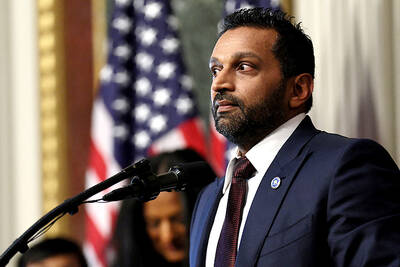
A pro-Iran hacking group claimed to breach FBI Director Kash Patel’s personal e-mail inbox and posted some of the contents online. The e-mails provided by the hacking group include travel details, correspondence with leasing agents in Washington and global entry, and loyalty account numbers. The e-mail address the hackers claim to have compromised has been previously tied to Patel’s personal details, and the leaked e-mails contain photos of Patel and others, in addition to correspondence with family members and colleagues. “The FBI is aware of malicious actors targeting Director Patel’s personal email information,” the agency said in a statement on
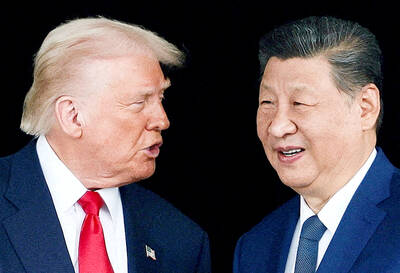
RIVALRY: ‘We know that these are merely symbolic investigations initiated by China, which is in fact the world’s most profligate disrupter of supply chains,’ a US official said China has started a pair of investigations into US trade practices, retaliating against similar probes by US President Donald Trump’s administration as the superpowers stake out positions before an expected presidential summit in May. The move, announced by the Chinese Ministry of Commerce on Friday, is a direct mirror of steps Trump took to revive his tariff agenda after the US Supreme Court last month struck down some of his duties. “China expresses its strong dissatisfaction and firm opposition to these actions,” a ministry spokesperson said in a statement, referring to the so-called Section 301 investigations initiated on March 11.
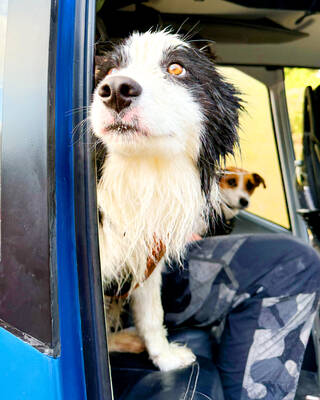
When a hiker fell from a 55m waterfall in wild New Zealand bush, rescuers were forced to evacuate the badly hurt woman without her dog, which could not be found. After strangers raised thousands of dollars for a search, border collie Molly was flown to safety by a helicopter pilot who was determined to reunite the pet and the owner. A week earlier, an emergency rescue helicopter found the woman with bruises and lacerations after a fall at a rocky spot at the waterfall on the South Island’s West Coast. She was airlifted on March 24, but they were forced to


 RSS
RSS