


Japan's Princess Kiko has developed complications with her pregnancy and may have to give birth to her third child by Cesarean section, palace officials said yesterday.
Kiko -- who is due to give birth in late September -- has symptoms indicating partial placenta previa, a condition in which part of the placenta drops too low in the uterus, palace doctor Ichiro Kanazawa said in a statement released through the Imperial Household Agency.
"There is a high risk of early bleeding, infection or pre-term birth triggered by the placenta previa," Kanazawa said. "In order to prevent these possible complications, the Princess will have to rest for some time."
He said Kiko needs rest and peace of mind, although her condition does not require immediate hospitalization.
"We believe a Cesarean section will be needed at the time of delivery, which is highly likely to come at an earlier date than originally expected," Kanazawa said.
He did not venture a prediction on the timing of the birth, however.
The doctor said both Kiko and the fetus, whose sex has not been disclosed, are in good health, but added that Kiko might have to be hospitalized if her condition gets worse.
The pregnancy of the 39-year-old wife of Prince Akishino, who is the second son of Emperor Akihito, has won national attention because the imperial family has failed to produce a male heir to the throne since 1965.
Crown Prince Naruhito and his wife, Masako, have only one child -- four-year-old Princess Aiko.
Prime Minister Junichiro Koizumi had pushed for legislation that would allow a woman to take the Imperial throne as a way to resolve the royal succession crisis.
But Kiko's pregnancy announcement in February raised hopes for a male heir and took the steam out of Koizumi's drive. The prime minister later hinted he may shelve the legislation.
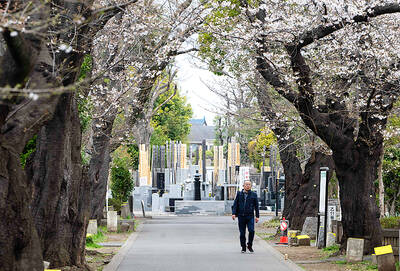
ROCKY RELATIONS: The figures on residents come as Chinese tourist numbers drop following Beijing’s warnings to avoid traveling to Japan The number of Chinese residents in Japan has continued to rise, even as ties between the two countries have become increasingly fractious, data released on Friday showed. As of the end of December last year, the number of Chinese residents had increased by 6.5 percent from the previous year to 930,428. Chinese people accounted for 22.6 percent of all foreign residents in Japan, making them by far the largest group, Japanese Ministry of Justice data showed. Beijing has criticized Tokyo in increasingly strident terms since Japanese Prime Minister Sanae Takaichi last year suggested that a military conflict around Taiwan could

Germany is considering Australia’s Ghost Bat robot fighter as it looks to select a combat drone to modernize its air force, German Minister of Defense Boris Pistorius said yesterday. Germany has said it wants to field hundreds of uncrewed fighter jets by 2029, and would make a decision soon as it considers a range of German, European and US projects developing so-called “collaborative combat aircraft.” Australia has said it will integrate the Ghost Bat, jointly developed by Boeing Australia and the Royal Australian Air Force, into its military after a successful weapons test last year. After inspecting the Ghost Bat in Queensland yesterday,
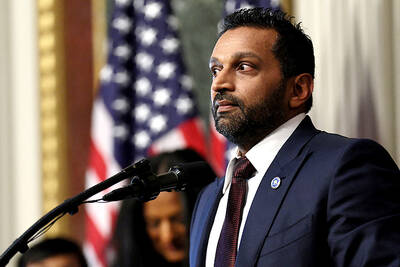
A pro-Iran hacking group claimed to breach FBI Director Kash Patel’s personal e-mail inbox and posted some of the contents online. The e-mails provided by the hacking group include travel details, correspondence with leasing agents in Washington and global entry, and loyalty account numbers. The e-mail address the hackers claim to have compromised has been previously tied to Patel’s personal details, and the leaked e-mails contain photos of Patel and others, in addition to correspondence with family members and colleagues. “The FBI is aware of malicious actors targeting Director Patel’s personal email information,” the agency said in a statement on
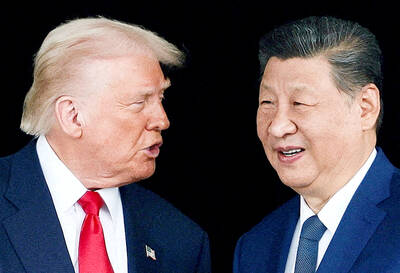
RIVALRY: ‘We know that these are merely symbolic investigations initiated by China, which is in fact the world’s most profligate disrupter of supply chains,’ a US official said China has started a pair of investigations into US trade practices, retaliating against similar probes by US President Donald Trump’s administration as the superpowers stake out positions before an expected presidential summit in May. The move, announced by the Chinese Ministry of Commerce on Friday, is a direct mirror of steps Trump took to revive his tariff agenda after the US Supreme Court last month struck down some of his duties. “China expresses its strong dissatisfaction and firm opposition to these actions,” a ministry spokesperson said in a statement, referring to the so-called Section 301 investigations initiated on March 11.


 RSS
RSS