


Mark Watson is in Kathmandu, negotiating an unusual project: to carry live plants and seeds out of Nepal and back to the UK. In an effort to conserve the country's abundant flora, Watson and his colleagues are about to start collecting and documenting every one of Nepal's 6,000-7,000 species of plants.
Watson, a botanist at the Royal Botanic Gardens in Edinburgh, and his colleague Colin Pendry, have spent much of the last two years training 16 local botanists in Nepal. This week they will be putting the trainees through their final paces, testing them on everything from herbarium management to plant drying, before starting the project in earnest.
They are expecting the mammoth undertaking to take them 15 years, but when it is finished the new plantlife record, or flora, will be the first official record of Nepal's rich plant environment and an invaluable aid for conservationists working out how best to protect and maintain the mountain nation's unique variety of plants.
Although it takes up only 0.09 percent of the planet's land surface, Nepal squeezes in everything from steamy jungles to frozen Himalayan mountains. This huge variation in altitude and environment makes it one of the most plant-rich countries in the world. By comparison the UK has 2,000 species recorded in its own flora.
The Royal Botanic Gardens already has a few of Nepal's most elusive plants. Collected over 100 years ago by Victorian explorers, the delicate plants have been nurtured by generations of botanists.
Back in their native homeland, some have not fared quite so well and are on the verge of extinction. The botanists hope to reintroduce Victorian and modern seedlings to Nepal from the Edinburgh gardens.
They will set about collecting the thousands of different plants in the same way the Victorians did -- by going out and hunting for them. Part of the training has involved three expeditions, with the most recent, in September, going to the Sagarmatha national park in the Mount Everest region. On these expeditions each botanist specializes in a particular plant group and gathers specimens.
Unlike their Victorian counterparts, these plant gatherers are assisted by high-tech equipment.
"We use GPS to work out the exact location and altitude of each specimen, digital cameras to take photos and a laptop to make ecological notes about each plant," Watson says.
Back at the camp the plants are pressed and dried using heat dryers. In remote locations without electricity this means carrying generators up to the camps to power the computers and kerosene to power the plant drying machines.
Aside from an adventurous spirit, some plant collecting requires a head for heights.
"There are some species that only grow along the branches of tall trees, and others that prefer rocky cliff faces," says Watson.
Meconopsis horridula, a blue, poppy-like flower and the symbol of the Edinburgh Royal Botanical Gardens, only grows on crags above 4,000m.
"It was a stunningly exciting moment when we found one and a brave Sherpa guide collected it from the crag for us," says Pendry.
The terrain is not the only difficulty for plant collectors in Nepal.
"Certain areas are problematic for collecting because of the Maoist insurgents," he adds.
So far the Edinburgh collectors have documented around 600 plant species on the expeditions, enough to fill one of the 10 volumes they expect to produce.
"It might not be considered very fashionable to be doing this Victorian science of plant collecting, but it is a fundamental necessity for scientific work in the future. If you can't name the plants, then you can't do anything with them," says Pendry.
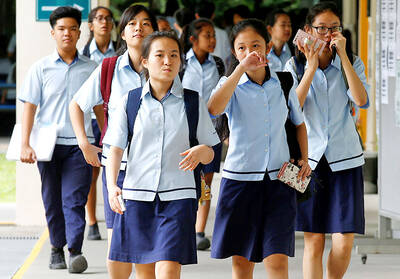
School bullies in Singapore are to face caning under new guidelines, but the education minister on Tuesday said it would be meted out only as a last resort with strict safeguards. Human rights groups regularly criticize Singapore for the use of corporal punishment, which remains part of the school and criminal justice systems, but authorities have defended it as a deterrent to crime and serious misconduct. Caning was discussed in the parliament after legislators asked how it would be used in relation to bullying in schools. The debate followed stricter guidelines on serious student misconduct, including bullying, unveiled by the Singaporean Ministry of
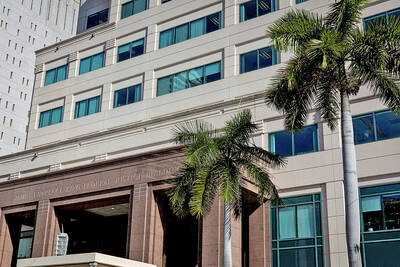
‘GROSS NEGLIGENCE?’ Despite a spleen typically being significantly smaller than a liver, the surgeon said he believed Bryan’s spleen was ‘double the size of what is normal’ A Florida surgeon who is facing criminal charges after allegedly removing a patient’s liver instead of his spleen has said he is “forever traumatized” by that person’s death. In a deposition from November last year that was recently obtained by NBC, 44-year-old Thomas Shaknovsky described the death of 70-year-old William Bryan as an “incredibly unfortunate event that I regret deeply.” Bryan died after the botched surgery; and last month, a grand jury in Tallahassee indicted Shaknovsky on a charge of manslaughter. “I’m forever traumatized by it and hurt by it,” Shaknovsky added, also saying that wrong-site surgeries can happen “during

A MESSAGE: Japan’s participation in the Balikatan drills is a clear deterrence signal to China not to attack Taiwan while the US is busy in the Middle East, an analyst said The Japan Self-Defense Forces yesterday fired a Type 88 anti-ship missile during a joint maritime exercise with US, Australian and Philippine forces, hitting a decommissioned Philippine Navy ship in waters facing the disputed South China Sea, in drills that underscore Tokyo’s rising willingness to project military power on China’s doorstep. The drill took place as Manila and Tokyo began talks on a potential defense equipment transfer, made possible by Japan’s decision to scrap restrictions on military exports. The discussions include the possible early transfer of Abukuma-class destroyers and TC-90 aircraft to the Philippines, Japanese Minister of Defense Shinjiro Koizumi said. Philippine Secretary of

A South Korean judge who last week more than doubled former South Korean first lady Kim Keon-hee’s prison sentence was found dead yesterday, police said. Shin Jong-o was found unconscious at about 1am at the Seoul High Court building, an investigator at the Seocho District Police Station in Seoul said. Shin was taken to a hospital and pronounced dead, he said. “There is no sign of foul play in the death,” the investigator added. Local media reported that Shin had left a suicide note, but the investigator said there was none. On Tuesday last week, Shin presided over 53-year-old Kim’s appeal trial, finding her guilty


 RSS
RSS