


Laleh Seddigh stepped on the gas, cut off a truck and blasted her Peugeot between two other cars.
"I prefer to drive by myself," she said, seeing her passenger steadying himself with a hand on the dash. "In case something happens -- it's a very big responsibility."
With that, she broke around a blue pickup, accelerated past an Oldsmobile and swerved onto an off-ramp, past a billboard of Ayatollah Khomeini and a 30kph speed-limit sign, doing 80kph (or just under 50mph).
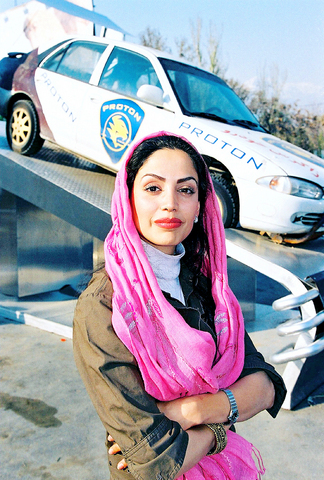
PHOTO: NY TIMES NEWS SERVICE
Seddigh loves speed. She also loves a challenge. Last fall, she petitioned the national auto racing federation in this male-dominated society for permission to compete against men. When it was granted, she became not only the first woman in Iran to race cars against the opposite sex, but also the first woman since the Islamic Revolution here to compete against men in any sport.
What's more, she beat them.
"I like competition in everything," the striking 28-year-old said after parking the car and going for tiramisu in a cafe in North Tehran. "I have to move whatever is movable in the world."
In March, she moved the nation when she won the national championship. State television refused to show the new champ on the victory stand elevated above the men, but photographers captured the moment. She stood quietly while receiving her medal, as she had promised the race organizers she would, with a scarf over her long black hair and a coat over her racing uniform.
Seddigh is a lively, energetic symbol of a whole generation of young Iranians who are increasingly testing social boundaries. Seventy percent of Iranians are under 35, and they have gently pushed for, and received, freedoms unimaginable even a few years ago. For women in Tehran, at least, head scarves are often brightly colored and worn loosely over the hair. The obligatory women's overcoats are now often tight and short.
She admires the Formula One star Michael Schumacher -- in fact, the petite Seddigh is often called "the little Schumacher" -- but her real hero is her father, a wealthy factory owner. "I've always wanted to be like him," she said. "Basically, he's my trainer in everything."
"I want to show my father that I can do anything," she said. "I've always wanted to follow him. He drove fast and careful, and I looked up to him and followed him. From the time I was 12 or 13, I wanted to have a competition with boys, and maybe that was the reason."
Seddigh is the oldest of four children. When she was 13, her father taught her to drive on weekends in a park on the outskirts of Tehran. At 23, she began racing miniature race cars that had more in common with go-carts. She also entered three-day cross-country car rallies, in which she had to change her own tires and make her own repairs. "I had to do everything by myself," she said, "because my navigator was a girl as well."
The opportunity to compete against the boys came last year, when a new president took over at the Iranian racing federation who was open to allowing a woman to enter the men's races. There has been a lot of jealous grumbling from many of the male drivers, Seddigh said, but others, like Saeed Arabian, Iran's previous national champion and now her driving coach, are proud of what she has achieved.
"She is brave in asking for her rights," Arabian said. "She will have a great future."
After winning the national championship, Seddigh was featured on the cover of Zanan, Iran's largest women's magazine. Still, she is careful not to assume an activist's role.
"I'm not a feminist," she said. "But why should women be lazy and weak? If you're determined, you've got to push."
She has been pushing into traditionally male pursuits all her life. With her father's encouragement, she has devoted her academic career to preparing to succeed him in the family business. She received a bachelor's degree in industrial management and a master's in production engineering, and is now working on her PhD in industrial management and production, all at Tehran University.
She enjoys her studies, she says, but driving is her first love. It appears to be a widely shared passion, as the exuberantly chaotic traffic of Tehran makes competitive driving seem like a national sport.
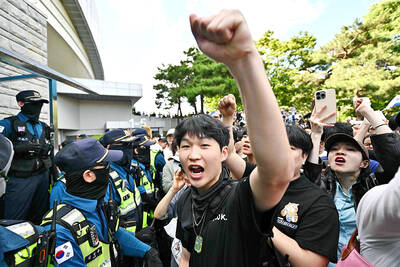
‘ABSURD MISTAKE’: The election commission said that there had been a failure to anticipate turnout after 14 polling stations ran short of ballot papers South Korean riot police yesterday cleared protesters from a Seoul polling station after a 35-hour blockade sparked by a shortage of ballot papers during local elections earlier this week. Wednesday’s election was the first nationwide vote since South Korean President Lee Jae-myung took office following the ouster of Yoon Suk-yeol over his short-lived martial law declaration. Lee’s ruling Democratic Party swept most races, but failed to flip the crucial Seoul mayoral seat. The South Korean National Election Commission apologized, blaming a failure to anticipate turnout after 14 polling stations in Seoul ran short of ballot papers. Some polling stations stayed open until 10pm to
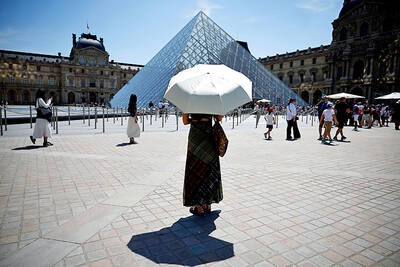
France experienced its hottest spring on record, the French weather service said on Tuesday, after an exceptional early heat wave that also broke highs for the season in England and Wales. Meteo-France said the average nationwide temperature over March to May was 13.8°C — about 1.7°C above the norm, and surpassing records set in 2011 and 2020. “The warmest spring since records began in 1900,” it said in a bulletin. All three months were warmer than average, but the onset of an “unprecedented heatwave” late last month pushed the mercury to highs typically seen at the height of the summer. “Our country had never
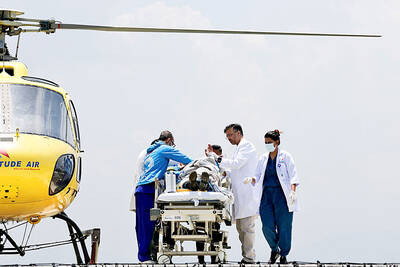
A Sherpa guide was found crawling to base camp on Mount Everest a week after he went missing and was reunited with his family, who had given up hope he would return. Dawa Sherpa was last seen on Friday last week descending the mountain, but he did not reach base camp even though his client did. The pair were among the last climbers on the mountain as the climbing season came to an end and the route was dismantled. Dawa was located by a cleaning crew on Thursday morning as he was crawling down the snowy slopes around the Khumbu Icefall, just above
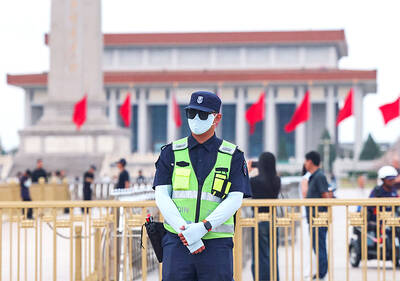
Chinese authorities are snuffing out any remembrance of the deadly 1989 military crackdown on student-led pro-democracy protests in Tiananmen Square, which happened 37 years ago yesterday, in a further tightening of a years-long campaign to erase what happened from public memory. Police told relatives of the victims they would not be allowed to visit a cemetery in Beijing on the anniversary of the crackdown, a person with knowledge of the matter said. Relatives of the victims visited the cemetery on the anniversary for more than 30 years to read memorial statements with police keeping watch, Amnesty International said. Hundreds of people,


 RSS
RSS