


China's senior leaders promised yesterday to investigate a stampede at a lantern festival north of the capital that killed 37 people who were celebrating the end of the Lunar New Year holiday.
Many of the victims suffocated, the official Xinhua News Agency said.
Fifteen were injured and reported to be in stable condition yesterday, according to a local official who gave only her surname, Wang. Another nine were treated for "slight injuries" in the morning, Beijing city spokesman Wu Kun said.
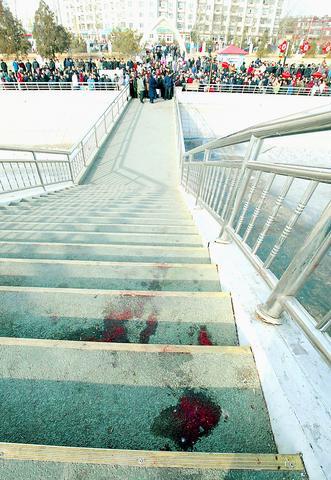
PHOTO: AP
Revelers were crowded onto a bridge at a popular park in the northern Beijing suburb of Miyun County late on Thursday when someone tripped and triggered a chain reaction, Wu said yesterday.
Officials from President Hu Jintao (胡錦濤) down expressed "deep concern," and the mayor of Beijing and the region's Communist Party chief went to the scene to supervise. Hu and Premier Wen Jiabao (溫家寶) ordered a thorough investigation into what happened and why.
The quick involvement of top men from China's new generation of leaders reflected their promise to keep the people safe -- whether it be from economic downturn, subversion or preventable disasters.
"The safety and the stability of the capital is an overwhelming political task," Beijing Mayor Wang Qishan (
"The government at all levels must learn lessons from this accident and carry out thorough inspections to find hidden dangers that might cause future accidents," he said.
Details of the conference were released in a faxed statement from the city. Wang also ordered safety inspections of public places including hotels, supermarkets, cinemas, parks and train stations, the statement said.
Thursday's accident occurred at 7:45pm in Mihong Park just outside the town of Miyun when one person fell down on a bridge and panic ensued, Wu said.
According to the People's Daily, the Communist Party newspaper, "thousands of people" were watching the festival when the crowd stampeded.
Local media showed photos of the injured, including a young boy, his face bruised and blue, who reportedly survived after being unconscious for three hours. The identities of many victims remained unconfirmed yesterday morning, though most were believed to be local residents.
At the park, the size of four football fields, about 200 people gathered around the bridge yesterday morning to quietly watch police take measurements. The concrete-and-metal bridge, arched over a frozen river, was blocked off and appeared damaged; it was littered with jewelry, bits of broken plastic and dried wax from lanterns. Darkened red lanterns hung outside the park.
Ge Jing, a street vendor who hawks roast meat, said he feared for his family as early as Thursday afternoon because the park and the bridge were filling up rapidly with people.
"It didn't feel very stable. I told my wife and child not to come," he said.
Inside nearby Miyun County Hospital, bodies lay covered with white sheets in the lobby early yesterday. Distraught relatives emerged through the main doors and told of the heartbreaking sight.
"It's a horrible scene in there. There are more than 30 dead bodies inside," said Zhao Jingfu, whose sister-in-law died.
"My heart is in pain," he said, fighting back tears. Others emerging, who didn't give their names, said there weren't enough doctors to treat the injured.
Wen, the Chinese premier, ordered local and regional authorities "to try their best to save the injured and make suitable arrangements for the families of the dead."
It is not the only disaster to hit during what is also known as Spring Festival.
Hundreds of Chinese have been killed in car accidents during the festivities as hundreds of millions of people travel to ancestral homes and back to major cities. Others have been maimed or killed while setting off fireworks.
Miyun County, about 75km from central Beijing and technically within the administrative limits of the capital, is a large district that includes both the city and the sprawling surrounding areas.
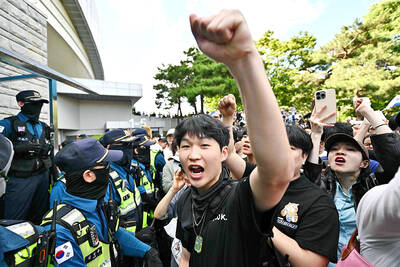
‘ABSURD MISTAKE’: The election commission said that there had been a failure to anticipate turnout after 14 polling stations ran short of ballot papers South Korean riot police yesterday cleared protesters from a Seoul polling station after a 35-hour blockade sparked by a shortage of ballot papers during local elections earlier this week. Wednesday’s election was the first nationwide vote since South Korean President Lee Jae-myung took office following the ouster of Yoon Suk-yeol over his short-lived martial law declaration. Lee’s ruling Democratic Party swept most races, but failed to flip the crucial Seoul mayoral seat. The South Korean National Election Commission apologized, blaming a failure to anticipate turnout after 14 polling stations in Seoul ran short of ballot papers. Some polling stations stayed open until 10pm to

France experienced its hottest spring on record, the French weather service said on Tuesday, after an exceptional early heat wave that also broke highs for the season in England and Wales. Meteo-France said the average nationwide temperature over March to May was 13.8°C — about 1.7°C above the norm, and surpassing records set in 2011 and 2020. “The warmest spring since records began in 1900,” it said in a bulletin. All three months were warmer than average, but the onset of an “unprecedented heatwave” late last month pushed the mercury to highs typically seen at the height of the summer. “Our country had never
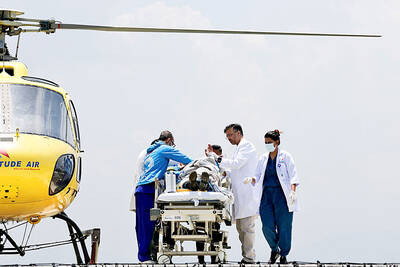
A Sherpa guide was found crawling to base camp on Mount Everest a week after he went missing and was reunited with his family, who had given up hope he would return. Dawa Sherpa was last seen on Friday last week descending the mountain, but he did not reach base camp even though his client did. The pair were among the last climbers on the mountain as the climbing season came to an end and the route was dismantled. Dawa was located by a cleaning crew on Thursday morning as he was crawling down the snowy slopes around the Khumbu Icefall, just above
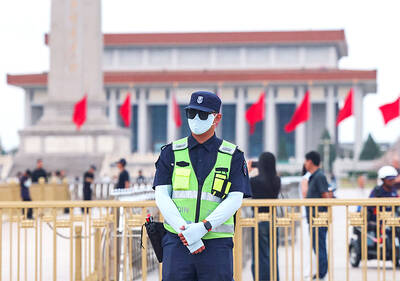
Chinese authorities are snuffing out any remembrance of the deadly 1989 military crackdown on student-led pro-democracy protests in Tiananmen Square, which happened 37 years ago yesterday, in a further tightening of a years-long campaign to erase what happened from public memory. Police told relatives of the victims they would not be allowed to visit a cemetery in Beijing on the anniversary of the crackdown, a person with knowledge of the matter said. Relatives of the victims visited the cemetery on the anniversary for more than 30 years to read memorial statements with police keeping watch, Amnesty International said. Hundreds of people,


 RSS
RSS