


When Yuzou Yamato's parents were young and in love in the 1950s, they had to elope to overcome family opposition to their marriage.
Yamato's mother was from a buraku community in this western Japanese town -- an invisible minority racially and culturally indistinguishable from their fellow Japanese, but for centuries as targets of discrimination. His father was not.
Years later, Yamato heard from his father's father why he believed burakumin -- literally, "people of the hamlet" -- were different.
"`The reason you suffer discrimination is because your ancestors did evil deeds,'"Yamato, now an activist working for burakumin rights, remembered his grandfather saying.
Scholars trace such attitudes to ancient Shinto religious concepts linking death and pollution and Buddhist teachings against killing animals.
During Japan's feudal era from the 17th century, those in occupations such as meat processing, making leather goods and handling the dead became part of an institutionalized pariah class, similar to India's Dalits, once called "untouchables".
The status was abolished in the 19th century, but burakumin continued to suffer discrimination in jobs and marriage.
"It's something Japanese themselves don't understand and they are not too keen on admitting to foreigners," said University of Essex Professor Ian Neary, who has researched the topic.
"It hangs in there behind Japanese culture like anti-Semitism in North American and European culture."
Talking about the topic is something of a taboo.
The issue can even affect trade negotiations, as when Mexico earlier this year sought better access to Japan's market for leather goods as part of a broader free trade deal.
"Leather is a sensitive issue in Japan," said one trade official, in a tacit reference to burakumin's historical dominance of the industry.
Government programs legislated in 1969 at the prodding of the activist Buraku Liberation League upgraded roads, housing and education levels in buraku communities.
"The place where I grew up was filled with poor people, the homes were small and old and fire engines couldn't even get down the narrow streets," said opposition party lawmaker Ryu Matsumoto, 52, whose grandfather, Jiichiro Matsumoto, was a leader of the early burakumin rights movement.
"I think we can say there has been progress," he said.
"But in terms of marriage, employment and education, many problems still remain," added Matsumoto, who reluctantly recalled how he once had to stop seeing a woman he had hoped to marry.
Matsumoto's openness about his background makes him something of a rarity.
"Clearly, it's a minus in Japanese society to say you're of buraku origin, so those who are successful don't mention it," said Kenzo Tomonaga, director of the Buraku Liberation and Human Rights Research Institute.
Slightly under one million Japanese of buraku background now reside in areas officially recognized as buraku communities, while another two million or more have moved into mainstream society, no longer identifiable by occupation or residence.
Some individuals may not even be aware of their buraku heritage, if their parents or grandparents kept silent.
But as recently as 1998, hundreds of companies in Osaka -- home to a large burakumin population -- were found to have paid detective agencies for background data on job applicants to determine whether they had buraku heritage.
"There is a very strong likelihood that some companies are still doing this," said Yoshiaki Koto, who handles human rights issues at a large Osaka-based firm. "I'd say the fact that such detective agencies still exist is proof."
So-called "buraku lists", which cite areas and even family names associated with burakumin, are circulated on the Internet, where chat pages with derogatory remarks can also be found.
Some experts on the buraku rights movement say its traditional tactic of publicly denouncing those found to practice discrimination contributed to corporate wariness in hiring.
"Scandals involving companies using such lists continue," said Kinhide Mushakoji, a professor at the Osaka University of Economics and Law and a human rights advocate.
"It is not based so much on a traditional notion that burakumin are `unclean', but from a kind of dual discrimination," he said.
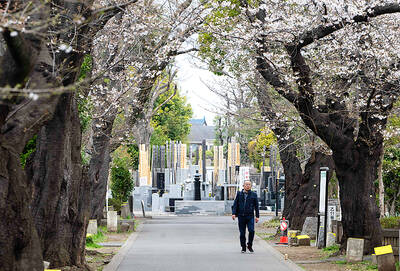
ROCKY RELATIONS: The figures on residents come as Chinese tourist numbers drop following Beijing’s warnings to avoid traveling to Japan The number of Chinese residents in Japan has continued to rise, even as ties between the two countries have become increasingly fractious, data released on Friday showed. As of the end of December last year, the number of Chinese residents had increased by 6.5 percent from the previous year to 930,428. Chinese people accounted for 22.6 percent of all foreign residents in Japan, making them by far the largest group, Japanese Ministry of Justice data showed. Beijing has criticized Tokyo in increasingly strident terms since Japanese Prime Minister Sanae Takaichi last year suggested that a military conflict around Taiwan could

Germany is considering Australia’s Ghost Bat robot fighter as it looks to select a combat drone to modernize its air force, German Minister of Defense Boris Pistorius said yesterday. Germany has said it wants to field hundreds of uncrewed fighter jets by 2029, and would make a decision soon as it considers a range of German, European and US projects developing so-called “collaborative combat aircraft.” Australia has said it will integrate the Ghost Bat, jointly developed by Boeing Australia and the Royal Australian Air Force, into its military after a successful weapons test last year. After inspecting the Ghost Bat in Queensland yesterday,
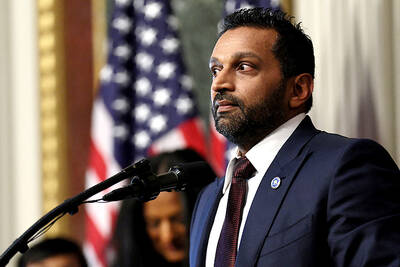
A pro-Iran hacking group claimed to breach FBI Director Kash Patel’s personal e-mail inbox and posted some of the contents online. The e-mails provided by the hacking group include travel details, correspondence with leasing agents in Washington and global entry, and loyalty account numbers. The e-mail address the hackers claim to have compromised has been previously tied to Patel’s personal details, and the leaked e-mails contain photos of Patel and others, in addition to correspondence with family members and colleagues. “The FBI is aware of malicious actors targeting Director Patel’s personal email information,” the agency said in a statement on
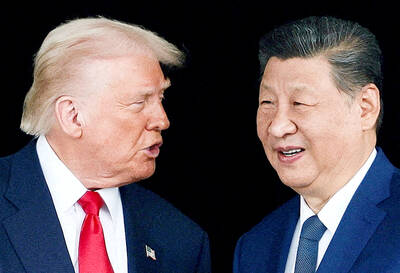
RIVALRY: ‘We know that these are merely symbolic investigations initiated by China, which is in fact the world’s most profligate disrupter of supply chains,’ a US official said China has started a pair of investigations into US trade practices, retaliating against similar probes by US President Donald Trump’s administration as the superpowers stake out positions before an expected presidential summit in May. The move, announced by the Chinese Ministry of Commerce on Friday, is a direct mirror of steps Trump took to revive his tariff agenda after the US Supreme Court last month struck down some of his duties. “China expresses its strong dissatisfaction and firm opposition to these actions,” a ministry spokesperson said in a statement, referring to the so-called Section 301 investigations initiated on March 11.


 RSS
RSS