

The Supreme Court has upheld a prison sentence of five years and six months for a man convicted of severely physically abusing his live-in girlfriend's four-year-old son, leaving the child with permanent brain damage and disabilities.
The ruling upheld a Taiwan High Court verdict finding the man, surnamed Wang (王), guilty of intentionally causing serious bodily harm to a child.
Wang was living with his girlfriend and her son in Taoyuan when the abuse took place on March 5, 2024, High Court documents said.
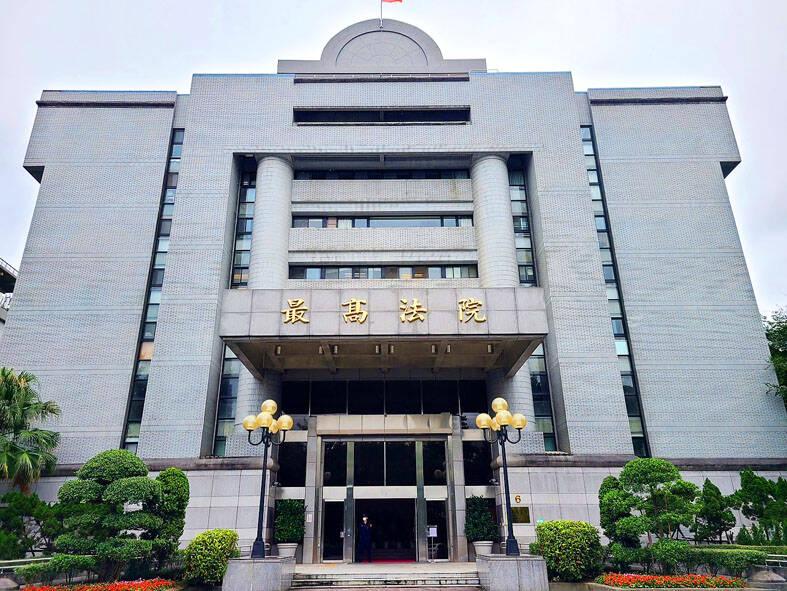
Photo: CNA
Wang became angry because he believed the boy was refusing to follow instructions and forced him to stand as punishment, the court documents said.
When the child collapsed after standing for an extended period, Wang lifted him up, repeatedly struck him on the buttocks and continued to force him to stand, they said.
Wang later slapped the boy, causing him to fall, struck him on the head with a slipper and kicked him in the chest, the documents said.
The child then hit the back of his head on the floor and lost consciousness, they said.
The boy was diagnosed with a right-sided subdural hematoma accompanied by cerebral edema, bilateral retinal hemorrhages, a fractured left tibia and extensive bruising, the court documents said.
Medical experts told the High Court that such injuries were highly unlikely to have resulted from an accidental fall at home, saying the retinal hemorrhages strongly suggested abusive head trauma caused by violent impact or shaking.
Despite prolonged treatment, the boy was left with brain atrophy, cerebral softening and enlarged ventricles, as well as impaired function of his left arm, spasticity in both legs, and delays in speech and cognitive development.
The damaged brain tissue cannot be restored, and the chances of significant recovery are extremely low, medical experts told the court.
After reviewing medical evidence and videos showing the child's daily activities, the High Court ruled that his injuries had caused severe and permanent impairment of his cognitive and motor functions, leaving him permanently disabled.
Wang was initially sentenced to two years in prison by the Taoyuan District Court for intentionally injuring a child.
The High Court later increased the sentence to five years and six months after finding that the child had suffered serious and lasting impairments and that Wang's abuse had caused the injuries.
The Supreme Court rejected Wang's appeal, making the sentence final.
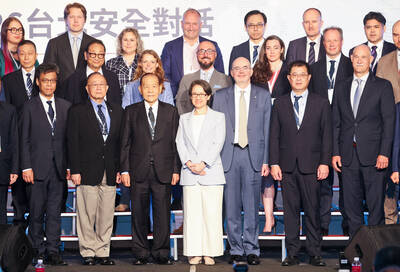
Taiwan’s growing defense preparations might be sending a stronger signal to the US than to Beijing, highlighting the need for Taipei to tailor its deterrence efforts to different audiences, a US security academic said yesterday. Stanford University Freeman Spogli Institute for International Studies fellow Oriana Skylar Mastro made the comment during a Taipei Security Dialogue panel examining lessons Taiwan could draw from the wars in Ukraine and the Middle East. Mastro said she was impressed by Taiwan’s increased defense spending, emphasis on asymmetric capabilities and efforts to prepare society for conflict, but questioned whom those initiatives were influencing. She said when she asked

A total of 400 foreign “high- level” professionals have been naturalized as Republic of China (Taiwan) citizens over the past decade as the government has eased nationality rules to attract talent from a wider range of fields, the Ministry of the Interior said yesterday. The 400th high-level professional, who works in the electronics industry, was approved for ROC citizenship on Aug. 26, the MOI said. The MOI quoted the newly naturalized citizen as saying that Taiwan is a leader in fields such as semiconductors, electronics manufacturing, artificial intelligence development and energy technology. He also said
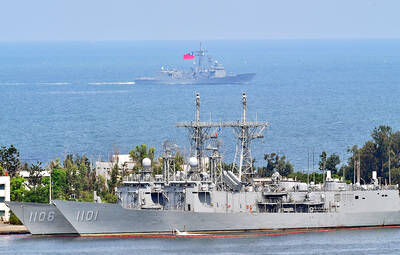
SIZE MATTERS: Large ships are politically attractive as visible symbols of national defense, but small surface combatants are more likely to survive an initial strike Taiwan needs to restructure its naval fleet from focusing on large warships, which are “sitting ducks” for China’s advanced tracking technology, to smaller, stealthy corvettes that are harder to detect but retain sufficient firepower to deter a Chinese invasion, a Taiwanese academic and a former US military commander said in an article published on Friday in the journal Foreign Affairs. Taiwan does not need a fleet capable of competing with the Chinese navy for traditional control of the Taiwan Strait, but rather “sea denial” capabilities that would prevent China from freely using the waterway, Taiwanese aerospace and security expert Holmes Liao
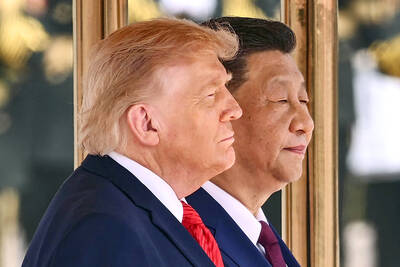
China has warned that it could cancel a planned US-China leaders’ summit if Washington approves new arms sales to Taiwan, a Japanese media outlet quoted sources as saying yesterday. US President Donald Trump, “apparently eager to showcase some diplomatic achievements ahead of November’s midterm congressional elections, places great importance on holding the summit with Chinese President Xi Jinping (習近平),” Japan’s Kyodo News reported. “While preparing for Xi’s upcoming trip, China has restated its position that the Taiwan issue is a ‘red line’ in bilateral relations,” the report said. The report said that when Xi met with Trump in Beijing in May, Xi said


 RSS
RSS