


The Kaohsiung Sports Development Bureau on Monday said the National Immigration Agency (NIA) registration process for 834 Chinese who applied to participate in this year’s Asia Pride Games has been suspended over suspicions of forged documents and national security concerns.
Many of the applicants lacked a background in sports, submitted documents generated by artificial intelligence, indicated backgrounds in the Chinese People’s Liberation Army or failed to comply with requirements, the bureau said.
The event, organized by the Taiwan Gay Sports and Movement Association, began yesterday and runs until Monday. It is open to athletes from around the world.
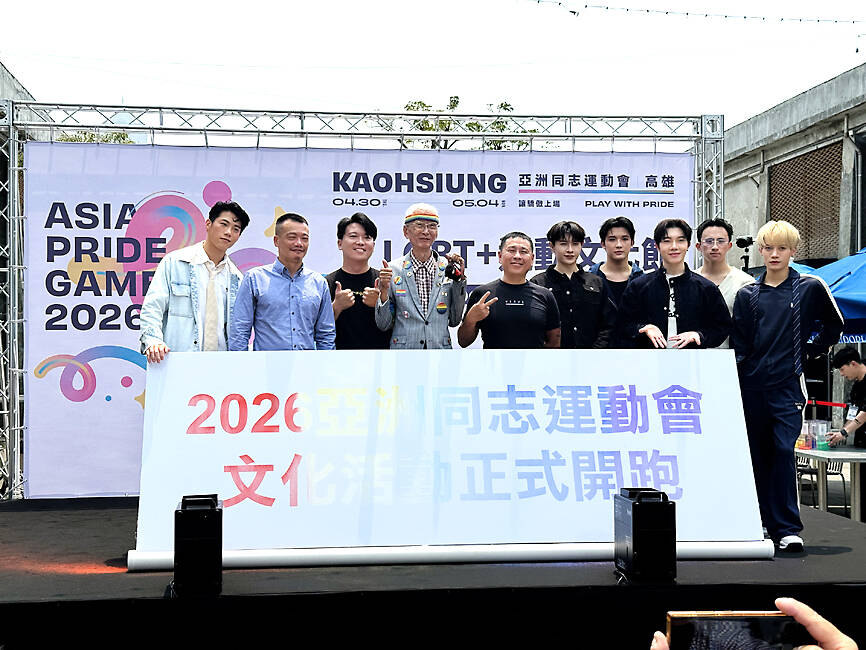
Photo: Hsu Li-chuan, Taipei Times
Out of 1,804 registered participants, 834 are Chinese — accounting for about 46 percent of the total, the bureau said.
That is a drastic increase from previous iterations of the Games, which typically saw only double-digit participation from China, it added.
Chinese participants must apply for special entry permits to visit Taiwan, a process that is handled by the host association.
The Mainland Affairs Council (MAC) had informed the association of the required documentation, but its “administrative capabilities were genuinely problematic,” an anonymous official said.
It did not pass a single application to the government by the registration deadline, they added.
The association said it was subjected to “technical delays,” but added that it would initiate a refund process for the Chinese applicants, which is estimated to cost nearly NT$6 million (US$189,585).
MAC Deputy Minister Liang Wen-chieh (梁文傑) said the council did not review the applications of the Chinese athletes, as local governments and the NIA had rejected them at the preliminary stage.
The main problem lies in the organizer’s lack of familiarity with the procedures for Chinese coming to Taiwan, and as a result, it was not able to prepare the required documents and did not have enough time to make corrections, Liang said.
That more than 800 Chinese participants applied might be because the event was advertised on Chinese social media, and people might be attempting to use it as a reason to travel to Taiwan, Liang added.
“Even if entry to Taiwan were approved by our side, the Chinese government needs to issue exit permits. Athletes might not receive such permits if they state their reason for going to Taiwan is to compete in the Pride Games,” Liang said.
According to standard procedures, the organizer must submit the information of Chinese athletes to the Ministry of Sports for approval before the NIA conducts its review.
Given the unusual surge, the MAC convened a meeting on March 11 with the organizer, the bureau, the ministry and the NIA, urging the association to strictly vet the applicants.
Kaohsiung City Councilor Chang Po-yang (張博洋) said users on social media platform Xiaohongshu (小紅書), also known as “Red Note,” were discussing how to use the Games as a shortcut to enter Taiwan.
Posts on the platform promoted the event, saying that applicants “do not need to be gay” and that “the registration fee is only a little more than 1,000 yuan (US$146.4), compared with the tens of thousands needed for a business visa,” Chang said, adding that users were highlighting that the visa allows for a stay of up to 15 days.
Additional reporting by Chen Yu-fu and Wang Kuan-jen

Yangmingshan National Park authorities yesterday urged visitors to respect public spaces and obey the law after a couple was caught on a camera livestream having sex at the park’s Qingtiangang (擎天崗) earlier in the day. The Shilin Police Precinct in Taipei said it has identified a suspect and his vehicle registration number, and would summon him for questioning. The case would be handled in accordance with public indecency charges, it added. The couple entered the park at about 11pm on Thursday and began fooling around by 1am yesterday, the police said, adding that the two were unaware of the park’s all-day live
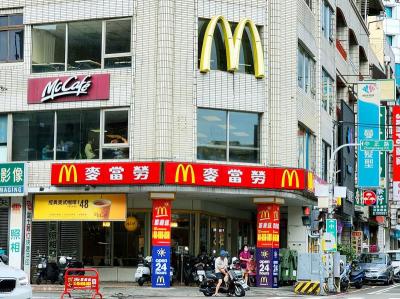
Fast food chain McDonald's is to raise prices by up to NT$5 on some products at its restaurants across Taiwan, starting on Wednesday next week, the company announced today. The prices of all extra value meals and sharing boxes are to increase by NT$5, while breakfast combos and creamy corn soup would go up by NT$3, the company said in a statement. The price of the main items of those meals, if ordered individually, would remain the same. Meanwhile, the price of a medium-sized lemon iced tea and hot cappuccino would rise by NT$3, extra dipping sauces for chicken nuggets would go up
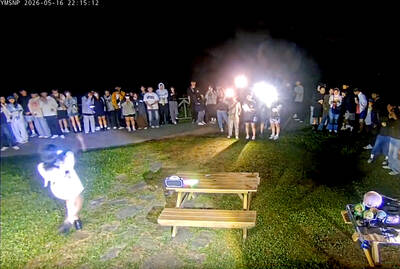
Yangmingshan National Park’s Qingtiangang (擎天崗) nature area has gone viral after a park livestream camera observed a couple in the throes of intimate congress, which was broadcast live on YouTube, drawing large late-night crowds and sparking a backlash over noise, bright lights and disruption to wildlife habitat. The area’s livestream footage appeared to show a couple engaging in sexual activity on a picnic table in the park on Friday last week, with the uncensored footage streamed publicly online. The footage quickly spread across social media, prompting a tide of visitors to travel to the site to “check in” and recreate the

Minister of Digital Affairs Lin Yi-ching (林宜敬) yesterday cited regulatory issues and national security concerns as an expert said that Taiwan is among the few Asian regions without Starlink. Lin made the remarks on Facebook after funP Innovation Group chief executive officer Nathan Chiu (邱繼弘) on Friday said Taiwan and four other countries in Asia — China, North Korea, Afghanistan and Syria — have no access to Starlink. Starlink has become available in 166 countries worldwide, including Ukraine, Malaysia, the Philippines and Vietnam, in the six years since it became commercial, he said. While China and North Korea block Starlink, Syria is not


 RSS
RSS