


Beijing’s new regulations aimed at stabilizing industrial supply chains are set to create an unavoidable dilemma for foreign investors and Taiwanese operating businesses in China, as complying with US restrictions would breach Chinese law, while ignoring those restrictions could lead to US sanctions, the Mainland Affairs Council said yesterday.
The Regulations of the State Council on the Security of Industrial and Supply Chains, which were announced earlier last month, would force foreign investors in China to quickly adopt a dual-track supply chain and information technology (IT) mechanism to avoid triggering security investigations or retaliatory measures from the Chinese government, the council said.
Not only would the regulations increase corporate maintenance costs of IT systems, but it would further shorten the supply chain in the global manufacturing system, it said.
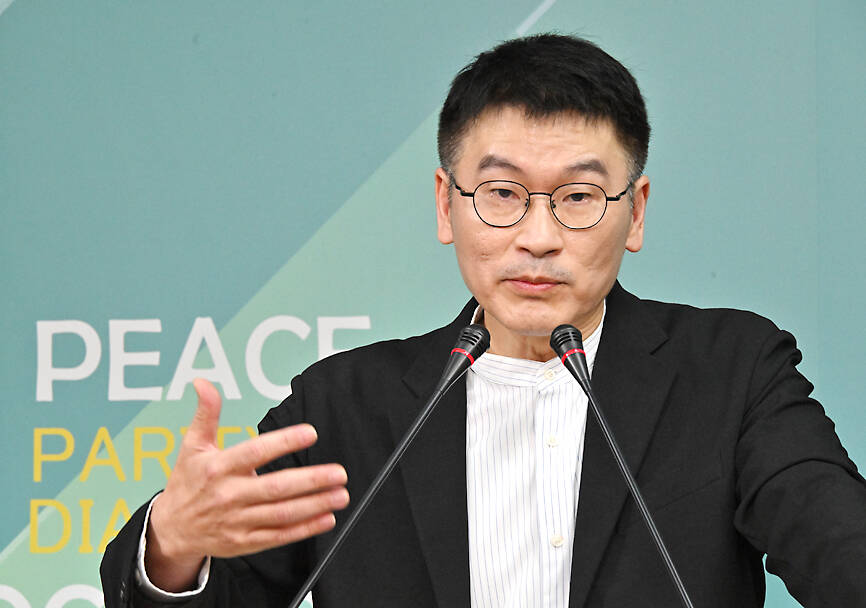
Photo: Liu Hsin-de, Taipei Times
The regulations would further authorize the Chinese government to establish a list of critical sectors, offering clear targets for the Chinese government to launch asymmetric retaliation against hostile nations, the council said.
As China has already implemented exploratory export controls on rare earths, gallium, germanium and drone components, it is expected to leverage industries in which it holds a relative global dominance — such as mature-node semiconductors, new energy equipment and advanced battery materials — to impose export restrictions, delay regulatory approvals or impose special fees on foreign governments or companies that align with US policies, the council said.
Once regulations designate a particular supply chain or technological shortage as a national security risk, increased Chinese capital is expected to flow into the strategic sector through government subsidies, bank loans and national industrial funds, the council said.
Under these circumstances, repeated investment and overcapacity are sure to occur, forcing manufacturers to export excess products to other countries and potentially igniting more trade conflicts, the council said.
The regulations would directly affect foreign investors and Taiwanese doing business in China, it added.
They would face the challenge of having to comply with the sanctions imposed by the US and China, which could entangle them in legal disputes when they follow one or the other, the council said.
Meanwhile, supply chain managers, as well as legal and compliance officers, might inadvertently cross the line into “illegal information gathering” when conducting on-site inspections or responding to data requests from overseas headquarters, increasing the risk of detention or exit restrictions, the council said.
The new policy would also make it difficult for Taiwanese businesses in China to provide supply chain transparency reports or certificates demonstrating the absence of forced labor practices, which are required to secure orders from customers of advanced countries, it said.
Taiwanese businesses in China are facing a continual increase in operational costs due to a trade and technology dispute between China and the US, the rise of a “red supply chain” and fierce domestic competition, the council said.
The share of Taiwanese investment in China in total outbound investment has fallen from 83.8 percent in 2010 to 7.5 percent in 2024, and 3.75 percent last year, the council said, citing data from the Ministry of Economic Affairs.
“We urge Taiwanese businesses in China to closely monitor the potential impact from the new policy. Foreign investors in China must now consider political and economic risks they would face as the core elements in their operations,” the council said.
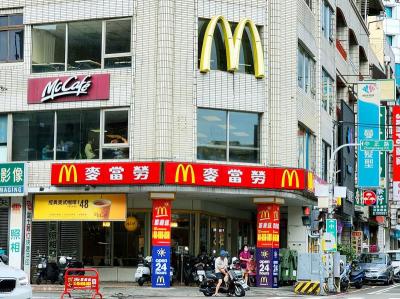
Fast food chain McDonald's is to raise prices by up to NT$5 on some products at its restaurants across Taiwan, starting on Wednesday next week, the company announced today. The prices of all extra value meals and sharing boxes are to increase by NT$5, while breakfast combos and creamy corn soup would go up by NT$3, the company said in a statement. The price of the main items of those meals, if ordered individually, would remain the same. Meanwhile, the price of a medium-sized lemon iced tea and hot cappuccino would rise by NT$3, extra dipping sauces for chicken nuggets would go up

Yangmingshan National Park’s Qingtiangang (擎天崗) nature area has gone viral after a park livestream camera observed a couple in the throes of intimate congress, which was broadcast live on YouTube, drawing large late-night crowds and sparking a backlash over noise, bright lights and disruption to wildlife habitat. The area’s livestream footage appeared to show a couple engaging in sexual activity on a picnic table in the park on Friday last week, with the uncensored footage streamed publicly online. The footage quickly spread across social media, prompting a tide of visitors to travel to the site to “check in” and recreate the

Minister of Digital Affairs Lin Yi-ching (林宜敬) yesterday cited regulatory issues and national security concerns as an expert said that Taiwan is among the few Asian regions without Starlink. Lin made the remarks on Facebook after funP Innovation Group chief executive officer Nathan Chiu (邱繼弘) on Friday said Taiwan and four other countries in Asia — China, North Korea, Afghanistan and Syria — have no access to Starlink. Starlink has become available in 166 countries worldwide, including Ukraine, Malaysia, the Philippines and Vietnam, in the six years since it became commercial, he said. While China and North Korea block Starlink, Syria is not
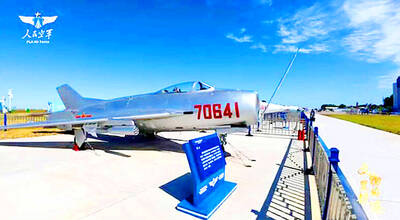
GROUNDED: A KMT lawmaker proposed eliminating drone development programs and freezing funding for counterdrone systems, despite China’s adoption of the technology China has deployed attack drones at air bases near the Taiwan Strait in a strategy aimed at overwhelming Taiwan’s air defense systems through saturation attacks, the Mainland Affairs Council (MAC) said. The council’s latest quarterly report on China said that satellite imagery and open-source intelligence indicate that the Chinese People’s Liberation Army (PLA) had converted retired J-6 fighter jets into J-6W drones, which the PLA has stationed at six air bases near Taiwan, five in China’s Fujian Province and one in Guangdong Province. The report cited J. Michael Dahm, a senior fellow at the US-based Mitchell Institute, as saying that China has


 RSS
RSS