


Importing US peanuts tariff-free could affect up to 30 percent of domestically produced peanuts, the Ministry of Agriculture (MOA) said today, presenting plans to boost the value of local peanuts and guide crop switching.
Tariff-free imports of US peanuts are an item of agreement under the US-Taiwan Agreement of Reciprocal Trade (ART), which still needs to be approved by the Legislative Yuan.
In response to concerns that US peanuts would flood the market once the ART takes effect, the government would help the industry transition so that Taiwanese peanuts remain the best choice for consumers, Deputy Minister of Agriculture Hu Chung-yi (胡忠一) said in a Facebook post last night.
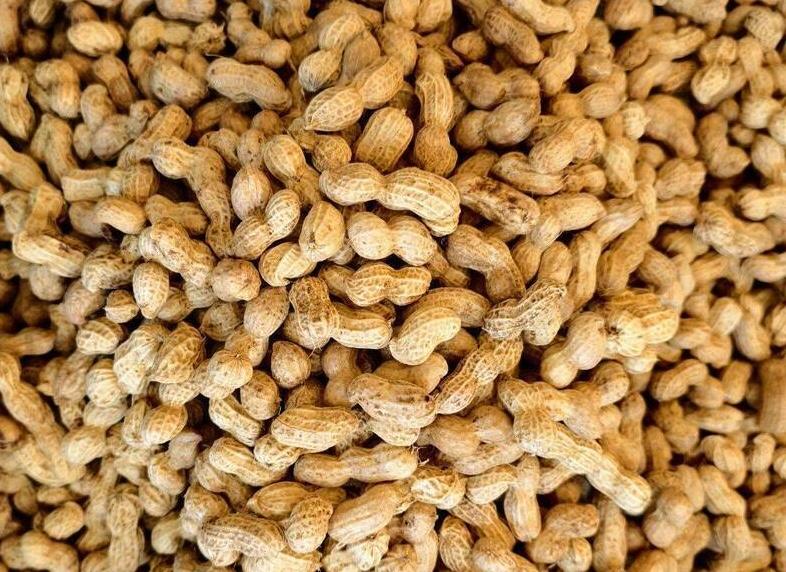
Photo: Taipei Times
If the ART is implemented, an estimated 20 to 30 percent of domestically produced peanuts would be affected, he added.
Domestic peanut production is concentrated in Yunlin and Changhua counties, but the industry has been declining annually due to labor shortages.
Peanut farms took up about 19,000 hectares in 2020, but fell to 17,000 hectares in 2024 and further dropped to 15,000 last year, ministry data showed.
Most of Taiwan’s imported peanuts come from India, Argentina and Brazil, with US peanuts accounting for less than 1 percent of total imports, data showed.
US shelled peanuts cost NT$47 per kilogram and un-shelled peanuts cost NT$37 per kilogram, Hu said.
As Taiwan’s peanut production last year was impacted by typhoons, shelled peanuts cost NT$150 to NT$160 per kilogram and un-shelled ones cost NT$80 to NT$88 per kilogram, which shows that US peanut imports would impact the market, he said.
However, farmers should not be overly concerned, as domestic peanuts would remain the preferred choice in most cases, Hu said.
Taiwan’s peanut consumption currently exceeds domestic production, with about 30 percent relying on imports, he said.
Most imported peanuts are shelled, as they easily go bad if not stored properly, Hu said.
However, about 70 percent of domestic peanuts are used for processed foods, for which fresh, in-shell peanuts are preferred, he said.
In addition, US peanuts are harder, and processors would need to consider whether the flavor could be maintained if they switch, he added.
Taiwan has developed several preferred peanut varieties, producing high-quality peanuts with high levels of unsaturated fatty acids and strong antioxidants, Hu said.
Three years ago, the government began promoting group production zones, implementing a fully integrated, standardized system from production to procurement, he said, adding that group-based production would be expanded in the future.
The ministry is encouraging smaller farmers to join group production zones or switch to sweet potatoes or edamame, which have stronger export competitiveness, Hu said.

Yangmingshan National Park authorities yesterday urged visitors to respect public spaces and obey the law after a couple was caught on a camera livestream having sex at the park’s Qingtiangang (擎天崗) earlier in the day. The Shilin Police Precinct in Taipei said it has identified a suspect and his vehicle registration number, and would summon him for questioning. The case would be handled in accordance with public indecency charges, it added. The couple entered the park at about 11pm on Thursday and began fooling around by 1am yesterday, the police said, adding that the two were unaware of the park’s all-day live
Fast food chain McDonald's is to raise prices by up to NT$5 on some products at its restaurants across Taiwan, starting on Wednesday next week, the company announced today. The prices of all extra value meals and sharing boxes are to increase by NT$5, while breakfast combos and creamy corn soup would go up by NT$3, the company said in a statement. The price of the main items of those meals, if ordered individually, would remain the same. Meanwhile, the price of a medium-sized lemon iced tea and hot cappuccino would rise by NT$3, extra dipping sauces for chicken nuggets would go up

Yangmingshan National Park’s Qingtiangang (擎天崗) nature area has gone viral after a park livestream camera observed a couple in the throes of intimate congress, which was broadcast live on YouTube, drawing large late-night crowds and sparking a backlash over noise, bright lights and disruption to wildlife habitat. The area’s livestream footage appeared to show a couple engaging in sexual activity on a picnic table in the park on Friday last week, with the uncensored footage streamed publicly online. The footage quickly spread across social media, prompting a tide of visitors to travel to the site to “check in” and recreate the

Minister of Digital Affairs Lin Yi-ching (林宜敬) yesterday cited regulatory issues and national security concerns as an expert said that Taiwan is among the few Asian regions without Starlink. Lin made the remarks on Facebook after funP Innovation Group chief executive officer Nathan Chiu (邱繼弘) on Friday said Taiwan and four other countries in Asia — China, North Korea, Afghanistan and Syria — have no access to Starlink. Starlink has become available in 166 countries worldwide, including Ukraine, Malaysia, the Philippines and Vietnam, in the six years since it became commercial, he said. While China and North Korea block Starlink, Syria is not


 RSS
RSS