


Following the Iran war, the US’ postwar strategy would shift focus to the Americas and Indo-Pacific region, with Taiwan’s importance set to rise rather than decline, Institute for National Policy Research president Tien Hung-mao (田弘茂) said.
Tien made the remarks at a seminar titled “The Global Impact of the US-Israel-Iran Conflict and Taiwan’s Security” hosted by the institute in Taipei yesterday.
In the post-war period, the US would inevitably need to shift its strategic focus to two regions: the Americas — where it would also need to address issues involving Canada — and the Indo-Pacific region, where relations with China require particular attention, he said.
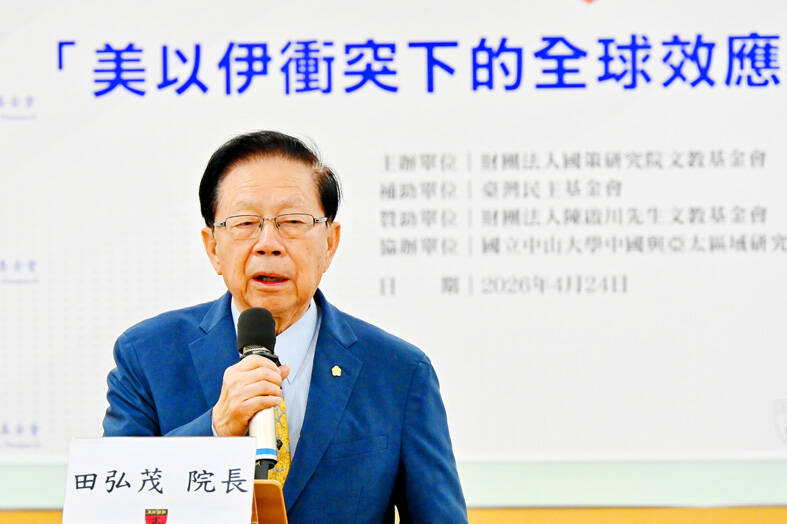
Photo: George Tsorng, Taipei Times
Within this broader global realignment, Taiwan’s strategic importance is likely to grow rather than diminish, he added.
If the US and Israel were to join forces to neutralize Iran’s ability to wage future conflict, Iran-backed militant groups across the Middle East would likely also be dismantled, he said, adding that such an outcome could pave the way for improved relations between Arab states and Washington, reducing the need for the US to keep a strong strategic focus on the region.
Former US Department of Defense official Tony Hu (胡振東) at the same seminar said the US in the first month of the war reportedly used more than 1,000 JASSM-ER stealth missiles and 850 Tomahawk missiles, while only 150 Tomahawks are slated for procurement this fiscal year.
In 2020, the US purchased just 396 JASSM-ER missiles, highlighting that the rate of consumption far exceeds replenishment, he said.
As for whether this would affect Taiwan’s national security, he said that the US Indo-Pacific Command maintains its own war reserves, and that the Iran conflict has limited direct impact on security in the western Pacific.
Taiwan should draw lessons by bolstering energy resilience, increasing on-island ammunition stockpiles and building hardened protective shelters, he added.
Institute vice president Kuo Yu-jen (郭育仁) said that more than half of the US’ rationale for striking Iran is directed at China, with the aim of cutting off China’s access to cheap oil from Iran and Venezuela.
The US is unlikely to launch a ground war lightly, as it would shift its strategic focus back to the Middle East — something that is highly significant for Taiwan, he said.
As for implications for Taiwan, Kuo said that Taiwan’s natural gas and strategic fuel reserves cover far fewer days than Japan’s.
Beyond diversifying supply sources, the precision munitions the US expended in just two weeks cost as much as US$17 billion.
Taiwan should take the opportunity to expand its own missile stockpiles and make use of the US FY2026 National Defense Authorization Act, which allows Taiwan to manufacture precision munitions for the US military, Kuo said.
Former National Defense University Political Warfare College dean Yu Tsung-chi (余宗基) said the US’ effort to deal with Iran is aimed at China and Russia, and could indirectly help bring about a collective defense framework in Asia similar to NATO.
Military exercises such as the US-Japan Keen Sword and Keen Edge drills are intended to deter China and advance the development of such a mechanism in Asia, he said.
He also cited the Japanese government publicly dispatching a destroyer through the Taiwan Strait last week as a signal of its commitment to the principle that a Taiwan contingency is a Japan contingency, and its corresponding military preparedness.
Taiwan should seize the opportunity by shifting international dynamics to expand cooperation with the US, Japan and the Philippines in areas such as drones and artificial intelligence, he said.

Yangmingshan National Park authorities yesterday urged visitors to respect public spaces and obey the law after a couple was caught on a camera livestream having sex at the park’s Qingtiangang (擎天崗) earlier in the day. The Shilin Police Precinct in Taipei said it has identified a suspect and his vehicle registration number, and would summon him for questioning. The case would be handled in accordance with public indecency charges, it added. The couple entered the park at about 11pm on Thursday and began fooling around by 1am yesterday, the police said, adding that the two were unaware of the park’s all-day live
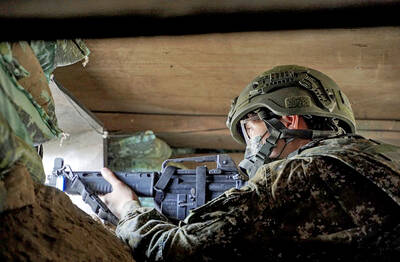
A former soldier and an active-duty army officer were yesterday indicted for allegedly selling classified military training materials to a Chinese intelligence operative for a total of NT$79,440. The Taipei District Prosecutors’ Office indicted Chen Tai-yin (陳泰尹) and Lee Chun-ta (李俊達) for contravening the National Security Act (國家安全法) and the Anti-Corruption Act (貪污治罪條例). Chen left the military in September 2013 after serving alongside then-staff sergeant Lee, now an army lieutenant, at the 21st Artillery Command of the army’s Sixth Corps from 2011 to 2013, according to the indictment. Chen met a Chinese intelligence operative identified as “Wang” (王) through a friend in November

Minister of Digital Affairs Lin Yi-ching (林宜敬) yesterday cited regulatory issues and national security concerns as an expert said that Taiwan is among the few Asian regions without Starlink. Lin made the remarks on Facebook after funP Innovation Group chief executive officer Nathan Chiu (邱繼弘) on Friday said Taiwan and four other countries in Asia — China, North Korea, Afghanistan and Syria — have no access to Starlink. Starlink has become available in 166 countries worldwide, including Ukraine, Malaysia, the Philippines and Vietnam, in the six years since it became commercial, he said. While China and North Korea block Starlink, Syria is not
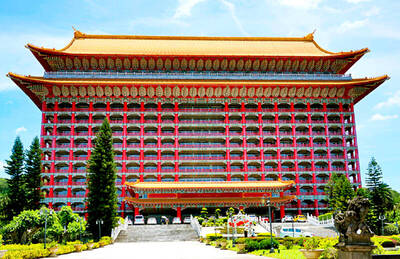
The Grand Hotel Taipei has rejected media reports claiming that the hotel had prevented CBS from broadcasting coverage of the Beijing summit between U.S. President Donald Trump and Chinese President Xi Jinping (習近平) on its premises. Media reports alleging that the hotel owner, dissatisfied with CBS’s coverage, prohibited the network from broadcasting political content on the hotel premises, are not true, the hotel said in a statement issued last night. The reports were “inconsistent with how the hotel actually handled the matter,” it said. The hotel said it received a refund request from a


 RSS
RSS