


The Ministry of Health and Welfare yesterday unveiled an NT$80 million (US$2.52 million) pilot program to provide free psychological counseling to people with cancer.
The initiative, which would start in July at the earliest, would be a joint venture between the ministry and the Formosa Cancer Foundation — expanding upon an ongoing collaboration, Department of Mental Health Director-General Chen Po-hsi (陳柏熹) told a news conference in Taipei.
The current version of the program mainly serves people with lung, head-and-neck or breast cancer, largely due to the availability of psychological specialist care, Chen said.

Photo: CNA
The initiative would broaden the eligibility requirements of the program to include people with other types of cancer, increasing the number of beneficiaries to an estimated 8,000 people from 4,290, he said.
Certified psychological care professionals would decide which people with cancer are in sufficiently severe mental distress to qualify, he said, adding that the type and frequency of counseling would also be needs-based.
The highest-risk patients would receive up to 12 free counseling sessions, medium-risk patients would receive up to six free sessions, and low-risk patients would be eligible for classes and other forms of emotional support, Chen said.
The program would alleviate the economic burden on people with cancer, who typically pay for counseling out of pocket, he said, adding that family members would also be eligible for mental health support via the policy.
The plan’s implementation would start with 12 public hospitals that specialize in tumor treatment, a decision partly based on their expertise in catering to the mental health needs of patients, he said.
The department plans to expand subsidized psychological care for cancer patients as a standard part of the National Health Insurance (NHI) package for tumor treatment, depending on the trial’s success, Chen said.
NHI Administration (NHIA) Director-General Chen Lian-yu (陳亮妤) said that people with tumors are 5.5 times more likely to commit suicide than the population at large, a risk that can be mitigated by 41 percent with robust mental health care.
NHIA Deputy Director-General Lin Li-ju (林莉茹) said that Taiwan reports 13,000 new cancer patients per year, while 62.3 percent survive five years following an initial diagnoses, a 10 percent improvement in survival rate compared with a decade ago.
Increased survival means that the mental health of people with cancer can no longer be ignored, Lin said.
The ministry has established 105 cancer resource centers and 66 certified cancer treatment hospitals, including the 12 that would be tasked with conducting the pilot mental health program, she said.
The government’s vision is to create a holistic healthcare program for people with cancer to support them with psychologists, psychiatrists and social workers on the community level, Lin said.
Foundation deputy director Tsai Li-chuan (蔡麗娟) said many people with cancer face immense mental anguish, not only from the fear of death, but also strain on their relationships, family life and loss of control.
Cancer treatment must be transformed into holistic care centered on quality of life in addition to boosting survival rates, Tsai said.

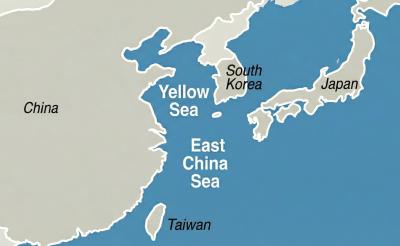
China has reserved offshore airspace in the Yellow Sea and East China Sea from March 27 to May 6, issuing alerts usually used to warn of military exercises, although no such exercises have been announced, the Wall Street Journal (WSJ) reported yesterday. Reserving such a large area for 40 days without explanation is an “unusual step,” as military exercises normally only last a few days, the paper said. These alerts, known as Notice to Air Missions (Notams), “are intended to inform pilots and aviation authorities of temporary airspace hazards or restrictions,” the article said. The airspace reserved in the alert is
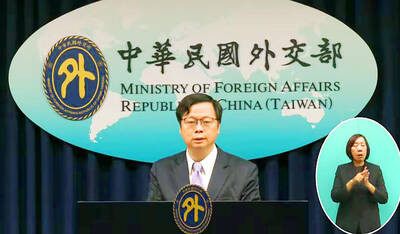
NAMING SPAT: The foreign ministry called on Denmark to propose an acceptable solution to the erroneous nationality used for Taiwanese on residence permits Taiwan has revoked some privileges for Danish diplomatic staff over a Danish permit that lists “Taiwan” as “China,” Eric Huang (黃鈞耀), head of the Ministry of Foreign Affairs’ Department of European Affairs, told a news conference in Taipei yesterday. Reporters asked Huang whether the Danish government had responded to the ministry’s request that it correct the nationality on Danish residence permits of Taiwanese, which has been listed as “China” since 2024. Taiwan’s representative office in Denmark continues to communicate with the Danish government, and the ministry has revoked some privileges previously granted to Danish representatives in Taiwan and would continue to review

More than 6,000 Taiwanese students have participated in exchange programs in China over the past two years, despite the Mainland Affairs Council’s (MAC) “orange light” travel advisory, government records showed. The MAC’s publicly available registry showed that Taiwanese college and university students who went on exchange programs across the Strait numbered 3,592 and 2,966 people respectively. The National Immigration Agency data revealed that 2,296 and 2,551 Chinese students visited Taiwan for study in the same two years. A review of the Web sites of publicly-run universities and colleges showed that Taiwanese higher education institutions continued to recruit students for Chinese educational programs without

A bipartisan group of US senators has introduced a bill to enhance cooperation with Taiwan on drone development and to reduce reliance on supply chains linked to China. The proposed Blue Skies for Taiwan Act of 2026 was introduced by Republican US senators Ted Cruz and John Curtis, and Democratic US senators Jeff Merkley and Andy Kim. The legislation seeks to ease constraints on Taiwan-US cooperation in uncrewed aerial systems (UAS), including dependence on China-sourced components, limited access to capital and regulatory barriers under US export controls, a news release issued by Cruz on Wednesday said. The bill would establish a "Blue UAS


 RSS
RSS